
Yaupon Holly Seeds
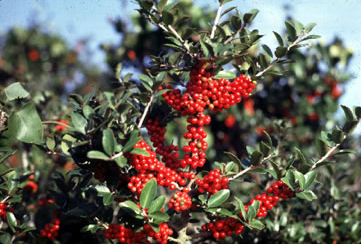
Yaupon Holly is one of North America's most versatile native shrubs and small trees. Naturally found throughout the southeastern United States, this attractive evergreen produces dense glossy foliage, bright red berries, and exceptional wildlife value. It is equally at home as a specimen plant, privacy screen, clipped hedge, foundation planting, or naturalized wildlife shrub.
Female plants produce abundant clusters of brilliant red berries that persist through winter, creating a colorful display while providing an important food source for birds and other wildlife. Yaupon Holly is remarkably tolerant of heat, drought, salt spray, pruning, and a wide range of soil conditions, making it one of the easiest native shrubs to grow.
Plant Characteristics- Botanical Name: Ilex vomitoria
- Common Names: Yaupon Holly, Cassina, Native Holly
- Plant Type: Evergreen shrub or small tree
- USDA Zones: 7-10
- Height: 10-25 feet
- Spread: 6-15 feet
- Sun Requirements: Full sun to partial shade
- Flower Color: Small white flowers
- Bloom Time: Spring
- Fruit: Bright red berries on female plants
Yaupon Holly produces masses of bright red berries that often remain on the plant throughout winter. While not generally consumed by humans, the berries are highly attractive to numerous species of songbirds including cedar waxwings, mockingbirds, robins, bluebirds, and other native birds.
The fruits become especially valuable during winter when other food sources are scarce. The dense evergreen growth also provides excellent nesting and shelter habitat.
Landscape Uses- Evergreen privacy hedge
- Formal clipped hedge
- Wildlife habitat planting
- Bird garden centerpiece
- Foundation shrub
- Windbreak planting
- Coastal landscapes
- Naturalized woodland edge
- Small ornamental tree
- Bonsai subject
Yaupon Holly seeds possess natural dormancy and often require patience.
- Clean seeds from ripe berries.
- Soak seeds in water for 24 hours.
- Cold stratify for 60-90 days in moist peat or vermiculite at 34-40°F.
- Sow 1/4 inch deep in a well-drained seed-starting mix.
- Maintain temperatures between 70-80°F.
- Keep soil evenly moist.
- Germination may occur in 2-12 months.
- Some seeds may continue sprouting over a second season.
Patience is often rewarded with strong, long-lived seedlings.
Growing InformationYaupon Holly is one of the most adaptable native shrubs available. It tolerates sandy soils, clay soils, drought, periodic flooding, coastal conditions, heat, humidity, and urban environments. Once established, it requires very little maintenance.
Plants respond well to pruning and can be maintained as tightly clipped hedges or allowed to develop naturally into graceful small trees.
Female plants require a nearby male plant for reliable berry production.
Hedge Growing InformationYaupon Holly is considered one of the finest evergreen hedge plants for the southern United States.
- Space plants 3-5 feet apart for hedges.
- Tolerates frequent pruning.
- Forms dense screening foliage.
- Retains attractive appearance year-round.
- Excellent for privacy barriers.
- Highly resistant to heat and drought once established.
Regular trimming encourages thick, lush growth and creates an attractive formal appearance.
Container GrowingDwarf forms and young plants perform well in containers.
- Use large containers with drainage holes.
- Provide quality potting soil.
- Water regularly during establishment.
- Prune to maintain desired size.
- Fertilize lightly in spring.
Container-grown specimens are popular for patios, entrances, and decorative landscape accents.
Pollinator ValueThe small white spring flowers attract bees, native pollinators, beneficial insects, and butterflies. While the blooms are modest in appearance, they are produced in abundance and provide an excellent nectar source.
Historical and Cultural SignificanceYaupon Holly holds a unique place in North American history. Native American tribes of the southeastern United States brewed a ceremonial tea from its leaves. Remarkably, Yaupon Holly is the only plant native to North America known to naturally contain significant amounts of caffeine.
European settlers later adopted the beverage, and interest in Yaupon tea has experienced a resurgence in recent years as people rediscover this native source of caffeine.
Seedman NoteOne of the most surprising facts about Yaupon Holly is that it is America's only native caffeinated plant. Long before coffee and tea became common, indigenous peoples harvested and prepared Yaupon leaves for stimulating beverages. Today, specialty growers are once again cultivating Yaupon for herbal teas, while gardeners appreciate it as one of the toughest, most wildlife-friendly evergreen hedges available. A mature female hedge loaded with bright red berries can become a winter feeding station for dozens of bird species.
For over a thousand more unique seed varieties, all in stock and ready to ship, visit our Seed Catalog Index Page .

Contact Us | Privacy Policy | About Us
Serving gardeners since 1992
State of Mississippi Seedmen's Permit #C-391, Ohio 90152, Minnesota 20086777