
* Seeds
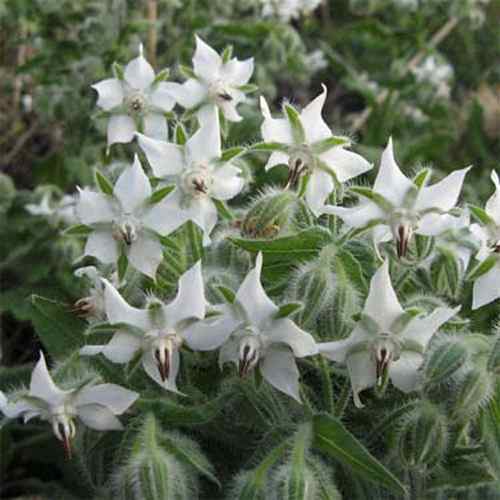
One of the most useful and beautiful herbs a gardener can grow. Its striking star-shaped blue flowers, fuzzy silver-green foliage, and exceptional pollinator value have made it a favorite in cottage gardens, herb gardens, vegetable plots, and pollinator habitats for centuries.
The brilliant blue blossoms appear continuously throughout the growing season, creating a dazzling display that attracts bees, butterflies, hummingbirds, and countless beneficial insects. In fact, Borage is widely considered one of the very best plants for supporting honeybees and other pollinators, making it a valuable addition to any garden focused on biodiversity and wildlife.
Borage is also highly regarded as a companion plant. Gardeners often grow it near tomatoes, squash, cucumbers, strawberries, and other vegetables to attract pollinators and beneficial insects that help create a healthy garden ecosystem. The large plants produce abundant nectar and flowers over a long season, drawing pollinators into the garden when they are needed most.
The edible flowers have a mild cucumber-like flavor and are often used to garnish salads, desserts, beverages, and summer drinks. The young leaves have also been used traditionally as a culinary herb. The vibrant blue flowers make stunning additions to fresh-cut arrangements and edible landscapes.
Uses and Benefits- Produces beautiful star-shaped blue flowers.
- One of the best plants for attracting honeybees.
- Excellent nectar source for bees, butterflies, and beneficial insects.
- Outstanding companion plant for vegetable gardens.
- Attracts pollinators to tomatoes, squash, cucumbers, and strawberries.
- Edible flowers with a mild cucumber-like flavor.
- Popular garnish for salads, desserts, and beverages.
- Excellent addition to herb gardens and edible landscapes.
- Makes attractive fresh-cut flowers.
- Suitable for pollinator gardens and wildlife habitats.
- Easy to grow and quick to flower from seed.
- Often self-sows, providing years of garden enjoyment.
Borage is grown as an annual in all USDA Zones, completing its life cycle in a single growing season.
Germination Instructions- Sow seeds directly outdoors after danger of frost has passed.
- Plant seeds 1/4 to 1/2 inch deep.
- Keep soil evenly moist during germination.
- Maintain temperatures between 60-75°F (16-24°C).
- Seeds typically germinate in 7-14 days.
- Thin seedlings to allow adequate spacing and airflow.
- Borage develops a taproot and generally performs best when direct sown.
- Plant in full sun to partial shade.
- Prefers average, well-drained soil.
- Water during prolonged dry periods.
- Flowers continuously throughout summer.
- Excellent for containers, raised beds, and garden borders.
- Allow some flowers to set seed if natural reseeding is desired.
Combining ornamental beauty, edible flowers, pollinator attraction, companion planting benefits, and ease of cultivation, Borage is truly one of the most versatile and rewarding plants in the garden. Whether grown for bees, butterflies, fresh flowers, culinary uses, or simply its unforgettable blue blossoms, Borage earns its place in every gardener's collection.
For over a thousand more unique seed varieties, all in stock and ready to ship, visit our Seed Catalog Index Page .

Contact Us | Privacy Policy | About Us
Serving gardeners since 1992
State of Mississippi Seedmen's Permit #C-391, Ohio 90152, Minnesota 20086777