
Giant White Bird of Paradise Seeds
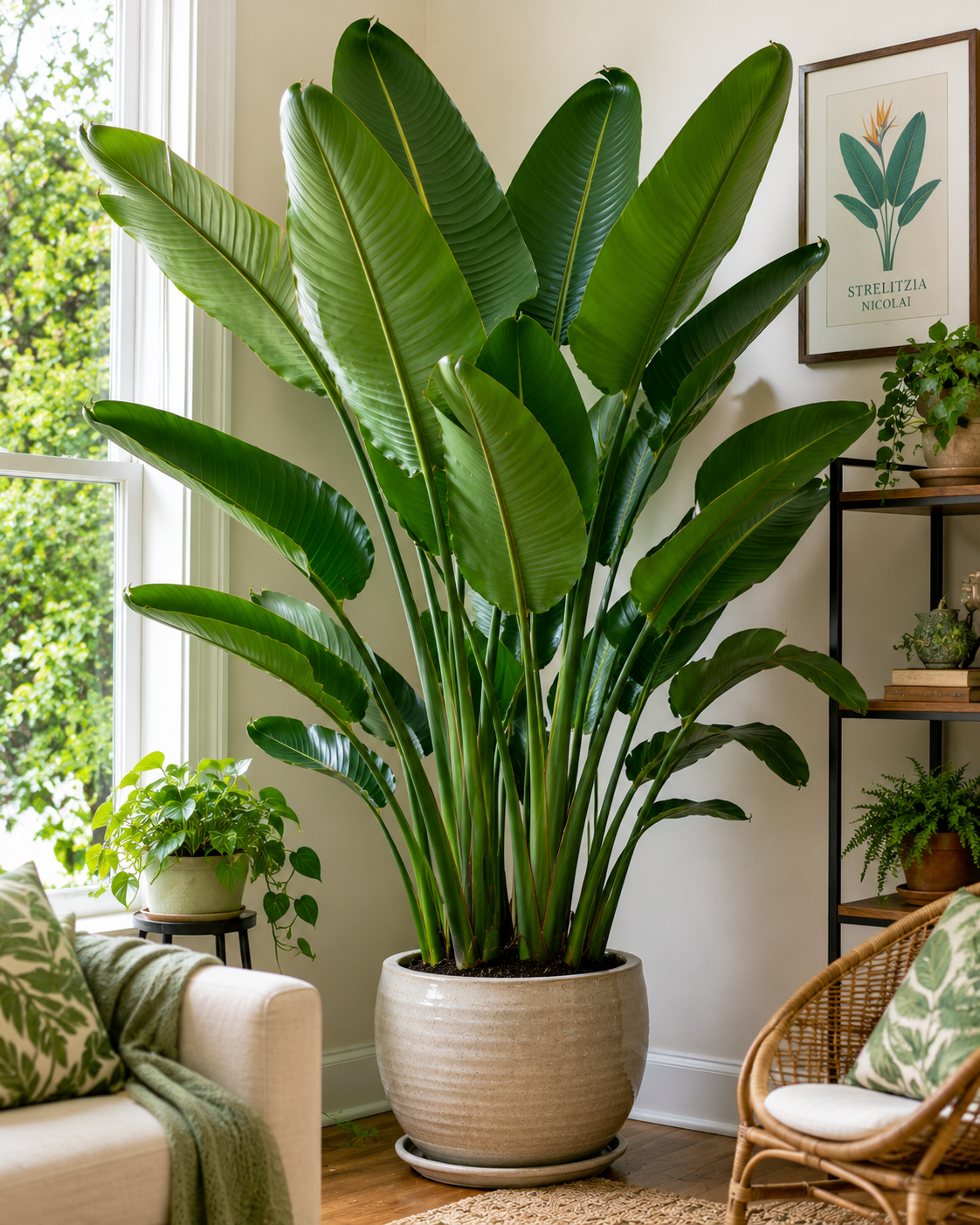
Bird of Paradise is one of the most spectacular tropical plants that can be grown indoors. Renowned for its bold banana-like foliage and exotic flowers that resemble brilliantly colored tropical birds in flight, this iconic species brings a touch of the tropics to homes, sunrooms, and conservatories around the world.
Even when not in bloom, Bird of Paradise remains an outstanding houseplant thanks to its large, elegant leaves and graceful architectural form. Few indoor plants create such an immediate impression of luxury, warmth, and tropical beauty.
Indoor Growing InformationBird of Paradise thrives in bright light and benefits from several hours of direct sunlight each day. South-facing windows, sunrooms, enclosed porches, and conservatories provide ideal conditions. Strong light encourages sturdy growth and improves the chances of flowering as plants mature.
Water thoroughly when the upper inch of soil begins to dry. While the plant appreciates regular moisture during active growth, it dislikes constantly wet soil.
Given proper care, Bird of Paradise can remain a magnificent houseplant for decades.
Container GrowingBird of Paradise adapts exceptionally well to containers and is often happiest when slightly root-bound. Use a rich, well-drained potting mix and a sturdy container capable of supporting the plant's eventual size.
Mature indoor specimens commonly reach 4 to 6 feet in height, while older plants in sunrooms may become even larger.
Repot only when necessary, as slightly crowded roots often encourage flowering.
Temperature and HumidityIdeal temperatures range between 65°F and 85°F. The plant tolerates average household humidity but appreciates slightly elevated humidity levels during active growth.
Protect from cold drafts and temperatures below 50°F.
FlowersThe extraordinary flowers are among the most recognizable in the plant kingdom. Bright orange sepals and vivid blue petals emerge from a boat-shaped bract, creating the appearance of an exotic bird perched among the foliage.
Flowering generally occurs only on mature plants and requires abundant light, but even non-flowering specimens remain highly ornamental.
Seed GerminationSoak seeds in warm water for 24 to 48 hours prior to planting. Sow approximately ½ inch deep in a warm, well-drained growing medium and maintain temperatures between 75°F and 85°F.
Germination may take several weeks to several months, requiring patience. Seedlings grow steadily and gradually develop the characteristic tropical foliage.
Houseplant Uses- Tropical floor specimen.
- Sunroom centerpiece plant.
- Architectural interior accent.
- Luxury container display.
- Conservatory collection plant.
- Long-lived heirloom houseplant.
Bird of Paradise belongs to a small family of plants native to South Africa. The flowers are naturally pollinated by birds, which land on the flower and trigger a mechanism that deposits pollen onto their feet.
The leaves are closely related in appearance to banana plants, giving the plant a distinctly tropical character even when not flowering.
Historical NotesBird of Paradise was introduced to Europe during the late 18th century and quickly became one of the most sought-after tropical ornamentals. The plant was named in honor of Queen Charlotte of Mecklenburg-Strelitz, wife of King George III of Great Britain.
For generations, Bird of Paradise has been a prized feature of botanical gardens, conservatories, and luxury landscapes around the world.
Growing TipProvide the brightest location available and avoid frequent repotting. Mature plants often flower best when slightly root-bound and receiving abundant sunlight.
Seedman NoteBird of Paradise is one of the finest houseplants available for gardeners seeking a dramatic tropical statement. Its bold foliage, long lifespan, and potential for spectacular blooms make it a plant that only becomes more impressive with age.
Additional Seedman NoteFew houseplants combine beauty, durability, and sheer visual impact as effectively as Bird of Paradise. Whether displayed as a young foliage plant or a mature flowering specimen, it instantly transforms an ordinary room into a tropical retreat. For many collectors, it represents the ultimate indoor tropical plant and deserves a place among the finest selections in the Houseplant Collection.
For additional growing information, see our Giant White Bird of Paradise Seeds AI fact sheet.
For over a thousand more unique seed varieties, all in stock and ready to ship, visit our Seed Catalog Index Page .

Contact Us | Privacy Policy | About Us
Serving gardeners since 1992
State of Mississippi Seedmen's Permit #C-391, Ohio 90152, Minnesota 20086777