
Ming Fern Seeds
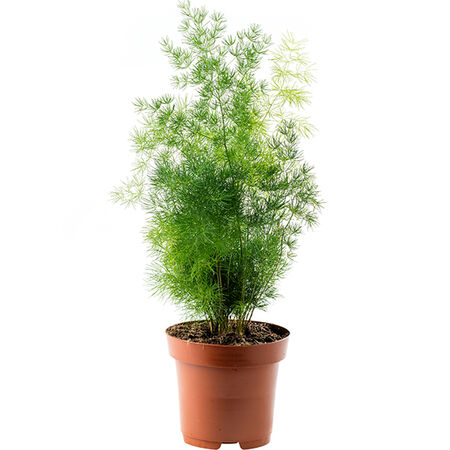

Ming Fern is one of the most elegant and refined foliage plants available for indoor growing. Despite its common name, this remarkable plant is not a true fern but a member of the asparagus family. Its dense clouds of delicate, feathery foliage create a soft, graceful appearance that brings tranquility and beauty to homes, offices, sunrooms, and conservatories.
Highly prized by collectors and interior designers, Ming Fern develops a naturally sculptural form that resembles a living green fountain. Its fine texture, airy growth habit, and year-round beauty make it one of the most sophisticated foliage plants available for indoor culture.
Why Grow Ming Fern?- Produces elegant clouds of fine-textured foliage.
- Excellent specimen for decorative containers.
- Adds softness and texture to indoor plant collections.
- Long-lived and adaptable.
- Perfect for tropical, contemporary, and traditional interiors.
- One of the most graceful foliage plants available.
The beauty of Ming Fern lies in its incredible texture. Countless tiny branchlets create soft masses of feathery greenery that appear almost cloud-like. As the plant matures, the stems arch and layer naturally, creating an elegant fountain effect that gives the plant its distinctive character.
Its graceful appearance brings a sense of calm and refinement to any indoor setting.
Not a True FernAlthough commonly called a fern, Ming Fern is actually a member of the asparagus family and is more closely related to edible garden asparagus than to true ferns.
The delicate green structures that resemble leaves are specialized stems known as cladodes, allowing the plant to maintain its soft appearance while remaining surprisingly durable and adaptable.
Native OriginsLike many ornamental asparagus species, Ming Fern traces its origins to southern Africa, where it evolved in warm climates with seasonal rainfall. These origins have produced a plant capable of adapting well to container culture and indoor environments.
Its natural resilience contributes to its reputation as an excellent houseplant.
Growing as a Houseplant- Light: Bright indirect light is ideal.
- Water: Keep soil lightly moist but avoid soggy conditions.
- Soil: Rich, well-drained potting mix.
- Humidity: Appreciates moderate humidity.
- Temperature: Thrives in average indoor temperatures.
- Fertilizer: Feed lightly during active growth.
Ming Fern performs exceptionally well in decorative containers where its fountain-like form can be fully appreciated. Over time, mature plants develop increasingly dense foliage, creating an impressive specimen that requires surprisingly little maintenance.
Its compact growth habit makes it suitable for tabletops, plant stands, entryways, and bright indoor corners.
Indoor Decorating ValueFew plants offer such remarkable texture. Ming Fern provides a beautiful contrast to broad-leaved tropical plants such as Monstera, Philodendron, Ficus, and Palms. The fine foliage softens interior spaces and helps create a relaxed, natural atmosphere.
Its elegant form works equally well in modern, tropical, traditional, and Asian-inspired décor.
Flowers and BerriesMature plants may occasionally produce tiny white flowers followed by decorative berries. While not the primary attraction, these features add seasonal interest and highlight the plant's maturity and health.
Seed GerminationSow seeds in a moist, well-drained growing medium and provide warmth and bright indirect light. Maintain consistent moisture during germination. Young seedlings establish steadily and gradually develop the fine-textured foliage characteristic of mature plants.
Ratings
Houseplant Appeal: ★★★★★
Foliage Elegance: ★★★★★
Ease of Growing: ★★★★☆
Container Value: ★★★★★
Conversation Value: ★★★★☆
Ming Fern is often used in bonsai-style plantings because of its naturally graceful structure and ability to develop a miniature tree-like appearance. Many collectors consider it one of the most elegant foliage plants available for indoor growing.
Ming Fern combines delicate beauty, graceful texture, and year-round greenery, making it one of the finest ornamental foliage plants for homes, offices, and indoor plant collections.
For over a thousand more unique seed varieties, all in stock and ready to ship, visit our Seed Catalog Index Page .

Contact Us | Privacy Policy | About Us
Serving gardeners since 1992
State of Mississippi Seedmen's Permit #C-391, Ohio 90152, Minnesota 20086777