
Passion Fruit Seeds
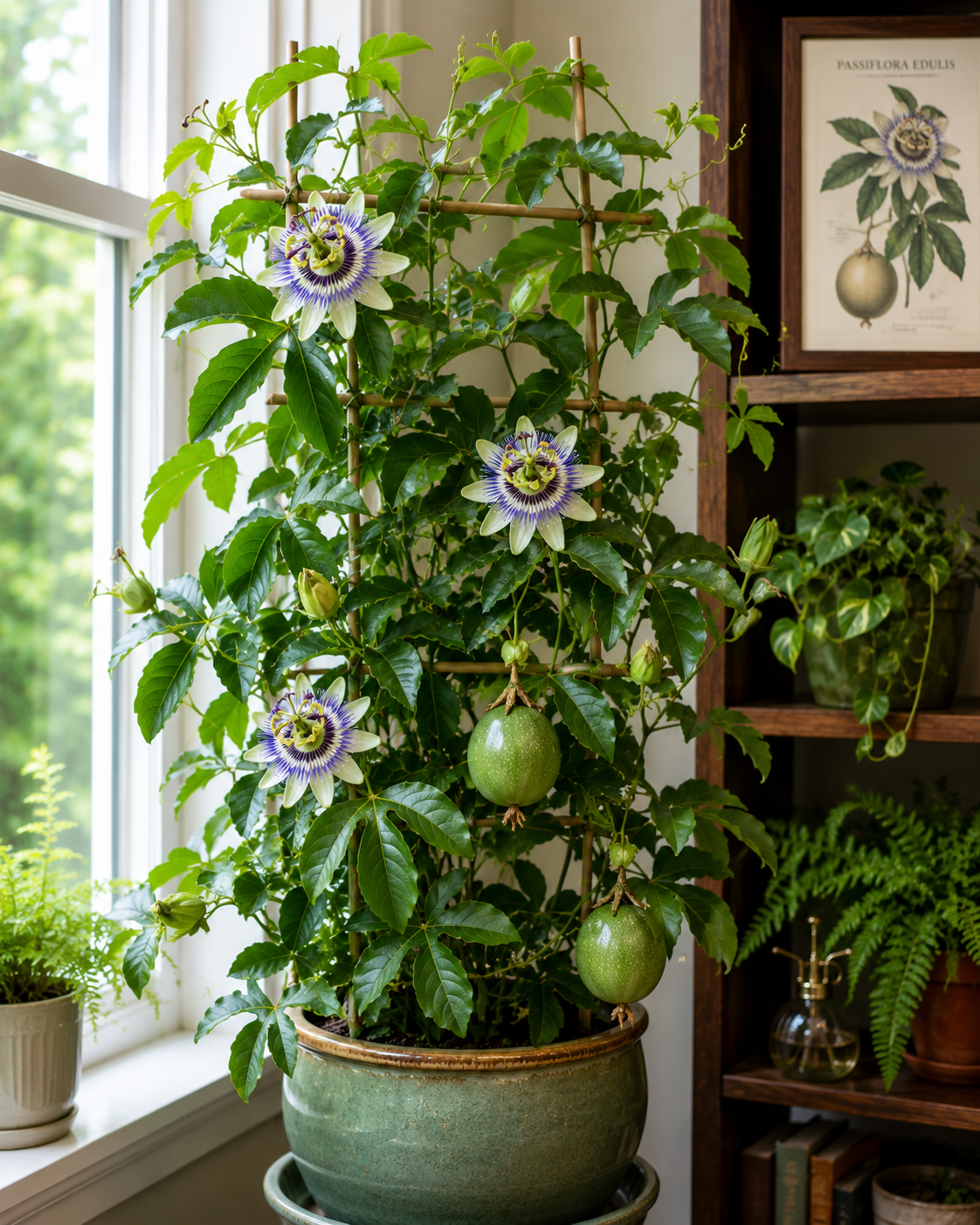
Passion Fruit is one of the most exotic and fascinating plants that can be grown indoors. Famous for its spectacular flowers, glossy evergreen foliage, and delicious tropical fruit, this vigorous climbing vine transforms bright indoor spaces into miniature tropical conservatories.
While often grown outdoors in warm climates, Passion Fruit adapts surprisingly well to large containers and indoor trellises. Its rapidly growing tendrils, intricate flowers, and potential fruit production make it one of the most rewarding plants for gardeners seeking something truly extraordinary.
Important Houseplant Note: Passion Fruit performs best as a sunroom, conservatory, or bright indoor trellis plant rather than a traditional tabletop houseplant. Given adequate light and support, however, it can become one of the most impressive specimens in an indoor plant collection.
Indoor Growing InformationPassion Fruit requires bright light and benefits from several hours of direct sunlight daily. South-facing windows, enclosed porches, sunrooms, and conservatories provide ideal growing conditions.
Keep the soil consistently moist but not waterlogged. During active growth, regular watering and occasional feeding encourage vigorous vines and abundant flowering.
The plant grows rapidly and will actively seek structures to climb using its specialized tendrils.
Container GrowingUse a large container with excellent drainage and provide a sturdy trellis, bamboo support, or decorative climbing structure. A rich, fertile potting mix encourages healthy growth and flowering.
Periodic pruning helps maintain a manageable size and encourages branching. Without support, the vine can quickly become tangled and difficult to manage indoors.
Container-grown plants can remain productive and attractive for many years.
Temperature and HumidityIdeal temperatures range between 65°F and 85°F. Passion Fruit enjoys warm conditions and appreciates moderate humidity.
Protect plants from cold drafts and temperatures below 50°F. Consistent warmth encourages vigorous growth and flowering.
Flowers and FruitThe extraordinary flowers are among the most complex and beautiful in the plant kingdom. White petals surround a striking corona of purple, blue, and white filaments, creating an appearance unlike almost any other flower.
Under favorable conditions, flowers may be followed by delicious tropical fruits filled with aromatic orange pulp and edible seeds.
Even when fruit is not produced, the flowers alone make the plant worth growing.
Seed GerminationSoak seeds in warm water for 24 hours before planting. Sow approximately ¼ inch deep in a moist, well-drained growing medium and maintain temperatures between 75°F and 85°F.
Germination can vary considerably, often occurring within 2 to 8 weeks. Fresh seed generally produces the best results.
Houseplant Uses- Sunroom trellis plant.
- Indoor conservatory specimen.
- Tropical flowering vine.
- Edible indoor plant.
- Collector's botanical specimen.
- Living privacy screen in bright rooms.
The intricate flower structure evolved to attract specific pollinators and is considered one of nature's most remarkable floral designs. The plant uses specialized tendrils that can rapidly coil around supports, allowing the vine to climb toward sunlight.
Passion Fruit belongs to a large family containing more than 500 species of passionflowers, many of which produce spectacular blooms.
Historical NotesSpanish missionaries in South America believed various parts of the flower symbolized elements of the Crucifixion of Christ, leading to the common name "Passion Flower." The remarkable floral structure was interpreted as representing religious symbolism, and the plant quickly gained attention throughout Europe.
Today Passion Fruit is cultivated throughout tropical and subtropical regions worldwide for both its beauty and its delicious fruit.
Growing TipProvide a sturdy trellis from the beginning. Young vines establish more easily when they have support available early, resulting in a more attractive and manageable houseplant specimen.
Seedman NoteFew plants offer as much excitement as Passion Fruit. The combination of exotic flowers, vigorous growth, and edible fruit makes it one of the most fascinating plants that can be grown indoors under bright conditions.
Additional Seedman NotePassion Fruit is not merely a houseplant—it is a living tropical experience. Each flower appears almost too intricate to be real, and the sight of a flowering vine climbing through a sunny room creates an atmosphere normally associated with botanical gardens and tropical conservatories. For gardeners with adequate light and space, Passion Fruit can become one of the most unforgettable plants in the entire collection.
For additional growing information, see our Passion Fruit Seeds AI fact sheet.
For over a thousand more unique seed varieties, all in stock and ready to ship, visit our Seed Catalog Index Page .

Contact Us | Privacy Policy | About Us
Serving gardeners since 1992
State of Mississippi Seedmen's Permit #C-391, Ohio 90152, Minnesota 20086777