
New Seed Arrivals | New Account |
Gift Certificates |
Gardening Products
SEEDS: Unusual | Annuals | Perennials | Vegetables | Herbs | Trees
Illinois Bundleflower Seeds
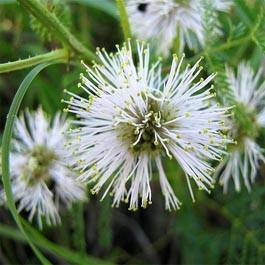
AW35 Illinois Bundleflower ( Desmanthus illinoensis )
Used in meadows, roadsides, and tall grass prairie plantings. Good for xeriscaping. Produces fruit in the form of dark-brown clusters of pods. Due to it being high in protein, it is readily eaten by livestock and wildlife. Fixes high amounts of nitrogen in the soil and can rejuvenate worn-out soil. Attracts bees, butterflies and birds.
Illinois bundleflower is rated by some authorities as our most important native legume and is included in range revegetation programs since the species is readily eaten by livestock. The lenticular seeds contain 38 percent protein on a dry weight basis, which compares favorably with soybeans.
Seeds are desirable for wild birds. The plant is considered a nutritious and palatable browse for wildlife.
Pawnee Indians used leaf tea as wash for itching. Hopi used seeds placed in eye for conjunctivitis.
A perennial growing to 3-6 ft. tall with cream colored flowers. Hardy to zone 5. The primary attraction of Illinois Bundleflower is the refined appearance of its fern-like foliage. The subleaflets of the compound leaves fold together at night, and they close partially during hot sunny days in order to reduce moisture loss. During the morning and evening, when sunlight is less intense, the compound leaves orient themselves in the direction of the sun in order to maximize the reception of its light.
Illinois bundleflower is rated by some authorities as our most important native legume and is included in range revegetation programs since the species is readily eaten by livestock. The lenticular seeds contain 38 percent protein on a dry weight basis, which compares favorably with soybeans.
Seeds are desirable for wild birds. The plant is considered a nutritious and palatable browse for wildlife.
Pawnee Indians used leaf tea as wash for itching. Hopi used seeds placed in eye for conjunctivitis.
A perennial growing to 3-6 ft. tall with cream colored flowers. Hardy to zone 5. The primary attraction of Illinois Bundleflower is the refined appearance of its fern-like foliage. The subleaflets of the compound leaves fold together at night, and they close partially during hot sunny days in order to reduce moisture loss. During the morning and evening, when sunlight is less intense, the compound leaves orient themselves in the direction of the sun in order to maximize the reception of its light.
For additional growing information, see our Illinois Bundleflower Seeds AI fact sheet.
For over a thousand more unique seed varieties, all in stock and ready to ship, visit our Seed Catalog Index Page .

Contact Us | Privacy Policy | About Us
| Returns
Serving gardeners since 1992
State of Mississippi Seedmen's Permit #C-391, Ohio 90152, Minnesota 20086777