
Japanese Aralia Seeds
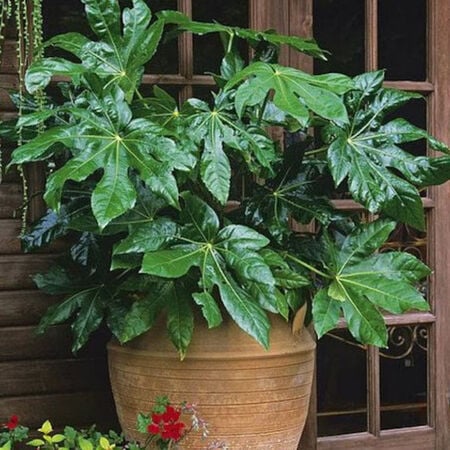

Japanese Aralia, botanically known as Fatsia japonica, is one of the finest foliage plants for indoor and outdoor ornamental use. Famous for its large, glossy, hand-shaped leaves, this elegant evergreen brings a lush tropical appearance to homes, sunrooms, conservatories, patios, and shaded gardens.
Despite its exotic appearance, Japanese Aralia is surprisingly tough and adaptable. Its bold foliage creates an immediate focal point, making it a favorite among interior designers, collectors, and gardeners seeking dramatic texture and year-round greenery.
Why Grow Japanese Aralia?- Produces spectacular glossy tropical foliage.
- Excellent houseplant and container specimen.
- Adaptable to a wide range of growing conditions.
- Fast-growing and easy to maintain.
- Creates a bold architectural statement.
- Outstanding year-round ornamental value.
The large, deeply lobed leaves of Japanese Aralia can reach impressive sizes, creating a lush tropical effect that instantly transforms indoor spaces. Each leaf resembles a giant green hand, adding texture and visual interest unlike almost any other houseplant.
Its dramatic foliage makes it appear far more delicate than it actually is.
Native OriginsJapanese Aralia is native to Japan, Taiwan, and parts of southern Korea, where it grows naturally in woodland environments and along sheltered slopes. It evolved beneath taller trees, which helps explain its ability to thrive in bright indirect light and partial shade.
These natural adaptations make it exceptionally well suited to indoor culture.
The Meaning Behind the NameThe genus name Fatsia comes from an old Japanese word meaning "eight," a reference to the number of lobes commonly found on the leaves. While leaf shapes can vary, the deeply divided foliage remains one of the plant's most recognizable features.
The striking leaf shape has helped make the species famous worldwide.
Growing as a Houseplant- Light: Bright indirect light to partial shade.
- Water: Keep soil evenly moist but not waterlogged.
- Soil: Rich, well-drained potting mix.
- Humidity: Appreciates moderate humidity.
- Temperature: Thrives in normal indoor temperatures.
- Fertilizer: Feed during active growth.
Japanese Aralia performs beautifully in decorative containers where its large foliage can be fully appreciated. It quickly develops into an impressive specimen plant that adds height, texture, and tropical character to indoor plant collections.
Its upright growth habit allows it to serve as a focal point without occupying excessive floor space.
Flowers and Seasonal InterestMature plants may produce clusters of creamy-white flowers during cooler months, followed by small dark berries. While the flowers are attractive, the magnificent foliage remains the primary reason gardeners treasure this species.
The blooms provide additional seasonal interest and help distinguish mature specimens.
Indoor Decorating ValueFew foliage plants create as much visual impact as Japanese Aralia. Its large glossy leaves pair beautifully with palms, ferns, philodendrons, monsteras, and flowering houseplants.
The bold foliage provides an instant tropical atmosphere and works exceptionally well in both traditional and modern interiors.
Historical and Cultural InterestJapanese Aralia has been cultivated as an ornamental plant for well over a century and remains a staple of botanical gardens and conservatories worldwide. Its ability to combine beauty with durability has ensured its continued popularity.
Many gardeners consider it one of the finest foliage plants ever introduced into cultivation.
Seed GerminationSow seeds in a moist, well-drained growing medium and maintain warmth and consistent moisture. Germination is generally reliable under favorable conditions. Seedlings establish steadily and soon begin producing the distinctive lobed leaves characteristic of the species.
Ratings
Foliage Beauty: ★★★★★
Houseplant Performance: ★★★★★
Tropical Appearance: ★★★★★
Ease of Growing: ★★★★★
Conversation Value: ★★★★☆
Japanese Aralia is frequently used in movie sets, conservatories, and tropical displays because its large glossy leaves instantly create the appearance of a lush jungle environment. Yet despite its exotic look, it is one of the easiest large-leaved houseplants to grow.
Japanese Aralia combines dramatic foliage, tropical elegance, and dependable performance, making it one of the most rewarding houseplants for creating bold indoor greenery.
For over a thousand more unique seed varieties, all in stock and ready to ship, visit our Seed Catalog Index Page .

Contact Us | Privacy Policy | About Us
Serving gardeners since 1992
State of Mississippi Seedmen's Permit #C-391, Ohio 90152, Minnesota 20086777