
Japanese Mock Orange Seeds
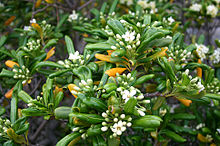
Japanese Mock Orange is a handsome evergreen shrub prized for its dense glossy foliage, highly fragrant spring flowers, and exceptional versatility as a hedge plant. Native to Japan, Korea, and parts of eastern Asia, it has become one of the most widely planted evergreen hedges in warm temperate and coastal regions around the world.
Its naturally dense branching habit forms an attractive screen that can be maintained as a formal clipped hedge or allowed to develop into a graceful informal barrier. During spring, clusters of creamy white flowers release a sweet citrus-like fragrance often compared to orange blossoms, giving rise to its common name.
For gardeners seeking beauty, privacy, fragrance, and year-round greenery, few hedge plants offer as complete a package as Japanese Mock Orange.
Plant Characteristics- Botanical Name: Pittosporum tobira
- Common Names: Japanese Mock Orange, Japanese Pittosporum, Tobira
- Plant Type: Evergreen flowering shrub
- USDA Zones: 8-11
- Height: 6-15 feet
- Spread: 6-12 feet
- Sun Requirements: Full sun to partial shade
- Growth Rate: Moderate
- Foliage Color: Deep glossy green
- Flower Color: Creamy white
- Bloom Time: Spring
Japanese Mock Orange is one of the most adaptable evergreen shrubs for landscape use.
- Privacy hedges
- Foundation plantings
- Property screens
- Coastal landscapes
- Windbreaks
- Formal hedges
- Fragrant gardens
- Evergreen borders
Its neat growth habit and year-round appearance make it equally suitable for residential and commercial landscapes.
Important Hedge NoteJapanese Mock Orange tolerates repeated trimming and shaping exceptionally well. This ability allows gardeners to maintain crisp formal hedges while preserving dense foliage from top to bottom.
Germination Instructions- Sow seeds in a well-drained seed starting mix.
- Lightly cover seeds with fine soil.
- Maintain temperatures between 70-80°F.
- Keep soil consistently moist.
- Provide bright indirect light.
- Germination may occur within several weeks.
- Transplant seedlings when well established.
- Provide protection from frost during early growth.
Japanese Mock Orange performs best in full sun to partial shade and adapts to a wide variety of soil conditions. Once established, it exhibits excellent drought tolerance and requires relatively little maintenance.
It is particularly valued in coastal areas because of its tolerance to salt spray and ocean winds.
Occasional pruning after flowering helps maintain a dense, attractive form.
Container GrowingThis species adapts exceptionally well to large containers.
- Use quality well-drained potting soil.
- Provide full sun or partial shade.
- Water regularly during establishment.
- Prune as needed to maintain shape.
- Feed lightly during active growth.
Container-grown specimens are frequently used around patios, entrances, and courtyards.
Pollinator ValueThe fragrant flowers attract bees, butterflies, and other beneficial insects. During bloom, flowering shrubs often become active pollinator gathering points.
The sweet fragrance helps draw pollinators from considerable distances.
Wildlife ValueDense evergreen growth provides nesting sites and year-round shelter for birds. Mature hedges create valuable cover for small wildlife while helping protect beneficial insects from harsh weather.
The thick foliage makes excellent refuge habitat.
Historical and Cultural SignificanceJapanese Mock Orange has been cultivated in East Asian gardens for centuries. It was valued not only for its beauty but also for its fragrant flowers and evergreen appearance.
As international plant exploration expanded during the nineteenth century, the species gained popularity throughout Europe, North America, Australia, and other warm-climate regions.
Today it remains a landscape favorite wherever winters are sufficiently mild.
Interesting Botanical Facts- The flowers are often compared to orange blossoms in fragrance.
- The species is highly tolerant of coastal conditions.
- Glossy leaves remain attractive throughout the year.
- It is frequently used in commercial landscapes due to its reliability.
- Mature plants develop an exceptionally dense branching structure.
Japanese Mock Orange is one of those rare hedge plants that checks nearly every box on a gardener's wish list. It is evergreen, attractive, fragrant, adaptable, drought tolerant, and easy to maintain. Whether planted as a formal privacy hedge or a relaxed landscape screen, it consistently delivers beauty throughout the year.
The spring flower display adds a sensory element that many hedge plants simply cannot match.
Additional Seedman NoteOne of the most enjoyable features of Japanese Mock Orange is that visitors often notice its fragrance before they notice the plant itself. On warm spring days, the sweet scent of the flowers can drift across patios, walkways, and gardens, creating an experience that turns a simple hedge into a memorable landscape feature.
Hedge Plant Rating- Privacy Screen: ★★★★★
- Evergreen Value: ★★★★★
- Fragrance: ★★★★★
- Salt Tolerance: ★★★★★
- Drought Tolerance: ★★★★☆
- Ease of Maintenance: ★★★★★
- Wildlife Shelter: ★★★★☆
- Ornamental Appeal: ★★★★★
Overall Hedge Rating: One of the finest evergreen hedge plants for warm climates and coastal landscapes.
For additional growing information, see our Japanese Mock Orange Seeds AI fact sheet.
For over a thousand more unique seed varieties, all in stock and ready to ship, visit our Seed Catalog Index Page .

Contact Us | Privacy Policy | About Us
Serving gardeners since 1992
State of Mississippi Seedmen's Permit #C-391, Ohio 90152, Minnesota 20086777