
London Plane Tree Seeds
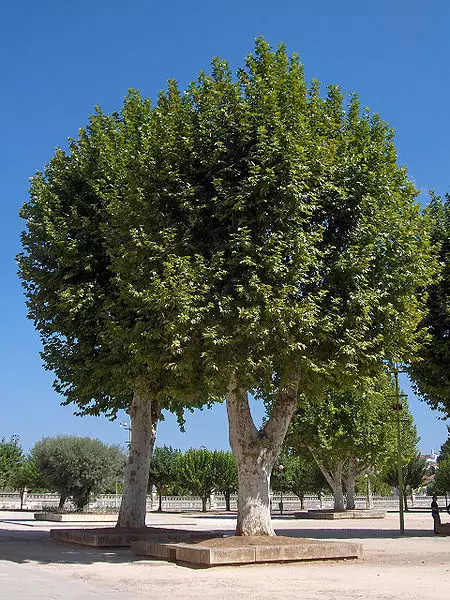
Jim's Note: This is almost dead on identical to the Platanus occidentalis, or Sycamore tree that I knew as a child. As a kid some 60 years ago, me and my brothers would collect the seed balls and have a great time throwing them at each other. Doubt any children in this modern age would see much fun in that.
The London Plane Tree is one of the world's most famous shade trees, admired for its massive size, broad canopy, distinctive mottled bark, and remarkable ability to thrive in urban environments. A hybrid between the American Sycamore and the Oriental Plane Tree, this magnificent tree has become a landscape icon throughout Europe, North America, and many of the world's great cities.
When planted as a lawn specimen, the London Plane develops into a stately shade tree capable of transforming an ordinary yard into a park-like landscape. Mature specimens are among the most impressive shade trees available, often becoming treasured landmarks for generations.
Plant Characteristics- Botanical Name: Platanus × acerifolia
- Common Names: London Plane Tree, London Planetree
- Plant Type: Deciduous Shade Tree
- Mature Height: 70 to 100 feet
- Mature Spread: 60 to 90 feet
- Growth Rate: Fast
- USDA Zones: 5 to 9
- Sun Exposure: Full Sun
- Soil Requirements: Adaptable
- Specimen lawn tree
- Shade tree
- Estate landscapes
- Parks and public grounds
- Street tree plantings
- Large residential properties
- Historic landscape restoration
Few trees create such an impressive shade canopy. A mature London Plane can cool large portions of a lawn while providing outstanding visual impact.
Lawn & Specimen Tree Rating★★★★★
One of the finest large shade trees available for spacious lawns and landscapes.
Important Landscape NoteThis is a tree for the future. While attractive when young, London Plane truly reaches its full beauty after several decades, developing a massive trunk, broad canopy, and distinctive patchwork bark that make mature specimens unforgettable landscape features.
Germination Information- Sow seed on the surface of a moist seed-starting mix.
- Provide bright light.
- Maintain temperatures between 65°F and 75°F.
- Keep evenly moist.
- Germination generally occurs within 10 to 30 days.
Young seedlings establish readily and exhibit vigorous growth under favorable conditions.
Growing Information- Plant in full sun.
- Provide adequate space for future growth.
- Tolerates urban conditions exceptionally well.
- Water regularly during establishment.
- Requires little maintenance once mature.
The species is famous for thriving where many other large shade trees struggle.
Wildlife ValueLarge specimens provide nesting sites, shelter, and habitat for numerous bird species. The broad canopy creates valuable wildlife cover while supporting a variety of insects and other beneficial organisms.
Pollinator ValueAlthough primarily wind-pollinated, London Plane contributes significantly to urban biodiversity and habitat diversity.
Fall InterestThe foliage typically develops shades of yellow to tan before dropping in autumn, while the mottled bark provides year-round ornamental interest.
Bark and Winter InterestOne of the tree's most attractive features is its exfoliating bark. As patches of bark peel away, they reveal cream, gray, olive, and tan colors beneath, creating a natural camouflage pattern that remains striking even during winter.
Historical and Cultural TidbitsThe London Plane is believed to have originated during the seventeenth century as a hybrid between the American Sycamore (Platanus occidentalis) and the Oriental Plane Tree (Platanus orientalis). It likely first appeared in Europe before becoming one of the most important urban trees ever planted.
By the nineteenth century, London Plane Trees lined streets, parks, and boulevards throughout London, Paris, and other major European cities. Their remarkable tolerance of smoke, soot, and pollution made them invaluable during the Industrial Revolution.
Today, some of the world's most famous avenues and public parks are shaded by mature London Plane Trees that were planted over a century ago.
Botanical Facts- The species is a hybrid between two different plane trees.
- The bark naturally exfoliates throughout the tree's life.
- Round seed balls often persist into winter.
- Leaves resemble those of maple trees, inspiring the name acerifolia, meaning "maple-leaved."
- Mature trunks can become extraordinarily massive.
Many tree experts consider London Plane to be one of the most pollution-tolerant large shade trees ever discovered. Some specimens have survived for well over a century in the heart of major cities where many other trees would fail.
Seedman NoteIf you have room for a large specimen tree, London Plane deserves serious consideration. Few trees combine rapid growth, impressive size, beautiful bark, and long-term landscape value so successfully. A mature specimen can become the defining feature of an entire property.
Additional Seedman NotePlant this tree for future generations. While it provides beauty within a few years, its true greatness emerges over decades as it develops into one of the grandest shade trees in the landscape.
For additional growing information, see our London Plane Tree Seeds AI fact sheet.
For over a thousand more unique seed varieties, all in stock and ready to ship, visit our Seed Catalog Index Page .

Contact Us | Privacy Policy | About Us
Serving gardeners since 1992
State of Mississippi Seedmen's Permit #C-391, Ohio 90152, Minnesota 20086777