
Chinese Windmill Palm Seeds
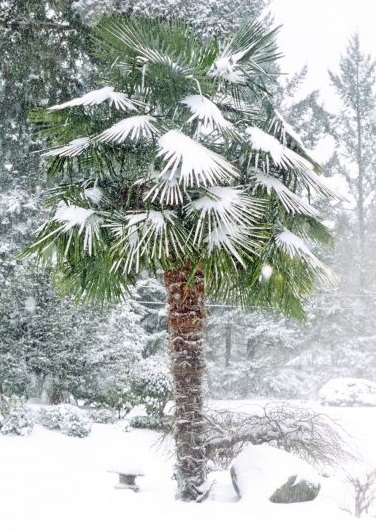
The Chinese Windmill Palm is widely regarded as the world's most cold-hardy trunk-forming palm and is famous for bringing a tropical appearance to regions where few other palms can survive. Native to mountainous regions of China, Myanmar, and northern India, this remarkably adaptable palm has become a favorite of gardeners from the Deep South to parts of Europe, the Pacific Northwest, and even protected locations much farther north.
Its fan-shaped leaves, distinctive fiber-covered trunk, and exceptional cold tolerance have earned it a reputation as one of the most reliable landscape palms ever introduced into cultivation.
Plant Characteristics- Botanical Name: Trachycarpus fortunei
- Common Names: Chinese Windmill Palm, Chusan Palm, Windmill Palm
- Mature Height: 20 to 40 feet
- Mature Spread: 8 to 12 feet
- Growth Rate: Moderate
- USDA Zones: 7a to 11
- Cold Hardiness: Approximately 0°F to 5°F (-18°C to -15°C)
- Sun Exposure: Full Sun to Partial Shade
- Soil Requirements: Well-drained soils of most types
Chinese Windmill Palm is often the palm of choice for gardeners living outside traditional palm-growing regions. Its compact size and cold tolerance make it suitable for a wide variety of landscapes.
- Tropical-themed gardens
- Courtyard plantings
- Poolside landscapes
- Japanese gardens
- Protected urban landscapes
- Cold-climate palm collections
- Container specimens
It is particularly striking when planted near stone walls, entryways, or other structures that help showcase its textured trunk and graceful fan-shaped leaves.
Important Palm NoteFew palms can match the cold tolerance of Trachycarpus fortunei. Mature specimens have survived heavy snowfalls, ice storms, and temperatures well below freezing, making it one of the most successful palms grown in temperate climates.
Germination Information- Soak seeds in warm water for 24 to 48 hours.
- Plant in a well-draining germination medium.
- Maintain temperatures between 75°F and 90°F.
- Keep consistently moist.
- Germination usually occurs within 1 to 3 months.
Fresh seed generally germinates faster and more uniformly than older seed.
Growing Information- Plant in full sun or partial shade.
- Water regularly during establishment.
- Provide good drainage, especially in colder climates.
- Apply palm fertilizer during the growing season.
- Protect young plants during extreme cold events.
- Remove only dead or damaged fronds.
Once established, Windmill Palm is remarkably easy to maintain and adapts well to a wide range of growing conditions.
Snow and Cold ToleranceOne of the most remarkable features of Chinese Windmill Palm is its ability to withstand snow. Mature specimens are frequently photographed carrying substantial snow loads on their leaves, creating one of the most unusual and beautiful sights in the gardening world—a tropical-looking palm standing proudly in a winter landscape.
Unlike many palms, snow itself rarely harms healthy plants. Extended periods of severe cold are generally more challenging than snow accumulation.
Wildlife ValueThe flowers attract bees and other pollinators, while the fruits may be consumed by birds. Dense crowns can provide shelter for nesting birds and beneficial wildlife.
Historical and Cultural TidbitsThe species was introduced to Europe during the 1800s and quickly gained popularity because it could survive winters that killed most tropical palms. It soon became a prized ornamental in England, France, Germany, and other parts of Europe.
The species name honors Scottish botanist and plant explorer Robert Fortune, who introduced numerous Asian plants to Western horticulture during the nineteenth century.
In China, fibers from the trunk were traditionally harvested and used to make ropes, brushes, mats, and coarse textiles.
Botanical Facts- Trachycarpus fortunei belongs to the Arecaceae family.
- The trunk is naturally covered with dense brown fibers.
- The fan-shaped leaves may reach 3 feet across.
- Male and female flowers are usually borne on separate plants.
- It naturally occurs in mountainous regions rather than tropical lowlands.
- The genus name "Trachycarpus" means "rough fruit."
For gardeners dreaming of growing palms in colder climates, Chinese Windmill Palm is often the gateway species. It combines genuine palm beauty with remarkable toughness, allowing gardeners far beyond the tropics to enjoy the elegance of a true palm tree in their landscape.
Interesting FactMature Windmill Palms have survived outdoor winters in parts of England, Germany, Switzerland, the Pacific Northwest, and even protected locations in Canada. Few other trunk-forming palms can claim such an impressive cold-weather résumé.
Palm Rating: ★★★★★The ultimate cold-hardy palm, combining tropical beauty, snow tolerance, durability, and exceptional adaptability.
For additional growing information, see our Chinese Windmill Palm Seeds AI fact sheet.
For over a thousand more unique seed varieties, all in stock and ready to ship, visit our Seed Catalog Index Page .

Contact Us | Privacy Policy | About Us
Serving gardeners since 1992
State of Mississippi Seedmen's Permit #C-391, Ohio 90152, Minnesota 20086777