
Edible Date Palm Seeds
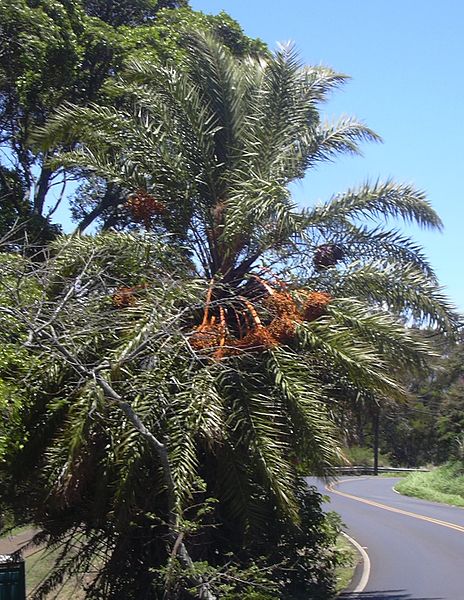

Edible Date Palm is one of the oldest cultivated fruit trees in human history and among the most economically important palms in the world. Native to the arid regions of the Middle East and North Africa, this magnificent species has sustained civilizations for thousands of years through its nutritious and delicious fruit.
Often referred to as the "Tree of Life" in desert cultures, Phoenix dactylifera has provided food, shelter, fiber, building materials, and economic prosperity across some of the harshest environments on Earth. Few plants have played such a significant role in the development of human civilization.
Plant CharacteristicsEdible Date Palm develops a stout trunk crowned by a massive canopy of arching feather-like fronds. Mature specimens commonly reach 50 to 80 feet in height and may live for more than a century.
The elegant blue-green foliage creates a dramatic tropical silhouette that has become synonymous with oasis landscapes throughout the world.
Mature trees often produce offshoots at the base, allowing prized varieties to be propagated vegetatively.
Fruit ProductionDate Palm produces large hanging clusters of sweet, nutritious fruits known simply as dates. Depending upon the variety, fruits may range from golden yellow and amber to deep reddish-brown.
Dates are rich in natural sugars, fiber, minerals, and antioxidants and have served as a staple food for desert peoples for thousands of years.
Many varieties are considered among the finest fruits in the world.
Landscape UsesThis species is ideal for desert landscapes, Mediterranean gardens, resort plantings, avenue plantings, public parks, and large specimen gardens.
Its towering stature and historic significance make it one of the most impressive palms available.
Rows of mature Date Palms create some of the most iconic landscapes found anywhere on Earth.
Cold HardinessEdible Date Palm is generally suitable for USDA Zones 9-11.
It tolerates occasional light freezes but performs best in regions with long, hot summers and relatively mild winters.
Dry heat is particularly beneficial for fruit ripening.
Container GrowingYoung plants may be grown in large containers for several years, but their eventual size makes permanent landscape planting necessary for mature development.
Provide excellent drainage and abundant sunlight.
GerminationSow fresh seeds in a warm, moist growing medium and maintain temperatures between 80°F and 100°F.
Fresh seed generally germinates reliably when warmth and moisture are provided consistently.
Seedlings are vigorous and develop attractive juvenile foliage.
Growing InformationDate Palm thrives in full sun and well-drained soils. Once established, it demonstrates exceptional drought tolerance and remarkable adaptation to desert conditions.
Deep watering during establishment encourages development of a strong root system.
The species prefers hot, sunny locations and performs best where summers are long and warm.
Wildlife ValueThe fruits provide food for birds, mammals, and humans alike. In oasis environments, Date Palms often serve as keystone species that support entire ecosystems.
The canopy also offers shade and shelter in otherwise harsh desert landscapes.
Interesting Botanical FactsDate Palm is one of the oldest cultivated fruit crops known to humanity, with evidence of cultivation dating back more than 5,000 years.
The species is dioecious, meaning male and female flowers occur on separate trees.
Commercial orchards often use hand pollination to maximize fruit production.
A single mature palm can produce hundreds of pounds of fruit annually under favorable conditions.
Historical NotesAncient civilizations of Mesopotamia, Egypt, Persia, and Arabia depended heavily upon Date Palms. The tree appears in some of humanity's oldest written records and has been celebrated in religious texts, literature, and art for millennia.
Entire oasis communities were built around date production, and trade in dates helped connect cultures across vast desert regions.
For thousands of years, travelers crossing the Sahara and Arabian deserts relied upon dates as a portable, energy-rich food source.
Growing TipProvide full sun and excellent drainage. The hotter and sunnier the location, the happier a Date Palm will be.
Seedman NoteFew plants combine beauty, utility, and historical importance as completely as the Edible Date Palm. It is truly one of the great plants of human civilization.
Additional Seedman NoteIf Coconut Palm represents tropical islands and Royal Palm represents elegance, Date Palm represents history itself. Long before modern agriculture, before many nations existed, and before some of the world's greatest cities were built, people were cultivating Date Palms and harvesting their fruit. Standing beneath a mature Date Palm is standing beneath a living link to thousands of years of human history. Few trees on Earth can make that claim.
For additional growing information, see our Edible Date Palm Seeds AI fact sheet.
For over a thousand more unique seed varieties, all in stock and ready to ship, visit our Seed Catalog Index Page .

Contact Us | Privacy Policy | About Us
Serving gardeners since 1992
State of Mississippi Seedmen's Permit #C-391, Ohio 90152, Minnesota 20086777