
Traveler's Palm Seeds
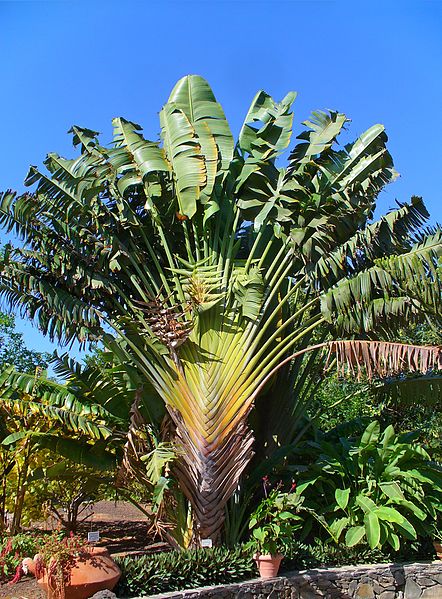
Traveler's Palm is one of the most recognizable and spectacular tropical plants in the world. Native to Madagascar, this extraordinary species is famous for its perfectly arranged fan-shaped display of enormous leaves that spread outward like a giant green peacock tail.
Despite its common name, Ravenala madagascariensis is not actually a true palm. It is more closely related to bananas and bird-of-paradise plants. Nevertheless, its majestic appearance and tropical character have earned it a permanent place among the world's most admired landscape plants.
Few plants create such a dramatic architectural statement in the garden.
Plant CharacteristicsTraveler's Palm develops a massive trunk-like base topped by huge banana-like leaves arranged in a single flat plane. Mature specimens commonly reach 30 to 50 feet in height, with leaf fans often spreading 20 feet or more across.
The symmetrical fan arrangement creates one of the most distinctive silhouettes found anywhere in the plant kingdom.
Mature specimens instantly become focal points in the landscape.
Landscape UsesThis species is ideal for tropical gardens, resort landscapes, botanical gardens, estate plantings, parks, and large residential properties.
Its dramatic form makes it one of the finest specimen plants available.
Traveler's Palm is often positioned where its unique fan shape can be viewed from a distance.
Cold HardinessTraveler's Palm is generally suitable for USDA Zones 10b-12.
It thrives in warm tropical climates and should be protected from frost.
Consistent warmth and humidity encourage vigorous growth.
Container GrowingYoung plants may be grown in large containers for several years, but their eventual size makes landscape planting necessary for mature development.
Provide fertile soil, regular watering, and ample growing space.
GerminationSow fresh seeds in a warm, moist growing medium and maintain temperatures between 80°F and 95°F.
Fresh seed generally germinates reliably under warm tropical conditions.
Seedlings initially resemble young banana plants before developing their distinctive fan arrangement.
Growing InformationTraveler's Palm thrives in full sun to partial shade and rich, well-drained soils. Regular moisture promotes rapid growth and lush foliage.
It appreciates abundant water during the growing season but benefits from good drainage.
Established specimens become surprisingly robust and durable.
Wildlife ValueThe flowers produce nectar that attracts birds and pollinating insects in tropical environments.
The large foliage also provides shelter for birds and wildlife.
In its native habitat, several species depend upon Traveler's Palm as part of the local ecosystem.
Interesting Botanical FactsThe enormous leaf bases naturally collect rainwater.
The fan-shaped arrangement often grows on an east-west axis, helping maximize sunlight capture.
Although called a palm, Traveler's Palm belongs to the bird-of-paradise family, Strelitziaceae.
The blue seeds are among the most striking ornamental seeds produced by any tropical plant.
Historical NotesThe common name "Traveler's Palm" originates from the long-standing belief that thirsty travelers could obtain drinking water from the leaf bases, where rainwater accumulates naturally.
While this story contains some truth, the water is not always clean enough to drink safely. Nevertheless, the legend became so widespread that it permanently influenced the plant's common name.
Throughout Madagascar, the plant has long been used for building materials, roofing, and other practical purposes.
Growing TipPlant in an open location where the full fan can develop without obstruction. Crowded plantings diminish much of its spectacular visual impact.
Seedman NoteTraveler's Palm is one of the most dramatic architectural plants available. Its unique silhouette and tropical character make it unforgettable in any landscape.
Additional Seedman NoteIf Royal Palm represents elegance and Sealing Wax Palm represents color, Traveler's Palm represents geometry. The perfectly arranged fan of giant leaves appears almost too symmetrical to be natural. Rising above tropical gardens like a living sculpture, it demonstrates why Madagascar remains one of the world's greatest botanical treasure houses. Few plants inspire more photographs, more questions, or more admiration than this remarkable species.
For additional growing information, see our Traveler's Palm Seeds AI fact sheet.
For over a thousand more unique seed varieties, all in stock and ready to ship, visit our Seed Catalog Index Page .

Contact Us | Privacy Policy | About Us
Serving gardeners since 1992
State of Mississippi Seedmen's Permit #C-391, Ohio 90152, Minnesota 20086777