
Blue Passionflower Seeds
★★★★★ Exotic Flowering Vine Rating: 5 out of 5 Stars
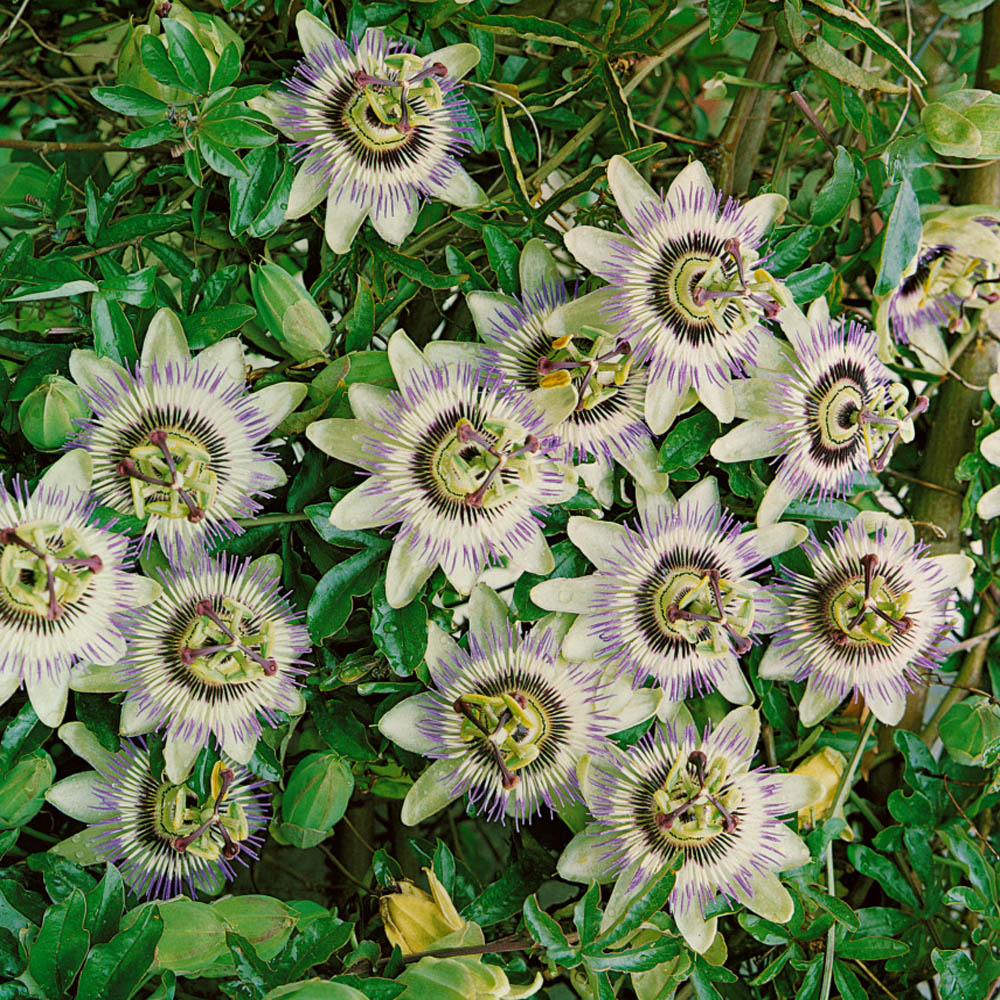
Blue Passionflower is one of the most extraordinary flowering vines in the world. Renowned for its intricate, almost otherworldly blossoms, this vigorous climber produces large white flowers adorned with striking rings of blue, violet, and purple filaments that create a truly unforgettable display. Each bloom appears as though it was designed by an artist rather than nature.
Native to South America, Blue Passionflower combines exotic beauty with surprising hardiness, making it one of the easiest Passionflowers to grow. Its rapid growth, fragrant flowers, attractive foliage, and ornamental fruit have made it a favorite among gardeners, pollinator enthusiasts, and collectors of unusual plants.
When in bloom, few vines attract more attention or admiration.
Plant Characteristics- Botanical Name: Passiflora caerulea
- Common Names: Blue Passionflower, Common Passion Flower, Blue Crown Passionflower
- Plant Type: Perennial climbing vine
- Mature Length: 15 to 30 feet
- Growth Rate: Fast
- USDA Zones: 6 to 10
- Flower Color: White petals with blue, violet, and purple corona filaments
- Bloom Time: Summer through fall
- Fruit: Orange-yellow egg-shaped fruits
- Foliage: Glossy deep green five-lobed leaves
Blue Passionflower is ideal for trellises, pergolas, fences, arbors, garden walls, privacy screens, butterfly gardens, tropical gardens, and patio containers.
Its exotic flowers create an immediate focal point wherever it is planted.
Germination InformationPassionflower seeds require patience but germinate reliably when provided warmth.
- Soak seeds in warm water for 24 hours before sowing.
- Sow approximately 1/4 inch deep.
- Maintain temperatures between 75 and 85°F.
- Keep soil consistently moist.
- Provide bright light.
- Germination may occur within 2 to 8 weeks, sometimes longer.
Fresh seed often germinates more quickly than older seed.
Growing InformationBlue Passionflower thrives in full sun to partial shade and prefers fertile, well-drained soil.
Regular watering encourages vigorous growth and abundant flowering, although established plants exhibit moderate drought tolerance.
Provide sturdy supports, as mature vines can become substantial.
In colder climates, top growth may die back during winter while roots survive and regrow in spring.
Container GrowingBlue Passionflower performs very well in large containers equipped with trellises or decorative supports.
Container-grown plants can be moved indoors or protected during severe winter weather in colder regions.
Its spectacular flowers make it a favorite patio specimen.
Pollinator ValueThe intricate flowers attract bees, butterflies, hummingbirds, and numerous beneficial pollinators.
Many species of native bees are particularly attracted to Passionflowers.
Wildlife ValuePassionflower vines serve as larval host plants for several butterfly species, including Gulf Fritillaries in warmer regions.
The flowers and fruit contribute valuable food resources for wildlife.
Historical and Cultural FactsSpanish missionaries in South America gave Passionflowers their common name because they believed various parts of the flower symbolized elements of the Passion of Christ.
The corona filaments were said to represent the crown of thorns, while other flower structures symbolized nails, wounds, and apostles.
This symbolic interpretation helped spread Passionflowers throughout Europe and beyond.
Botanical Facts- Member of the Passifloraceae family.
- Produces some of the most complex flowers in the plant kingdom.
- Climbs using specialized tendrils.
- Flowers may reach 4 inches or more across.
- One of the most cold-hardy Passionflower species.
- Produces ornamental orange fruits after flowering.
The egg-shaped orange fruits are ornamental and edible when fully ripe, although generally less flavorful than commercial passion fruits.
The fruits add additional seasonal interest after flowering has ended.
Seedman's NoteBlue Passionflower is a plant that never fails to inspire curiosity. The remarkable flowers appear almost too intricate to be natural, making it one of the most fascinating vines available to gardeners.
Additional Seedman's NoteIf you're looking for a vine that combines tropical beauty, pollinator value, fascinating history, and surprising hardiness, Blue Passionflower is an outstanding choice. Its spectacular blooms remain among the most unforgettable flowers found in any garden.
For additional growing information, see our Blue Passionflower Seeds AI fact sheet.
For over a thousand more unique seed varieties, all in stock and ready to ship, visit our Seed Catalog Index Page .

Contact Us | Privacy Policy | About Us
Serving gardeners since 1992
State of Mississippi Seedmen's Permit #C-391, Ohio 90152, Minnesota 20086777