
Rocky Mountain Juniper Seeds
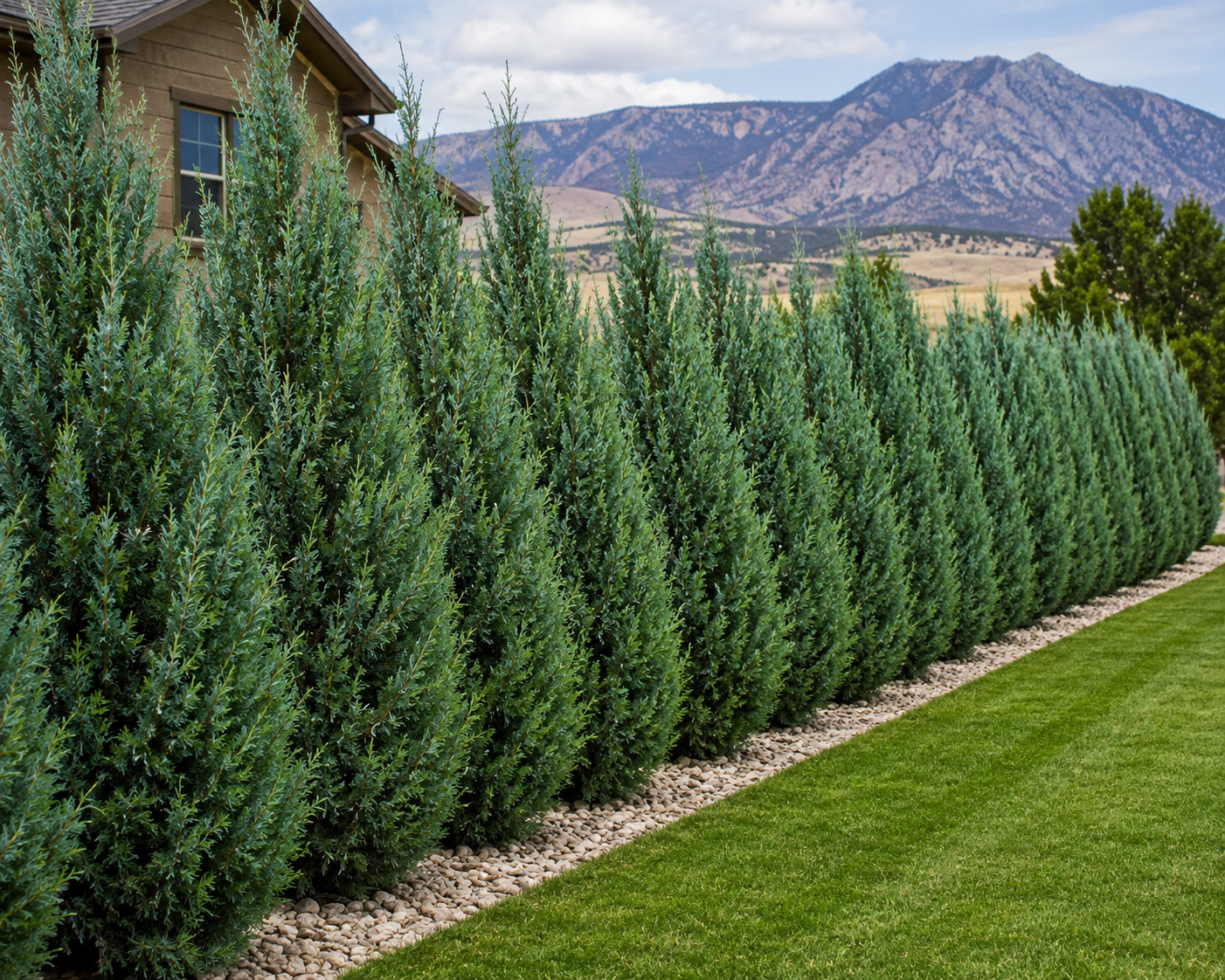
Rocky Mountain Juniper (Juniperus scopulorum) is one of the finest evergreen screening and windbreak plants for cold, dry climates. Native to the rugged mountains and foothills of western North America, this hardy conifer is valued for its attractive blue-green foliage, exceptional drought tolerance, and ability to form a dense year-round privacy screen. While not a traditional formal hedge plant, it excels as a low-maintenance living wall, shelterbelt, and wildlife hedge.
Plant CharacteristicsRocky Mountain Juniper is an evergreen conifer with a naturally upright, narrow growth habit. Many forms display attractive blue-green to silvery foliage that provides year-round color and texture.
- Botanical Name: Juniperus scopulorum
- Common Name: Rocky Mountain Juniper
- Plant Type: Evergreen conifer
- Mature Height: 20-50 feet
- Hedge Height: Commonly maintained at 8-20 feet
- Spread: 6-15 feet
- Growth Rate: Moderate
- USDA Zones: 3-8
- Sun Exposure: Full sun
Rocky Mountain Juniper is especially useful for:
- Privacy screens
- Windbreaks
- Shelterbelts
- Property boundaries
- Wildlife cover plantings
- Rural landscapes
- Drought-tolerant gardens
- Low-maintenance screening
Its dense evergreen foliage provides year-round screening even in harsh climates where many other hedge plants struggle.
Important Hedge NoteUnlike Boxwood or Privet, Rocky Mountain Juniper should not be treated as a formal clipped hedge. It performs best as a natural or lightly pruned screening hedge where its upright form can develop naturally.
For privacy screening, plants are typically spaced 6 to 8 feet apart. When mature, they create an attractive evergreen wall with minimal maintenance requirements.
Germination Instructions- Remove seeds from mature berry-like cones.
- Clean thoroughly and soak for 24 hours.
- Cold stratify for 90 to 120 days.
- Sow in a well-drained growing medium.
- Keep moist but not waterlogged.
- Germination may occur over several months.
Juniper seeds are naturally slow to germinate and patience is often required.
Growing InformationRocky Mountain Juniper thrives in full sun and is highly adaptable to poor, rocky, sandy, and drought-prone soils. Once established, it requires very little supplemental water and is one of the most drought-tolerant evergreen screening plants available.
The species is extremely cold hardy and performs well in areas with harsh winters and strong winds.
Container GrowingYoung plants can be grown successfully in containers for several years.
- Use deep containers with excellent drainage.
- Water regularly during establishment.
- Avoid overwatering.
- Transplant to the landscape before plants become rootbound.
Long-term container culture is generally less desirable due to the plant's eventual size.
Pollinator ValueJunipers are wind pollinated and provide limited direct pollinator benefits. However, they contribute valuable habitat diversity within the landscape.
Pollinator Rating: ★★☆☆☆
Wildlife ValueThe blue berry-like cones provide food for numerous bird species including cedar waxwings, robins, bluebirds, grouse, and wild turkeys. Dense evergreen foliage offers year-round shelter and nesting sites.
Wildlife Rating: ★★★★★
Historical and Cultural SignificanceRocky Mountain Juniper has long been valued throughout the American West for its durability and usefulness. Native peoples utilized the wood for tools, fuel, and ceremonial purposes, while settlers frequently planted junipers around homesteads as windbreaks and shelterbelts.
Many historic farmstead plantings established during the Dust Bowl era continue to provide protection and wildlife habitat today.
Interesting Botanical Facts- The species naturally grows on mountain slopes up to 9,000 feet in elevation.
- Its blue berry-like cones are actually modified seed cones.
- Rocky Mountain Juniper can survive drought conditions that would kill many other evergreens.
- Some specimens may live several hundred years.
- The aromatic wood is naturally resistant to decay and insects.
- It is closely related to Eastern Red Cedar.
If your goal is a hardy, evergreen privacy screen that can withstand cold winters, drought, poor soils, and strong winds, Rocky Mountain Juniper is one of the best choices available. It provides dependable screening with very little maintenance.
Additional Seedman NoteWhile it may not be a traditional clipped hedge plant, Rocky Mountain Juniper excels as a screening hedge, shelterbelt, and windbreak. For gardeners in challenging climates, few evergreens offer a better combination of toughness, beauty, and longevity.
Hedge Plant Rating- Privacy Screening: ★★★★☆
- Evergreen Foliage: ★★★★★
- Drought Tolerance: ★★★★★
- Cold Hardiness: ★★★★★
- Windbreak Value: ★★★★★
- Wildlife Value: ★★★★★
- Pruning Tolerance: ★★☆☆☆
- Overall Hedge Performance: ★★★★☆
Overall Hedge Rating: ★★★★☆
Rocky Mountain Juniper is one of the premier evergreen screening hedges for cold and dry climates. Its outstanding hardiness, wildlife value, and low-maintenance nature make it an exceptional choice for windbreaks, shelterbelts, and privacy screens.
For over a thousand more unique seed varieties, all in stock and ready to ship, visit our Seed Catalog Index Page.

Contact Us | Privacy Policy | About Us
Serving gardeners since 1992
State of Mississippi Seedmen's Permit #C-391, Ohio 90152, Minnesota 20086777