
Hyacinth Bean Seeds
★★★★★ Ornamental & Edible Vine Rating: 5 out of 5 Stars
Hyacinth Bean is one of the most versatile and beautiful climbing plants in cultivation. Grown for centuries throughout the tropics and subtropics, this vigorous vine combines attractive flowers, ornamental seed pods, lush foliage, and edible qualities into a single remarkable garden plant.
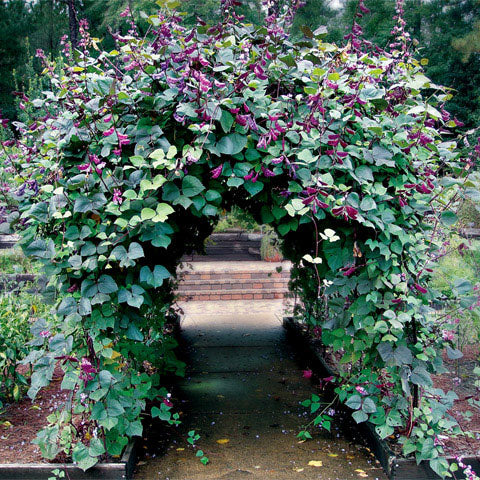
Throughout the growing season, Hyacinth Bean produces clusters of fragrant pea-like flowers in shades of lavender, rose-purple, or white, followed by decorative seed pods that often display rich purple coloration. The fast-growing vines quickly cover trellises, fences, pergolas, and arbors, creating a lush tropical appearance while attracting pollinators and adding vertical interest to the landscape.
Whether grown as an ornamental climber, edible crop, wildlife plant, or privacy screen, Hyacinth Bean delivers months of beauty and productivity.
Plant Characteristics- Botanical Name: Dolichos lablab (Lablab purpureus)
- Common Names: Hyacinth Bean, Lablab Bean, Egyptian Bean, Indian Bean
- Plant Type: Annual or tender perennial climbing vine
- Mature Length: 10 to 20 feet
- Growth Rate: Very fast
- USDA Zones: 9 to 11 as a perennial, annual elsewhere
- Flower Color: Lavender, rose-purple, pink, or white
- Bloom Time: Summer through frost
- Fruit: Decorative flat bean pods
Hyacinth Bean is ideal for arbors, pergolas, trellises, fences, privacy screens, vegetable gardens, edible landscapes, butterfly gardens, and cottage gardens.
Its rapid growth makes it one of the best annual vines for quickly covering structures and creating seasonal privacy.
Germination InformationSeeds germinate readily in warm soil.
- Sow seeds approximately 1 inch deep.
- Plant after all danger of frost has passed.
- Maintain soil temperatures above 70°F.
- Keep soil evenly moist.
- Provide full sun.
- Germination generally occurs within 7 to 14 days.
Direct sowing is usually recommended for strongest growth.
Growing InformationHyacinth Bean thrives in full sun and fertile, well-drained soils rich in organic matter.
Regular watering encourages lush growth and heavy flowering. Once established, plants tolerate heat well and continue blooming throughout the summer.
Provide sturdy supports, as mature vines can become quite heavy.
Container GrowingHyacinth Bean performs beautifully in large decorative containers fitted with trellises or obelisks.
Container-grown plants provide excellent vertical accents for patios, decks, balconies, and courtyard gardens.
Regular watering and occasional feeding help maintain vigorous growth and flowering.
Pollinator ValueThe fragrant flowers attract honeybees, native bees, butterflies, hummingbirds, and numerous beneficial insects.
Blooming continues for months, making the plant a valuable nectar source throughout the growing season.
Wildlife ValueDense foliage provides shelter for beneficial insects while flowers support pollinator populations.
The extended bloom period contributes significantly to pollinator-friendly gardens.
Historical and Cultural FactsHyacinth Bean has been cultivated for more than 3,000 years and is believed to have originated in Africa.
It became an important food crop throughout Asia, India, and the Middle East, where it remains widely grown today.
Thomas Jefferson reportedly grew Hyacinth Beans at Monticello, helping popularize the plant in American gardens.
Botanical Facts- Member of the Fabaceae (Bean) family.
- Capable of fixing atmospheric nitrogen, improving soil fertility.
- Produces ornamental flowers, pods, and seeds.
- One of the oldest cultivated bean species.
- Can flower continuously until frost.
- Combines ornamental and agricultural value in a single plant.
In many parts of the world, young pods, immature beans, leaves, and flowers are used as food. Proper preparation is important, as mature beans require cooking before consumption.
Hyacinth Bean remains an important food crop in tropical and subtropical agriculture.
Seedman's NoteFew vines offer the combination of beauty, usefulness, and historical significance found in Hyacinth Bean. Its rapid growth, attractive flowers, and decorative pods make it one of the most rewarding climbing plants for gardeners.
Additional Seedman's NoteIf you're looking for a vine that can quickly cover a trellis while providing flowers, ornamental seed pods, pollinator activity, and edible potential, Hyacinth Bean is an outstanding choice. It remains one of the finest dual-purpose vines available from seed.
For over a thousand more unique seed varieties, all in stock and ready to ship, visit our Seed Catalog Index Page .

Contact Us | Privacy Policy | About Us
Serving gardeners since 1992
State of Mississippi Seedmen's Permit #C-391, Ohio 90152, Minnesota 20086777