
Kenilworth Ivy Seeds
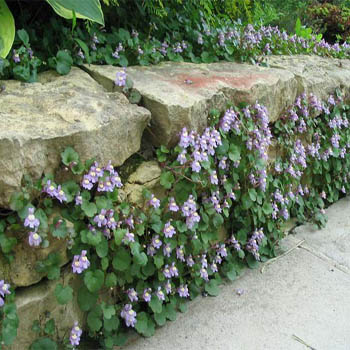
★★★★★ Rock Garden & Wall Plant Rating: 5 out of 5 Stars
Kenilworth Ivy is one of the most charming and adaptable creeping plants available to gardeners. Despite its common name, it is not a true ivy, but rather a delicate trailing perennial prized for its tiny lavender flowers, attractive rounded foliage, and remarkable ability to grow in stone walls, rock gardens, and crevices where few other plants can thrive.
Native to southern Europe, this enchanting little plant produces masses of snapdragon-like blossoms that appear to float above the foliage from spring through autumn. Its trailing stems naturally drape over walls and rocks, creating a soft, cascading effect that has delighted gardeners for centuries.
Few plants are better suited for softening stonework and adding old-world charm to the garden.
Plant Characteristics- Botanical Name: Cymbalaria muralis
- Common Names: Kenilworth Ivy, Ivy-Leaved Toadflax, Coliseum Ivy
- Plant Type: Herbaceous perennial
- Mature Spread: 12 to 24 inches or more
- Growth Rate: Moderate
- USDA Zones: 4 to 9
- Flower Color: Lavender-purple with yellow throats
- Bloom Time: Spring through fall
- Foliage: Small rounded ivy-like green leaves
Kenilworth Ivy is ideal for stone walls, rock gardens, pathways, retaining walls, crevice gardens, hanging baskets, containers, alpine gardens, and woodland edges.
It is particularly effective when allowed to spill naturally from cracks in stonework and masonry.
Germination InformationSeeds require light for successful germination.
- Sow seeds on the soil surface.
- Do not cover the seeds.
- Maintain temperatures between 60 and 70°F.
- Keep soil lightly moist.
- Provide bright indirect light.
- Germination usually occurs within 14 to 28 days.
Kenilworth Ivy thrives in partial shade to full sun, especially in cooler climates. It prefers well-drained soils and adapts readily to rocky or poor soils.
Once established, plants require very little maintenance and often self-seed gently into suitable crevices and cracks.
Its natural tendency to colonize stone walls contributes greatly to its charm.
Container GrowingKenilworth Ivy performs beautifully in containers, trough gardens, hanging baskets, and decorative planters.
Its cascading stems create attractive trailing displays that soften container edges and provide months of delicate flowers.
Pollinator ValueThe small nectar-rich flowers attract bees, hoverflies, and other beneficial pollinating insects.
Its long flowering season provides valuable nectar resources over many months.
Wildlife ValueDense mats of foliage provide shelter for beneficial insects and small garden wildlife.
The extended bloom period supports a variety of pollinator species.
Historical and Cultural FactsKenilworth Ivy has been cultivated in European gardens for centuries and became especially popular during the Victorian era.
It earned the common name "Kenilworth Ivy" from its abundance on the walls of historic Kenilworth Castle in England.
Another common name, "Coliseum Ivy," comes from its habit of growing among the ancient stonework of Rome's famous Colosseum.
Botanical Facts- Member of the Plantaginaceae family.
- Not actually related to true ivies.
- Produces snapdragon-like flowers.
- Develops unique seed stalks that bend toward cracks and crevices.
- Often self-seeds into stone walls and masonry.
- One of the finest plants for naturalizing old stone structures.
After flowering, the seed stalks exhibit a remarkable behavior called positive phototropism reversal. Instead of growing toward light, the stems bend toward darkness, pushing developing seeds deep into cracks and crevices where they can successfully germinate.
This unusual adaptation helps explain the plant's success on walls and rocky surfaces.
Seedman's NoteKenilworth Ivy is one of those rare plants that seems perfectly designed for old stone walls and cottage gardens. Its delicate flowers and graceful growth create a timeless, romantic appearance.
Additional Seedman's NoteIf you're looking for a plant that can transform ordinary stonework into a living garden feature, Kenilworth Ivy is an outstanding choice. Its ability to colonize cracks and drape itself naturally over masonry creates a look that appears both effortless and centuries old.
More Growing Information: Read our AI fact sheet for Kenilworth Ivy.
For over a thousand more unique seed varieties, all in stock and ready to ship, visit our Seed Catalog Index Page .

Contact Us | Privacy Policy | About Us
Serving gardeners since 1992
State of Mississippi Seedmen's Permit #C-391, Ohio 90152, Minnesota 20086777