
Soapweed Yucca Seeds
★★★★★ Xeriscape Plant Rating: 5 out of 5 Stars
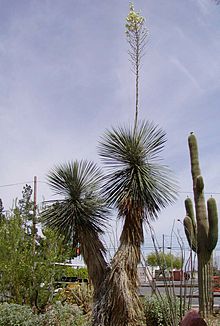
Soaptree Yucca is one of the most iconic plants of the American Southwest. Native to the deserts and grasslands of Texas, New Mexico, Arizona, and northern Mexico, this striking species is prized for its elegant blue-green foliage, towering flower stalks, extreme drought tolerance, and rich history of practical uses. Its tall trunk crowned with a fountain of narrow leaves creates a dramatic silhouette that instantly evokes the beauty of the desert landscape.
During flowering season, mature plants produce spectacular flower spikes that may reach 10 to 20 feet tall and are covered with hundreds of creamy-white bell-shaped blossoms. These impressive floral displays attract pollinators and can often be seen from great distances across open desert terrain.
Plant Characteristics- Botanical Name: Yucca elata
- Common Names: Soaptree Yucca, Soapweed Yucca, Palmilla
- Plant Type: Evergreen desert tree-like succulent
- Mature Height: 10 to 20 feet including trunk
- Flower Spike Height: Up to 20 feet
- Growth Rate: Slow to moderate
- USDA Zones: 5 to 10
- Flower Color: Creamy white
- Foliage: Narrow blue-green sword-shaped leaves
Soaptree Yucca is an outstanding choice for xeriscapes, desert gardens, rock gardens, drought-tolerant landscapes, Southwestern-themed plantings, and specimen plantings. Its architectural form makes it particularly valuable as a focal point in low-water landscapes.
The plant pairs beautifully with agaves, cacti, desert grasses, and other drought-tolerant species.
Germination InformationSeeds are generally easy to germinate when provided warmth and moisture.
- Soak seeds in warm water for 24 hours before planting.
- Sow approximately 1/4 to 1/2 inch deep.
- Use a well-drained cactus or succulent mix.
- Maintain temperatures between 70 and 85°F.
- Keep lightly moist until germination.
- Germination usually occurs within 2 to 8 weeks.
Soaptree Yucca thrives in full sun and well-drained soils. It tolerates sandy, rocky, alkaline, and poor soils exceptionally well.
Once established, it is among the most drought-tolerant landscape plants available and requires very little supplemental irrigation. Overwatering and poorly drained soils are the primary causes of failure.
Mature plants develop a sturdy trunk topped by a graceful crown of leaves that remains attractive year-round.
Container GrowingYoung plants adapt well to container culture and make attractive patio specimens. Use deep containers with excellent drainage and a gritty soil mix.
Container-grown plants require very little water and should be allowed to dry between waterings.
As plants mature, landscape planting is recommended to allow full development of the trunk and flowering stalk.
Pollinator ValueLike many yuccas, Soaptree Yucca maintains a fascinating relationship with specialized yucca moths, which serve as its primary pollinators. This partnership is considered one of nature's most remarkable examples of coevolution.
The flowers also attract bees and other beneficial insects.
Wildlife ValueThe flowers provide nectar for pollinators, while the seeds and structure offer resources for birds and desert wildlife. Mature plants contribute habitat diversity within arid ecosystems.
Historical and Cultural FactsNative American tribes utilized nearly every part of the Soaptree Yucca. The roots were processed into natural soap and shampoo, giving the plant its common name.
Fibers from the leaves were used to make ropes, baskets, sandals, brushes, and woven textiles.
The flower stalks, flowers, and fruits were traditionally harvested as food by several indigenous cultures throughout the Southwest.
Early settlers also adopted many of the plant's practical uses due to its abundance and versatility.
Botanical Facts- Member of the Asparagaceae family.
- Closely related to Joshua Trees and other yuccas.
- Produces flower spikes that may exceed the height of the plant itself.
- Extremely drought and heat tolerant.
- Can live for many decades in suitable conditions.
- Roots contain natural saponins that create a soap-like lather when mixed with water.
Soaptree Yucca combines striking beauty with remarkable toughness. Few plants can equal its ability to withstand drought, poor soils, and intense heat while still providing dramatic year-round ornamental value.
Additional Seedman's NoteIf you are creating a xeriscape or Southwestern garden, Soaptree Yucca deserves a prominent place. Its elegant silhouette, towering flower spikes, and fascinating history make it one of the finest desert plants available for landscape use.
More Growing Information: Read our AI fact sheet.
For over a thousand more unique seed varieties, all in stock and ready to ship, visit our Seed Catalog Index Page .

Contact Us | Privacy Policy | About Us
Serving gardeners since 1992
State of Mississippi Seedmen's Permit #C-391, Ohio 90152, Minnesota 20086777