
Sempervivum Seed ( Perennial )
Seedman Basic Info:Whether planted in large numbers or used as a single specimen Sempervivum are both beautiful and enduring. Houseleeks have a unique look. Their rosettes are fascinating with their succulent leaves radiating around the centre, their colour hues are stunning and their tendency to produce offsets makes for easy increase (hence the name "Hen and Chicks").
Leaf shape varies from short almost round leaves to long, tapering and finely pointed. The leaves may be dull or glossy, or covered with soft down. Colours range from bright yellow, through various shades of green, grey, pink, purple, red, orange and brown, to almost black in some varieties. The most colourful time is generally from March till June.
As drought-tolerant succulents they are hardy and easy to grow, requiring minimal care, only full sun and good drainage to thrive. Sempervivum plants successfully complement other rock-garden components, use them in alpine gardens, troughs and pots. They can be used as a groundcover between flagstones and they are especially suitable for green roofs or living walls.
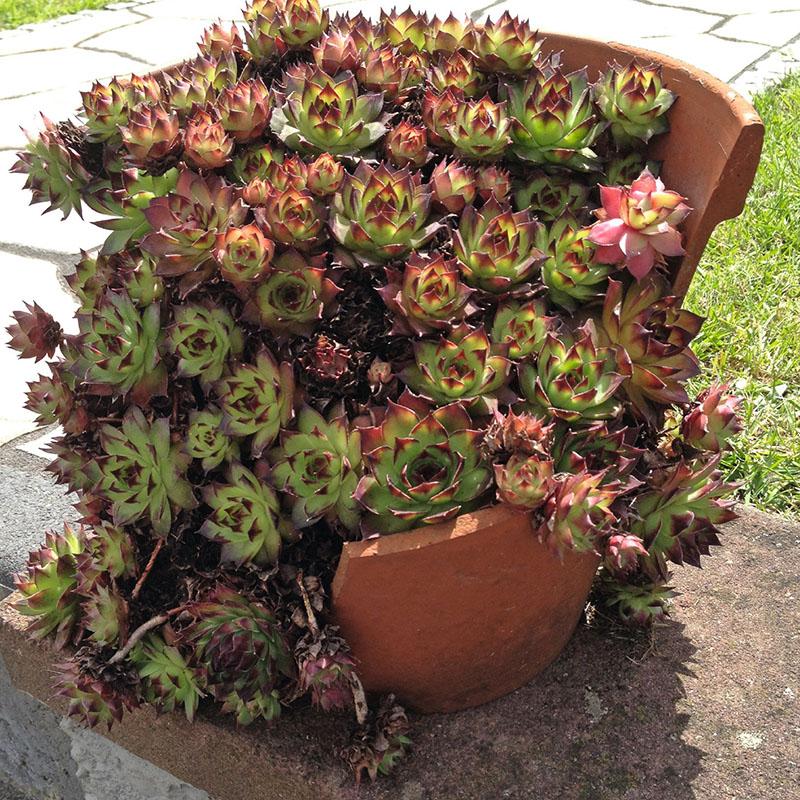
A colorful blend of hardy hens-and-chicks selected for outstanding foliage diversity, compact growth, and exceptional garden performance. Grown from convenient pelleted seeds, this unique mix produces an exciting range of rosettes in shades of emerald green, silver, blue-green, burgundy, mahogany, bronze, crimson, and purple. As the seasons change, many plants develop even richer colors, making every planting a living tapestry of ever-changing beauty. Perfect for rock gardens, containers, alpine troughs, and green roofs, Hippy Chicks offers remarkable color with almost no maintenance.
Garden UsesHippy Chicks is ideal for rock gardens, alpine gardens, fairy gardens, succulent bowls, patio containers, green roofs, stone walls, trough gardens, gravel gardens, and planting between stepping stones. The attractive rosettes provide outstanding texture and color throughout the year and combine beautifully with sedums, creeping thyme, saxifrages, dwarf ornamental grasses, hardy ice plants, and miniature conifers.
Growing InformationThe pelleted seeds make sowing much easier than handling the extremely tiny raw seed. Sow pellets on the surface of a fine, well-drained seed-starting mix and gently press them into the soil without covering deeply, as light improves germination. Maintain temperatures between 65° and 70°F while keeping the growing medium lightly moist. Germination generally occurs within 14 to 28 days.
Transplant seedlings into full sun or light afternoon shade in very well-drained sandy, gravelly, or rocky soil. Sempervivums thrive in lean soils and require very little supplemental watering once established. Avoid rich soils and excessive moisture, particularly during winter, as standing water can damage the rosettes. Mature plants gradually produce offsets, forming beautiful colonies that continue to expand each year.
Quick Facts| Characteristic | Details |
|---|---|
| Botanical Name | Sempervivum species mix |
| Common Name | Hippy Chicks Hens-and-Chicks Mix |
| Plant Type | Hardy Evergreen Succulent Perennial |
| Flower Color | Mixed Pink, Red, or Purple Shades |
| Foliage Color | Green, Silver, Blue-Green, Bronze, Burgundy, Crimson, Purple, and Mahogany |
| Bloom Time | Summer on Mature Rosettes |
| Height | 2–6 inches (flower stalks to 8–12 inches) |
| Spread | 6–18 inches by offsets |
| Sun Exposure | Full Sun to Light Partial Shade |
| Soil Requirements | Very well-drained sandy, gravelly, or rocky soil |
| Water Requirements | Very Low; extremely drought tolerant once established |
| USDA Zones | 3–8 |
| Garden Uses | Rock gardens, alpine gardens, containers, green roofs, trough gardens, fairy gardens, stone walls, and succulent displays |
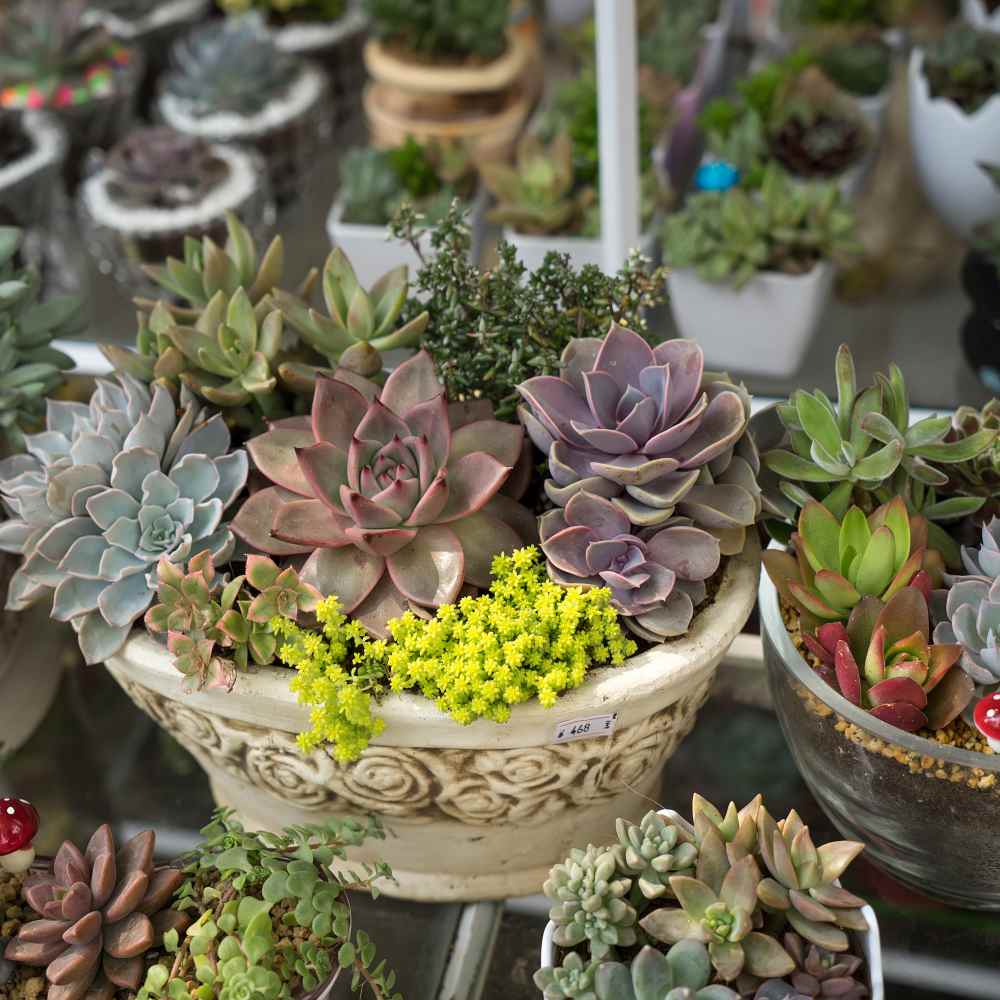
One of the world's most beloved hardy succulents, admired for its perfectly symmetrical rosettes, remarkable cold hardiness, and incredible range of foliage colors. This charming perennial forms neat rosettes known as "hens" that produce numerous smaller offsets, or "chicks," creating beautiful expanding colonies year after year. Depending on the variety and season, the foliage may display shades of emerald green, blue-green, silver, bronze, burgundy, crimson, purple, or nearly black. Exceptionally easy to grow, Hens and Chicks thrives where many other plants fail, making it an ideal choice for rock gardens, containers, green roofs, and alpine landscapes.
Garden UsesHens and Chicks is perfect for rock gardens, alpine gardens, succulent bowls, fairy gardens, trough gardens, green roofs, retaining walls, gravel gardens, containers, and planting between stepping stones. Its geometric rosettes create fascinating texture while providing year-round interest. It combines beautifully with sedums, creeping thyme, hardy ice plants, saxifrages, dwarf ornamental grasses, and miniature conifers.
Growing InformationSow seeds indoors 8 to 10 weeks before the final spring frost. Scatter seeds over the surface of a fine, sharply drained seed-starting mix and gently press them into the soil without covering deeply, as light improves germination. Maintain temperatures between 65° and 70°F while keeping the growing medium lightly moist. Germination generally occurs within 14 to 28 days.
Transplant seedlings into full sun or light afternoon shade in very well-drained sandy, gravelly, or rocky soil. Sempervivums prefer lean soils and should never remain in standing water. Once established, they require very little supplemental watering and tolerate heat, drought, cold, and poor soils with ease. Mature plants naturally produce offsets around the original rosette, gradually forming attractive colonies that expand from year to year.
Quick Facts| Characteristic | Details |
|---|---|
| Botanical Name | Sempervivum hybridum |
| Common Name | Hens and Chicks |
| Plant Type | Evergreen Succulent Perennial |
| Flower Color | Pink, Rose, Red, or Lavender depending on hybrid |
| Foliage Color | Green, Blue-Green, Silver, Bronze, Burgundy, Crimson, Purple, and Nearly Black depending on variety and season |
| Bloom Time | Summer on Mature Rosettes |
| Height | 2–6 inches (flower stalks to 8–12 inches) |
| Spread | 6–24 inches by offsets |
| Sun Exposure | Full Sun to Light Partial Shade |
| Soil Requirements | Very well-drained sandy, gravelly, or rocky soil |
| Water Requirements | Very Low; extremely drought tolerant once established |
| USDA Zones | 3–8 |
| Garden Uses | Rock gardens, alpine gardens, green roofs, containers, trough gardens, fairy gardens, retaining walls, and succulent displays |
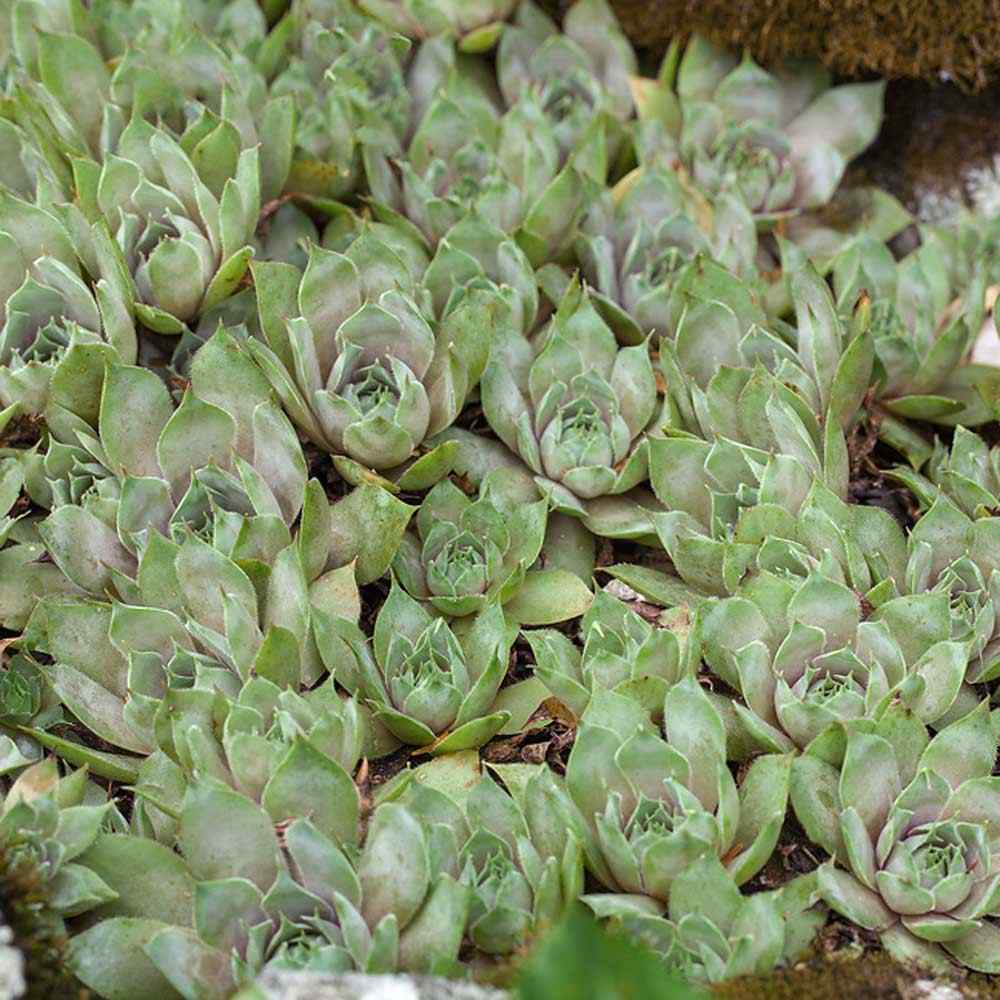
The original and most famous member of the Hens and Chicks family, treasured for centuries for its remarkable hardiness, perfectly symmetrical rosettes, and ability to thrive where few other plants can survive. Forming dense colonies of fleshy, pointed leaves in shades of green, blue-green, bronze, and reddish-purple, this evergreen succulent provides year-round beauty with almost no maintenance. During summer, mature rosettes produce impressive flower stalks topped with clusters of star-shaped pink blossoms before giving way to the next generation of young offsets, ensuring the colony continues to flourish for years to come.
Garden UsesCommon Houseleek is ideal for rock gardens, alpine gardens, green roofs, stone walls, trough gardens, succulent containers, fairy gardens, retaining walls, gravel gardens, and planting between stepping stones. Its attractive geometric rosettes provide year-round texture and pair beautifully with sedums, creeping thyme, saxifrages, hardy ice plants, dwarf ornamental grasses, and miniature conifers. It is equally at home in formal alpine collections and casual cottage gardens.
Growing InformationSow seeds indoors 8 to 10 weeks before the final spring frost. Scatter seeds over the surface of a fine, sharply drained seed-starting mix and gently press them into the soil without covering deeply, as light promotes germination. Maintain temperatures between 65° and 70°F while keeping the growing medium lightly moist. Germination generally occurs within 14 to 28 days.
Transplant seedlings into full sun or light afternoon shade in very well-drained sandy, gravelly, or rocky soil. Common Houseleek thrives in lean soils and should never remain in standing water. Once established, plants require very little supplemental watering and tolerate heat, drought, wind, poor soils, and severe winter cold. Mature plants naturally produce numerous offsets that gradually develop into attractive expanding colonies.
Quick Facts| Characteristic | Details |
|---|---|
| Botanical Name | Sempervivum tectorum |
| Common Name | Common Houseleek, Hens and Chicks |
| Plant Type | Evergreen Succulent Perennial |
| Flower Color | Rosy Pink to Red |
| Foliage Color | Green, Blue-Green, Bronze, with Red or Purple Highlights |
| Bloom Time | Mid to Late Summer on Mature Rosettes |
| Height | 2–6 inches (flower stalks to 8–16 inches) |
| Spread | 6–24 inches by offsets |
| Sun Exposure | Full Sun to Light Partial Shade |
| Soil Requirements | Very well-drained sandy, gravelly, or rocky soil |
| Water Requirements | Very Low; extremely drought tolerant once established |
| USDA Zones | 3–8 |
| Garden Uses | Rock gardens, alpine gardens, green roofs, stone walls, containers, fairy gardens, trough gardens, retaining walls, and succulent displays |

Contact Us | Privacy Policy | About Us
Serving gardeners since 1992
State of Mississippi Seedmen's Permit #C-391, Ohio 90152, Minnesota 20086777