
Our Favorite Poppy Flower Seeds
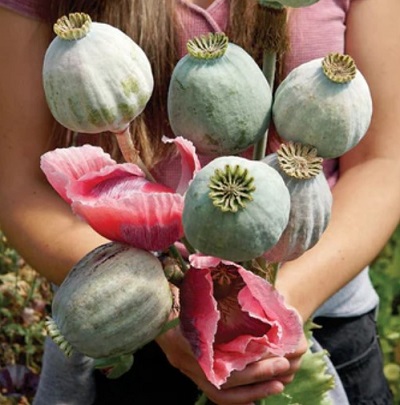
A remarkable heirloom breadseed poppy prized for its enormous globe-shaped seed pods, silky blooms, and dramatic garden presence. Selected for the cut flower industry as part of the Quality in Seed (QIS) series, this striking variety produces large flowers in shades of pink, mauve, lavender, and soft purple followed by exceptionally round seed capsules that resemble decorative bowling balls perched atop sturdy stems. Both the blooms and seed heads are highly valued in fresh and dried floral arrangements.
Garden Uses:
QIS Bowling Ball Poppy is ideal for cottage gardens, cutting gardens, borders, pollinator plantings, and dried flower arrangements. The elegant blooms pair beautifully with larkspur, bachelor buttons, snapdragons, cosmos, nigella, and ornamental grasses. After flowering, the large decorative seed pods continue to provide visual interest for weeks and are prized for fresh and dried floral work.
Growing Information:
Grow QIS Bowling Ball Poppy in full sun and well-drained soil. Direct sow seed outdoors in early spring or fall where winters are mild, as poppies dislike transplanting once established. Scatter seed on the soil surface and press lightly into place without deep covering. Germination typically occurs within 10-21 days under cool conditions. Thin seedlings to provide adequate spacing and avoid excessive fertilization, which may encourage foliage at the expense of flowers and seed pod development.
Quick Facts:
• Botanical Name: Papaver somniferum
• Plant Type: Annual Flower
• Height: 36-48 inches
• Spread: 12-18 inches
• Bloom Color: Pink, Lavender, Mauve, and Purple Shades
• Bloom Season: Late Spring to Early Summer
• Sun Requirements: Full Sun
• Water Requirements: Low to Moderate
• Attracts: Bees, Hoverflies, Beneficial Insects
• Best Uses: Cutting Gardens, Cottage Gardens, Borders, Dried Arrangements
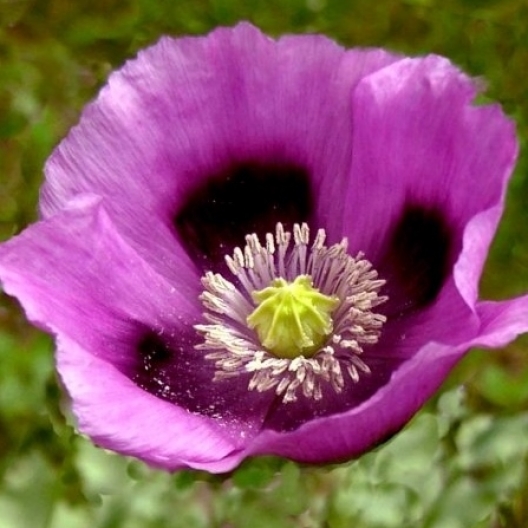
A beautiful annual poppy grown for its delicate cup-shaped blooms, ornamental blue-green foliage, and decorative rounded seed pods. The flowers often appear in soft shades of pink, lavender, mauve, and purple, sometimes with dramatic dark blotches near the center. After flowering, the plants form attractive seed capsules that add architectural interest to the garden and are valued in dried arrangements.
Garden Uses:
Hungarian Bread Seed Poppy is ideal for cottage gardens, cutting gardens, wildflower-style plantings, borders, and dried flower displays. The graceful blooms pair beautifully with larkspur, bachelor buttons, nigella, calendula, cosmos, and ornamental grasses. The large seed pods remain attractive after the petals fall, extending the plant's usefulness well beyond the bloom period.
Growing Information:
Grow Hungarian Bread Seed Poppy in full sun and well-drained soil. Direct sow seeds outdoors in early spring or fall, as poppies prefer to grow where they are planted and do not transplant well. Scatter seed on the soil surface and press lightly into place, covering only very lightly. Germination is best in cool conditions and usually occurs within 10-21 days. Thin seedlings to allow good air circulation and sturdy growth.
Quick Facts:
• Botanical Name: Papaver somniferum
• Plant Type: Annual Flower
• Height: 30-48 inches
• Spread: 12-18 inches
• Bloom Color: Pink, Mauve, Lavender, Purple, and White Shades
• Bloom Season: Late Spring to Early Summer
• Sun Requirements: Full Sun
• Water Requirements: Low to Moderate
• Attracts: Bees, Hoverflies, Beneficial Insects
• Best Uses: Cottage Gardens, Cutting Gardens, Borders, Dried Arrangements
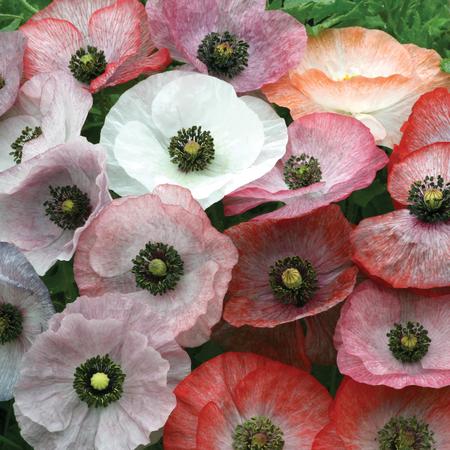
One of the most elegant and distinctive heirloom annual poppies available. Unlike traditional Shirley Poppies with bold solid colors, Mother of Pearl produces delicate, shimmering blooms in soft pastel shades that seem to change color depending on the light. Flowers appear in luminous tones of pearl pink, shell white, silvery lavender, rose, blush, and soft apricot, creating a watercolor effect across the garden. The silky, crepe-paper-like petals dance gracefully in the slightest breeze, adding movement and charm to cottage gardens, wildflower meadows, and cutting gardens.
Blooming from late spring through early summer, Mother of Pearl Poppy grows quickly from seed and creates attractive clumps of finely divided blue-green foliage topped with abundant flowers. Each bloom may reach 2 to 4 inches across, and while individual flowers are short-lived, plants continually produce new buds over several weeks. The flowers are followed by ornamental seed pods that are highly valued in dried flower arrangements and decorative crafts.
Garden Uses
Mother of Pearl Poppy is an excellent choice for cottage gardens, wildflower plantings, pollinator habitats, meadow gardens, borders, and naturalized landscapes. The soft pastel blooms blend beautifully with larkspur, bachelor's buttons, cosmos, sweet alyssum, nigella, and other old-fashioned annual flowers. The attractive seed pods provide additional ornamental value long after the petals have fallen.
Its airy growth habit makes it especially useful for filling gaps between perennials and adding a natural, romantic appearance to garden beds. It is equally effective when planted in large drifts where the subtle color variations can be fully appreciated.
Growing Information
Mother of Pearl Poppy performs best in full sun and well-drained soil. Like most annual poppies, it dislikes transplanting and should be direct-seeded where it is to grow. Sow seeds very shallowly, as light aids germination. Cool weather encourages the strongest growth and most abundant flowering.
Plants typically grow 24 to 36 inches tall and require little maintenance once established. Deadheading can extend the bloom period, although many gardeners allow seed pods to mature for ornamental use and natural reseeding. In favorable conditions, plants often self-sow gently, returning year after year without becoming invasive.
Quick Facts
- Botanical Name: Papaver rhoeas
- Common Name: Mother of Pearl Poppy
- Plant Type: Hardy Annual
- Height: 24–36 inches
- Spread: 12–18 inches
- Bloom Size: 2–4 inches
- Flower Colors: Pearl pink, blush, lavender, white, apricot, rose
- Sun Requirements: Full Sun
- Soil Requirements: Well-drained soil
- Water Needs: Low to Moderate
- Pollinator Friendly: Yes
- Deer Resistance: Moderate
- Suitable for Containers: Large Containers
- Self-Sowing: Often
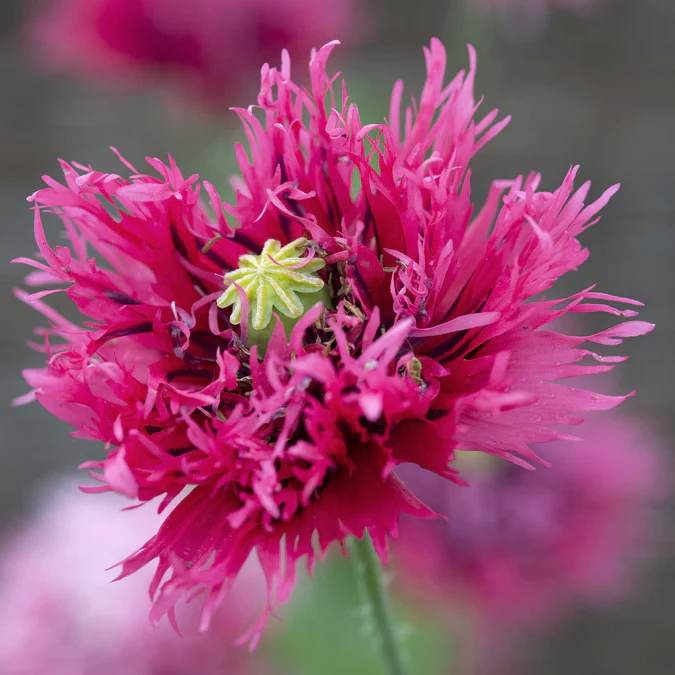
A spectacular fringed annual poppy grown for its deeply cut, feathered petals and rich rose-pink blooms. The flowers have a full, ruffled appearance that gives them a striking almost carnation-like look, yet they retain the delicate, silky texture that makes poppies so beloved. Each bloom rises above blue-green foliage on upright stems, creating a dramatic display in late spring to early summer gardens.
Garden Uses
Rose Feathers Poppy is excellent for cottage gardens, annual borders, cutting gardens, wildflower-style plantings, and heirloom flower beds. Its frilled blooms add texture and movement, making it especially attractive when planted among larkspur, bachelor’s buttons, nigella, cosmos, alyssum, and other old-fashioned annuals.
Growing Information
Sow seeds directly where plants are to grow, as poppies do not transplant well. Press seed lightly into prepared soil and cover very thinly, since light helps germination. Best growth occurs in full sun and well-drained soil. Plants usually reach 24 to 36 inches tall and bloom best during cool to mild weather.
Once established, Rose Feathers is easy to grow and requires little care. Water during dry spells, but avoid overly rich or wet soil. Allow some seed pods to mature if natural reseeding or decorative dried pods are desired.
Quick Facts
- Botanical Name: Papaver laciniatum
- Common Name: Rose Feathers Poppy
- Plant Type: Annual
- Height: 24–36 inches
- Spread: 12–18 inches
- Flower Color: Rose pink
- Bloom Season: Late spring to early summer
- Sun: Full sun
- Soil: Well-drained soil
- Water Needs: Low to moderate
- Best Use: Cottage gardens, borders, cutting gardens, wildflower plantings
- Pollinator Friendly: Yes
- Self-Sows: Often in favorable conditions
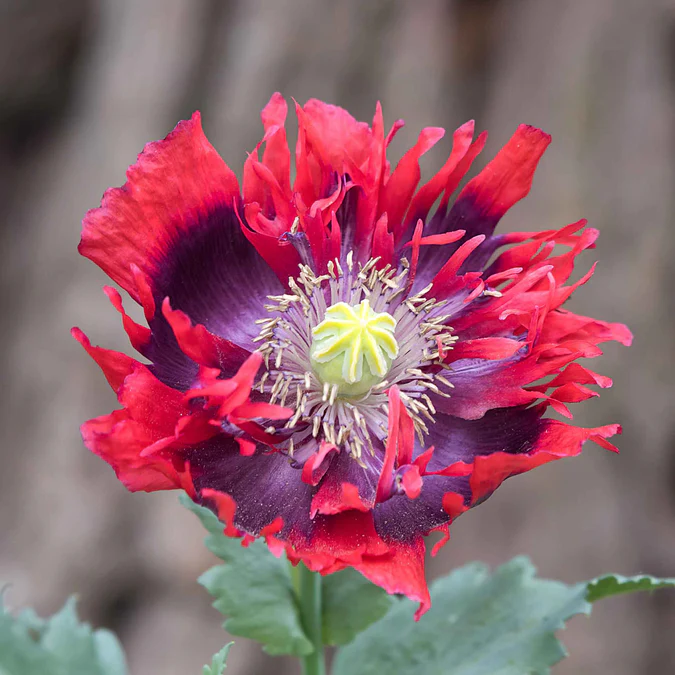
A bold and dramatic annual poppy grown for its spectacular fringed blooms of vivid red, deep purple, and dark plum. Each flower looks almost hand-painted, with richly colored petals, frilled edges, and striking dark blotches surrounding the central seed capsule. This is one of the most eye-catching ornamental poppies for gardeners who enjoy unusual flowers with strong color contrast and old-fashioned charm.
Garden Uses
Drama Queen Poppy is excellent for cottage gardens, heirloom flower beds, cutting gardens, annual borders, and pollinator plantings. Its intense red and purple flowers make a strong focal point when planted in groups or mixed with softer companion flowers such as larkspur, bachelor’s buttons, nigella, sweet alyssum, cosmos, and ornamental grasses.
The decorative seed pods are also highly valued for dried flower arrangements, wreaths, and craft use.
Growing Information
Sow seeds directly outdoors where plants are to grow, as poppies dislike transplanting. Scatter seed over prepared soil and press gently into the surface, covering only very lightly. Best germination occurs in cool conditions, and plants perform best in full sun with well-drained soil.
Plants typically grow 30 to 40 inches tall. Water during dry periods, but avoid heavy, wet soils. Once established, Drama Queen is easy to grow and requires little maintenance. Allow seed pods to mature if dried pods or natural reseeding are desired.
Quick Facts
- Botanical Name: Papaver somniferum
- Common Name: Drama Queen Poppy
- Plant Type: Annual
- Height: 30–40 inches
- Spread: 12–18 inches
- Flower Color: Red with deep purple to dark plum markings
- Bloom Season: Late spring to early summer
- Sun: Full sun
- Soil: Well-drained soil
- Water Needs: Low to moderate
- Best Use: Cottage gardens, borders, cutting gardens, dried pods
- Pollinator Friendly: Yes
- Self-Sows: Often in favorable conditions
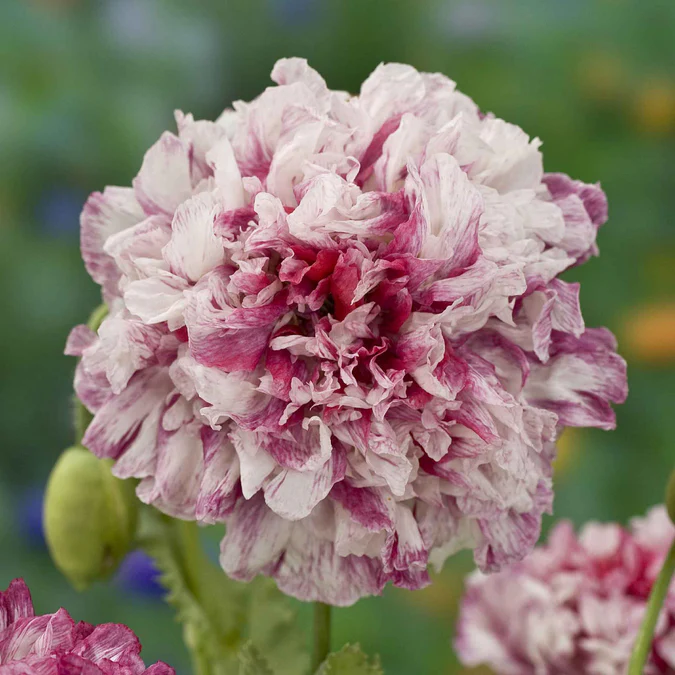
One of the most distinctive and sought-after ornamental poppies available. Its large, satiny flowers emerge in rich wine-red, burgundy, and deep crimson shades before gradually fading to antique rose, dusty pink, and soft mauve as the blooms mature. This unique color-changing effect creates the appearance of multiple flower colors on a single planting, giving the garden an ever-changing display of vintage elegance.
The flowers are large and silky, often measuring 4 to 5 inches across, with delicate crepe-paper petals surrounding prominent central seed capsules. The combination of fresh and aging blooms creates a beautiful tapestry of old-world colors that inspired the variety's name. Flemish Antique is particularly prized by cottage gardeners, flower photographers, and collectors of unusual heirloom flowers.
Garden Uses
Flemish Antique Poppy is an outstanding choice for cottage gardens, cutting gardens, heirloom flower collections, annual borders, pollinator gardens, and naturalized plantings. The evolving flower colors pair beautifully with larkspur, bachelor’s buttons, nigella, foxgloves, sweet alyssum, and ornamental grasses.
Its large flowers create a dramatic focal point, while the decorative seed pods extend the plant's ornamental value long after flowering has finished. The pods are excellent for dried arrangements and floral crafts.
Growing Information
Sow seed directly outdoors where plants are to grow, as poppies develop taproots and dislike transplanting. Scatter seed onto prepared soil and press lightly into the surface. Germination is best in cool weather.
Plants typically reach 30 to 48 inches tall and thrive in full sun with well-drained soil. Once established, they require little maintenance. Water during prolonged dry periods but avoid soggy conditions. Allow some seed pods to mature if natural reseeding or dried arrangements are desired.
In suitable conditions, Flemish Antique often self-sows lightly, producing volunteer seedlings that continue the display in future seasons.
Quick Facts
- Botanical Name: Papaver somniferum
- Common Name: Flemish Antique Poppy
- Plant Type: Annual
- Height: 30–48 inches
- Spread: 12–18 inches
- Flower Size: 4–5 inches
- Flower Colors: Burgundy, wine-red, crimson fading to antique rose, pink, and mauve
- Bloom Season: Late spring to early summer
- Sun Requirements: Full sun
- Soil Requirements: Well-drained soil
- Water Needs: Low to moderate
- Pollinator Friendly: Yes
- Suitable for Cutting: Yes
- Dried Pod Use: Excellent
- Self-Sowing: Often
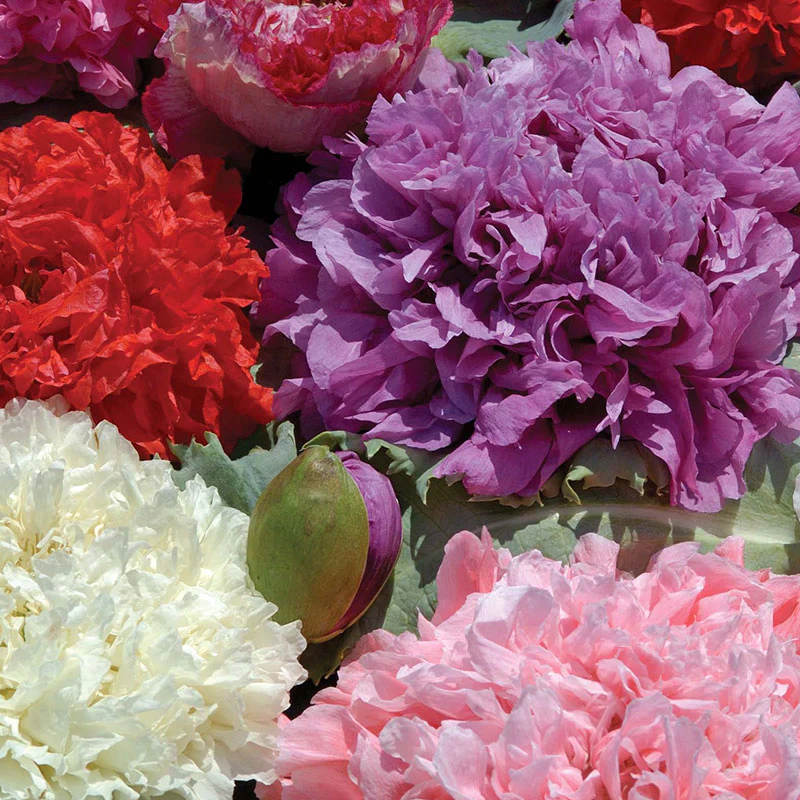
Aa beautiful ornamental annual poppy mixture known for its large, fully double blooms in a wide range of rich and delicate colors. Flowers may appear in shades of red, rose, pink, lavender, purple, mauve, white, and soft blush, often resembling ruffled peonies or carnations. The full, layered petals give this mix a luxurious old-fashioned appearance that makes it especially popular in cottage gardens and heirloom flower plantings.
Garden Uses
Double Mix Poppy is excellent for cottage gardens, annual borders, cutting gardens, wildflower-style plantings, and ornamental seed pod production. The large double blooms create a bold display when planted in groups and combine beautifully with larkspur, bachelor’s buttons, nigella, cosmos, sweet alyssum, foxgloves, and ornamental grasses.
After flowering, the rounded seed pods provide additional ornamental value and are widely used in dried arrangements, wreaths, and craft projects.
Growing Information
Sow seeds directly outdoors where plants are to grow, as poppies dislike transplanting. Scatter seed over finely prepared soil and press gently into the surface, covering only very lightly. Cool weather encourages the best germination and strongest plant growth.
Plants generally grow 30 to 40 inches tall and perform best in full sun with well-drained soil. Once established, they are easy to grow and require little maintenance. Water during extended dry periods, but avoid soggy or overly rich soil, which may reduce flower quality or cause weak growth.
Allow some seed pods to mature if dried pods or natural reseeding are desired.
Quick Facts
- Botanical Name: Papaver somniferum
- Common Name: Double Mix Poppy
- Plant Type: Annual
- Height: 30–40 inches
- Spread: 12–18 inches
- Flower Form: Fully double, ruffled
- Flower Colors: Red, pink, rose, lavender, purple, mauve, white, blush
- Bloom Season: Late spring to early summer
- Sun: Full sun
- Soil: Well-drained soil
- Water Needs: Low to moderate
- Best Use: Cottage gardens, borders, cutting gardens, dried pods
- Pollinator Friendly: Moderate
- Self-Sows: Often in favorable conditions
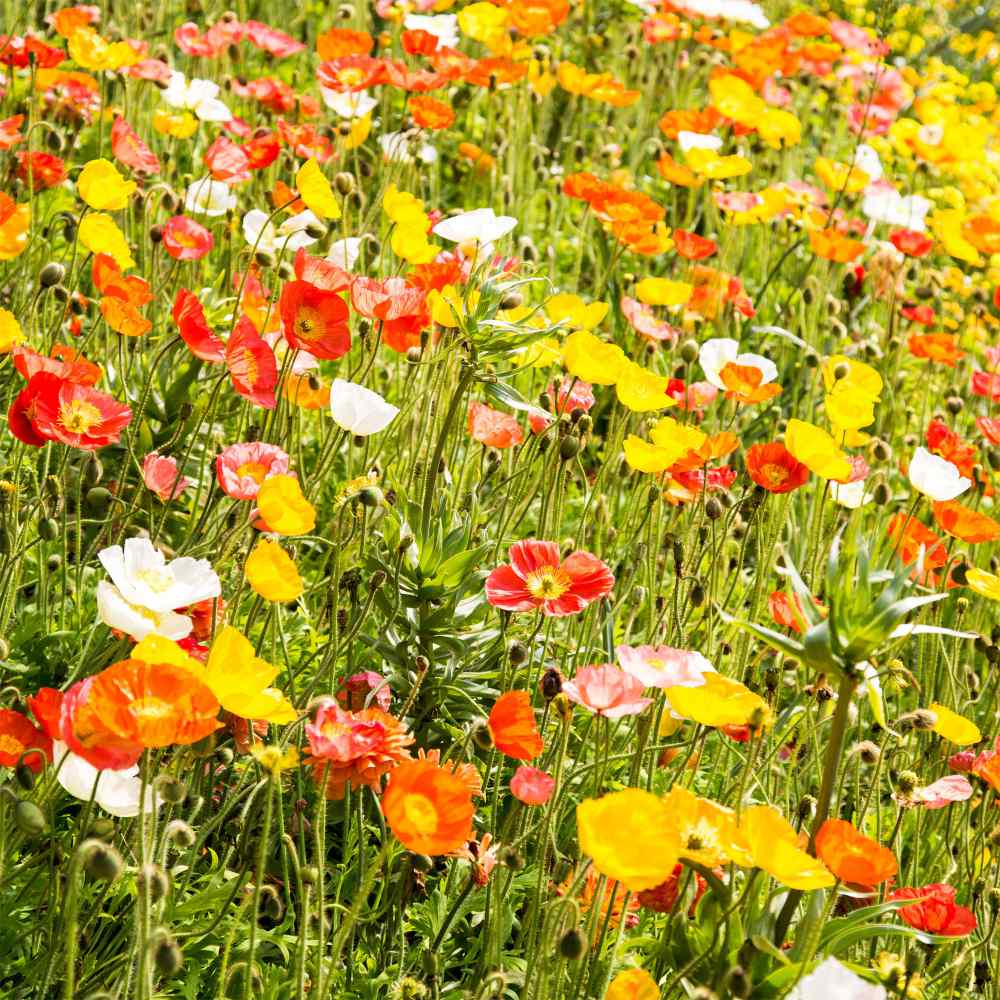
Alpine Poppy (Papaver alpinum) is a charming compact perennial poppy native to the mountainous regions of Europe, where it grows among rocky slopes, screes, and high-elevation meadows. Plants form low rosettes of finely divided gray-green foliage and typically reach only about 6 to 10 inches tall when flowering. Delicate, papery blossoms rise individually on slender stems above the foliage, creating a surprisingly colorful display for such a small plant. Depending upon the strain and individual seedling, flowers may appear in white, yellow, orange, or occasionally warmer salmon and reddish shades, making seed-grown plants especially interesting.
This naturally diminutive poppy is ideal for rock gardens, alpine gardens, stone walls, gravel gardens, troughs, edging, and other sunny locations where larger poppies would overwhelm the setting. Grow in full sun in gritty, sharply drained soil and avoid locations that remain wet, particularly during winter. Alpine Poppy is extremely cold hardy, generally suitable for USDA Zones 3-8, but its mountain heritage means that it often performs better in cool climates than in regions with prolonged hot, humid summers. Plants may be relatively short-lived, but under favorable conditions they can reseed naturally and establish attractive little colonies among stones and gravel.
Sow the tiny seeds on the surface of a fine, well-drained seed-starting medium and press them gently into place without deeply covering them, as light assists germination. Keep evenly moist until seedlings become established and provide bright light and cool to moderate temperatures. Seeds may also be direct sown outdoors in fall or early spring, allowing natural cool conditions to assist germination.
Seedman Notes: Alpine Poppy is a wonderful example of how a small plant can make a memorable garden display. Tucked between rocks, its delicate blossoms appear almost impossibly bright against gray stone and gravel. It is an especially good selection for gardeners interested in true alpine plants, and providing excellent drainage and avoiding excessive summer heat are the keys to keeping this little mountain poppy happy.
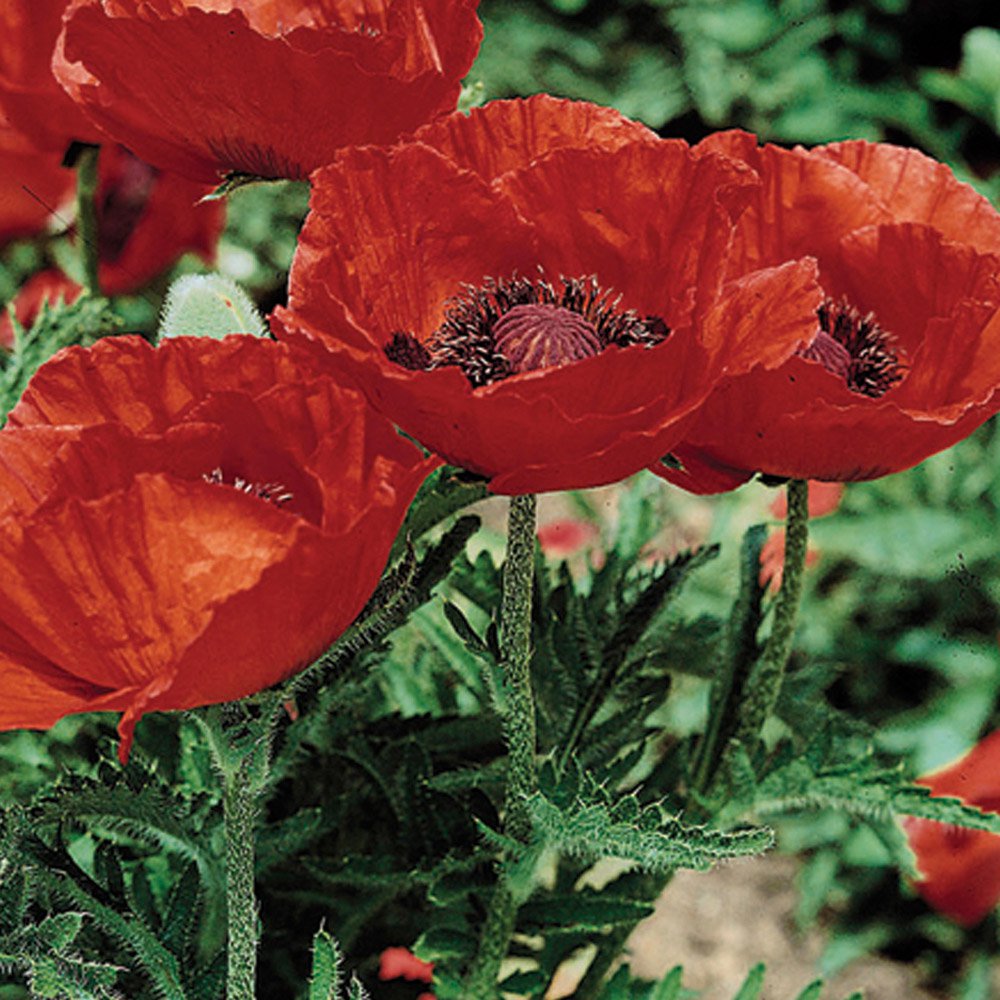
A magnificent perennial poppy famous for its huge scarlet-red flowers and bold black central markings. The dramatic blooms often reach 5 to 6 inches across, with crinkled, silky petals that glow brightly in late spring and early summer. This classic variety is one of the most striking Oriental poppies for perennial borders, cottage gardens, and bold landscape displays.
Garden Uses
Beauty of Livermere is excellent for perennial borders, cottage gardens, pollinator plantings, cutting gardens, and dramatic focal points in sunny beds. Its vivid red flowers pair beautifully with blue salvia, purple catmint, irises, delphiniums, peonies, yarrow, and ornamental grasses.
Because Oriental poppies often go dormant after flowering, they are best planted among later-growing perennials that can fill in the space during summer.
Growing Information
Plant in full sun and well-drained soil. Beauty of Livermere performs best in areas with cool winters and moderate spring weather. Plants usually grow 30 to 36 inches tall and spread 18 to 24 inches wide once established.
Oriental poppies form deep taproots and should not be moved frequently. Once settled, they are long-lived, drought tolerant, and capable of returning for many years. After blooming, the foliage may naturally yellow and disappear during summer dormancy, then return with cooler weather.
Quick Facts
- Botanical Name: Papaver orientale
- Common Name: Beauty of Livermere Oriental Poppy
- Plant Type: Herbaceous Perennial
- Height: 30–36 inches
- Spread: 18–24 inches
- Flower Color: Scarlet red with dark central markings
- Flower Size: 5–6 inches
- Bloom Season: Late spring to early summer
- Sun: Full sun
- Soil: Well-drained soil
- Water Needs: Low to moderate once established
- Best Use: Perennial borders, cottage gardens, pollinator gardens
- Pollinator Friendly: Yes
- Deer Resistance: Good
- Summer Dormancy: Common after flowering
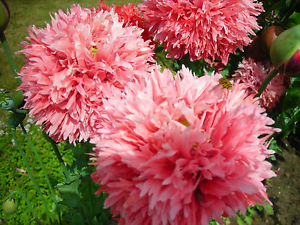
A breathtaking ornamental annual prized for its enormous double blooms that resemble fully opened peonies. The flowers are packed with layers of silky, ruffled petals in soft shades of blush pink and pale rose, creating a romantic and elegant display in the garden. With blooms often reaching 4 to 5 inches across, Pale Pink is one of the most refined and graceful members of the peony-flowered poppy family.
The lush flowers rise above attractive blue-green foliage and sturdy stems, making this variety a standout in cottage gardens, cutting gardens, and heirloom flower collections. Its soft coloring blends beautifully with other pastel flowers while providing exceptional texture and visual interest.
Garden Uses
Pale Pink Peony Poppy is ideal for cottage gardens, cutting gardens, annual borders, Victorian-style plantings, and heirloom flower displays. The delicate pink flowers combine beautifully with larkspur, foxgloves, sweet peas, nigella, bachelor’s buttons, cosmos, and sweet alyssum.
The large blooms create excellent focal points in mixed borders, while the ornamental seed pods provide continued interest after flowering has ended. The pods are highly valued for dried floral arrangements and decorative crafts.
Growing Information
Sow seeds directly outdoors where plants are to flower, as poppies dislike root disturbance. Scatter seed onto prepared soil and press gently into the surface. Light aids germination, so cover only lightly if at all.
Plants generally reach 30 to 40 inches tall and perform best in full sun and well-drained soil. Cool spring weather encourages vigorous growth and larger blooms. Once established, plants require little maintenance beyond occasional watering during extended dry periods.
Allow seed heads to mature if dried pods or natural reseeding are desired. In favorable conditions, plants often self-sow lightly.
Quick Facts
- Botanical Name: Papaver paeoniflorum
- Common Name: Pale Pink Peony Poppy
- Plant Type: Annual
- Height: 30–40 inches
- Spread: 12–18 inches
- Flower Size: 4–5 inches
- Flower Color: Pale pink, blush pink, soft rose
- Bloom Season: Late spring to early summer
- Sun Requirements: Full sun
- Soil Requirements: Well-drained soil
- Water Needs: Low to moderate
- Pollinator Friendly: Moderate
- Cut Flower Value: Excellent
- Dried Pod Value: Excellent
- Self-Sowing: Often
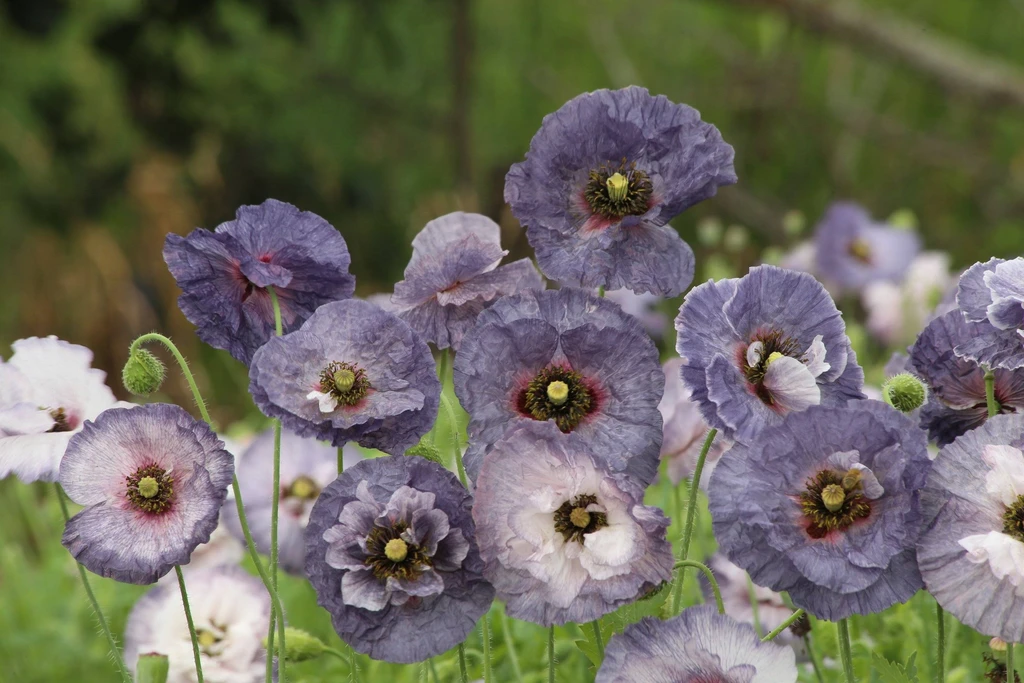
One of the most unusual and sought-after annual poppies in cultivation. Renowned for its rare smoky coloration, the flowers display remarkable shades of silvery lavender, dusty mauve, soft charcoal, weathered rose, antique purple, and pearl gray. The delicate blooms appear almost hand-painted, with subtle variations that make every flower unique. Few annual flowers can match the sophisticated color palette and vintage elegance of Amazing Grey.
The silky, crepe-paper-like petals flutter gracefully atop slender stems, creating an ethereal effect in the garden. Blooming throughout late spring and early summer, the flowers add a soft, romantic quality to cottage gardens, cutting gardens, and designer flower borders.
Garden Uses
Amazing Grey is an exceptional choice for cottage gardens, cutting gardens, heirloom flower collections, pollinator plantings, and mixed annual borders. Its muted tones pair beautifully with white flowers, ornamental grasses, blue larkspur, nigella, foxgloves, dusty miller, and silver-foliaged plants.
Because of its unique coloration, Amazing Grey is especially popular among floral designers and photographers. The blooms lend an elegant, vintage appearance to both gardens and bouquets.
Growing Information
Sow seeds directly where plants are to grow, as annual poppies dislike transplanting. Scatter seed on prepared soil and press lightly into the surface. Light aids germination, so only minimal covering is necessary.
Plants typically grow 24 to 36 inches tall and thrive in full sun with well-drained soil. Cool weather promotes the best flowering and strongest growth. Once established, plants require little maintenance beyond occasional watering during extended dry periods.
Deadheading can encourage continued blooming, although many gardeners allow the decorative seed pods to mature for ornamental use and natural reseeding.
Quick Facts
- Botanical Name: Papaver rhoeas
- Common Name: Amazing Grey Poppy
- Plant Type: Hardy Annual
- Height: 24–36 inches
- Spread: 12–18 inches
- Flower Size: 2–4 inches
- Flower Colors: Gray, smoky lavender, mauve, antique rose, silver-purple
- Bloom Season: Late spring to early summer
- Sun Requirements: Full sun
- Soil Requirements: Well-drained soil
- Water Needs: Low to moderate
- Pollinator Friendly: Yes
- Suitable for Cutting: Yes
- Dried Pod Use: Excellent
- Self-Sowing: Often
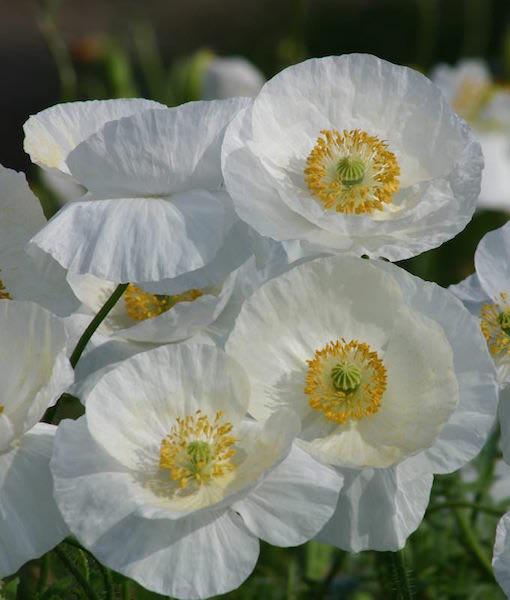
A graceful and elegant annual poppy prized for its pure white, silky blooms that seem to glow in the garden. The delicate flowers resemble fine bridal fabric, with crinkled, tissue-paper petals that flutter in the slightest breeze. Their pristine white coloration and airy appearance make Bridal Silk one of the most refined and romantic members of the Shirley Poppy family.
Blooming from late spring into early summer, the flowers rise above attractive blue-green foliage on slender stems, creating a cloud-like effect when planted in groups. The blooms typically measure 2 to 4 inches across and are followed by decorative seed pods that extend the plant's ornamental value well beyond flowering.
Garden Uses
Bridal Silk is an outstanding choice for cottage gardens, moon gardens, cutting gardens, wedding-themed plantings, pollinator gardens, and naturalized wildflower displays. Its luminous white flowers pair beautifully with pastel annuals, blue larkspur, lavender, pink cosmos, baby's breath, and silver-foliaged plants.
The flowers bring brightness to mixed borders and are particularly striking in evening light, where the white petals appear to glow against darker backgrounds.
Growing Information
Sow seeds directly outdoors where plants are to flower, as annual poppies dislike transplanting. Scatter seed onto prepared soil and press lightly into the surface. Since light aids germination, cover only minimally if at all.
Plants generally grow 24 to 36 inches tall and perform best in full sun and well-drained soil. Cool spring weather encourages vigorous growth and abundant flowering. Once established, Bridal Silk requires little maintenance beyond occasional watering during prolonged dry periods.
Allow seed pods to mature if ornamental pods or natural reseeding are desired. Plants frequently self-sow gently in suitable garden conditions.
Quick Facts
- Botanical Name: Papaver rhoeas
- Common Name: Bridal Silk Poppy
- Plant Type: Hardy Annual
- Height: 24–36 inches
- Spread: 12–18 inches
- Flower Size: 2–4 inches
- Flower Color: Pure white
- Bloom Season: Late spring to early summer
- Sun Requirements: Full sun
- Soil Requirements: Well-drained soil
- Water Needs: Low to moderate
- Pollinator Friendly: Yes
- Moon Garden Suitable: Excellent
- Dried Pod Use: Excellent
- Self-Sowing: Often
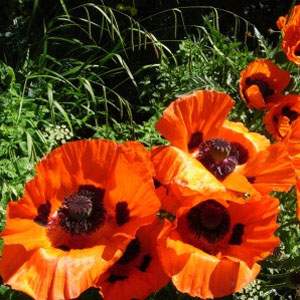
A bold and brilliant perennial poppy grown for its large, glowing orange-scarlet flowers with dramatic dark central markings. The satiny, crinkled petals create a fiery display in late spring to early summer, rising above coarse, deeply cut green foliage on sturdy stems. With flowers often reaching 4 to 6 inches across, this Oriental Poppy brings exceptional color and garden impact wherever it is planted.
Garden Uses
Orange Scarlet Poppy is excellent for perennial borders, cottage gardens, pollinator plantings, rock garden edges, sunny mixed beds, and bold focal points. Its vivid orange-red blooms pair beautifully with blue salvia, catmint, lavender, irises, delphiniums, yarrow, ornamental grasses, and white or purple companion flowers.
Because Oriental poppies often go dormant after blooming, they are best planted among later-growing perennials that can cover the space as summer progresses.
Growing Information
Grow Orange Scarlet Poppy in full sun and well-drained soil. Plants prefer cool winters and moderate spring weather, producing their strongest bloom display before summer heat arrives. Mature plants generally reach 24 to 36 inches tall with a spread of 18 to 24 inches.
Oriental poppies form deep taproots and should be planted where they can remain undisturbed. Once established, they are long-lived, drought tolerant, and relatively low maintenance. After flowering, foliage may yellow and disappear during summer dormancy, then return with cooler fall weather.
Quick Facts
- Botanical Name: Papaver orientale
- Common Name: Orange Scarlet Oriental Poppy
- Plant Type: Herbaceous Perennial
- Height: 24–36 inches
- Spread: 18–24 inches
- Flower Color: Orange-scarlet with dark central markings
- Flower Size: 4–6 inches
- Bloom Season: Late spring to early summer
- Sun: Full sun
- Soil: Well-drained soil
- Water Needs: Low to moderate once established
- Best Use: Perennial borders, cottage gardens, pollinator gardens
- Pollinator Friendly: Yes
- Deer Resistance: Good
- Summer Dormancy: Common after flowering
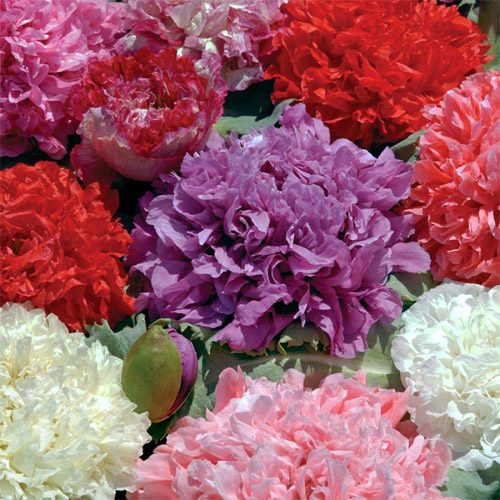
These large flowers are 4 inches across and form on long, sturdy stems. They make your garden look great, and cut them often to enjoy beautiful arrangements for indoors.
The plant has blue-green foliage that is intense and makes a complementary backdrop for the showy blooms. When the Peony Poppy flowers are done blooming, oblong seed pods are formed, and they are highly prized as an everlasting, keeping their color and shape for dried arrangements.
Zones 3-8.
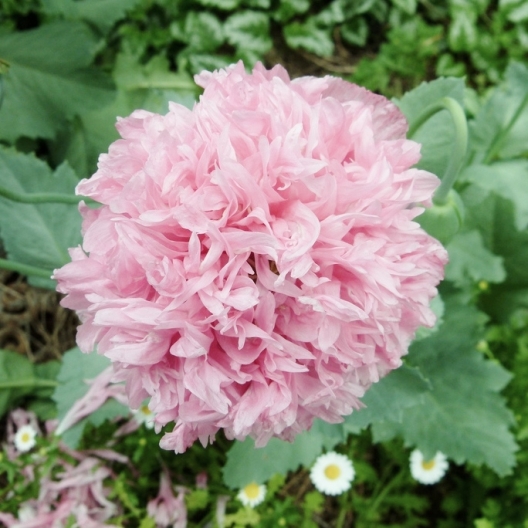
A magnificent annual prized for its enormous, fully double blooms that resemble old-fashioned peonies. Layers upon layers of silky, crepe-like petals unfold into large blossoms of soft rose pink, creating a lush and romantic display that is among the finest of all ornamental poppies. The flowers often reach 4 to 5 inches across and stand proudly above attractive blue-green foliage on sturdy stems.
With its refined pastel coloring and luxurious flower form, Pale Rose is a favorite for cottage gardens, cutting gardens, Victorian-inspired landscapes, and heirloom flower collections. The blooms bring both elegance and texture to the garden while the decorative seed pods provide lasting beauty long after flowering has ended.
Garden Uses
Pale Rose Peony Poppy is ideal for cottage gardens, cutting gardens, annual borders, heirloom gardens, pollinator plantings, and romantic landscape designs. Its soft pink flowers combine beautifully with foxgloves, larkspur, sweet peas, delphiniums, baby's breath, nigella, and silver-foliaged plants.
The large blossoms create outstanding focal points in mixed borders, while the decorative seed capsules remain attractive for dried flower arrangements and seasonal crafts.
Growing Information
Sow seeds directly outdoors where plants are to bloom, as poppies develop deep taproots and resent transplanting. Scatter seed over prepared soil and gently press into the surface. Since light aids germination, cover only lightly if necessary.
Plants typically reach 30 to 40 inches in height and perform best in full sun with fertile, well-drained soil. Cool spring temperatures encourage vigorous growth and produce the largest flowers. Once established, plants require little maintenance beyond occasional watering during prolonged dry periods.
Allow some seed pods to mature if natural reseeding or decorative dried pods are desired. Plants often self-sow gently under favorable growing conditions.
Quick Facts
- Botanical Name: Papaver paeoniflorum
- Common Name: Pale Rose Peony Poppy
- Plant Type: Annual
- Height: 30–40 inches
- Spread: 12–18 inches
- Flower Size: 4–5 inches
- Flower Color: Soft rose pink
- Bloom Season: Late spring to early summer
- Sun Requirements: Full sun
- Soil Requirements: Well-drained soil
- Water Needs: Low to moderate
- Pollinator Friendly: Moderate
- Cut Flower Value: Excellent
- Dried Pod Value: Excellent
- Self-Sowing: Often
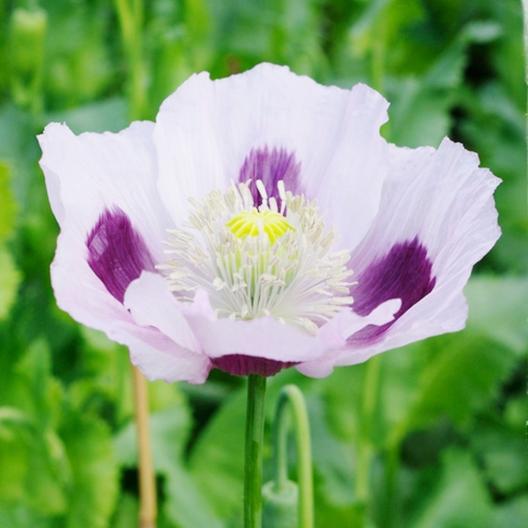
A striking ornamental annual poppy admired for its pale lavender-blue to soft lilac blooms marked with deep purple blotches at the base of each petal. The flowers have a delicate, luminous quality, with silky, crepe-paper petals surrounding a pale central seed capsule and ring of light stamens. Its cool coloring gives the garden a refined, almost moonlit appearance, making it a beautiful contrast to brighter annuals and traditional red poppies.
Garden Uses
Blue Moon Poppy is excellent for cottage gardens, heirloom flower beds, annual borders, cutting gardens, pollinator plantings, and ornamental seed pod production. Its soft lavender-blue blooms combine beautifully with white alyssum, blue larkspur, nigella, bachelor’s buttons, pink cosmos, silver foliage plants, and ornamental grasses.
The dark petal blotches add dramatic contrast, while the rounded seed pods provide continued ornamental value after flowering. Mature pods are useful for dried arrangements and garden crafts.
Growing Information
Sow seeds directly outdoors where plants are to grow, as poppies dislike transplanting. Scatter seed over prepared soil and press gently into the surface, covering only very lightly. Cool weather encourages best germination and strong early growth.
Plants generally grow 30 to 40 inches tall and perform best in full sun with well-drained soil. Once established, they require little care and tolerate dry conditions fairly well. Water during extended dry periods, but avoid soggy soils or heavy fertilization.
Allow some seed pods to mature if decorative pods or natural reseeding are desired. Plants may self-sow lightly in favorable garden conditions.
Quick Facts
- Botanical Name: Papaver somniferum var.
- Common Name: Blue Moon Poppy
- Plant Type: Annual
- Height: 30–40 inches
- Spread: 12–18 inches
- Flower Color: Pale lavender-blue to soft lilac with deep purple blotches
- Bloom Season: Late spring to early summer
- Sun: Full sun
- Soil: Well-drained soil
- Water Needs: Low to moderate
- Best Use: Cottage gardens, borders, cutting gardens, dried pods
- Pollinator Friendly: Yes
- Self-Sows: Often in favorable conditions
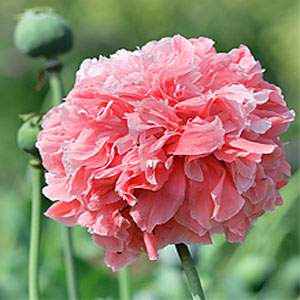
A luxurious annual poppy admired for its enormous, fully double blooms in soft salmon, peach, and warm coral-pink shades. The densely layered, crepe-paper petals resemble elegant peonies in full bloom, creating flowers that often reach 4 to 5 inches across. Their warm pastel coloring brings a gentle glow to the garden while adding texture and classic old-world charm.
Standing above attractive blue-green foliage on sturdy stems, Salmon Peony Poppy produces a spectacular late spring to early summer display that is equally at home in cottage gardens, cutting gardens, and heirloom flower collections. After flowering, attractive seed pods continue the ornamental display well into the season.
Garden Uses
Salmon Peony Poppy is an outstanding choice for cottage gardens, Victorian-style landscapes, annual borders, cutting gardens, heirloom plantings, and pollinator-friendly flower beds. The soft salmon blooms combine beautifully with lavender, delphiniums, foxgloves, larkspur, baby's breath, nigella, and ornamental grasses.
The full flowers create excellent focal points, while the decorative seed capsules are prized for dried floral arrangements and seasonal decorations.
Growing Information
Sow seeds directly outdoors where plants are to flower, as peony poppies develop deep taproots and dislike transplanting. Scatter seed onto finely prepared soil and gently press into the surface. Since light encourages germination, cover only very lightly if necessary.
Plants generally mature at 30 to 40 inches tall and thrive in full sun with fertile, well-drained soil. Cool spring temperatures encourage vigorous growth and produce the largest, fullest blooms. Once established, plants require very little maintenance beyond occasional watering during prolonged dry periods.
Allow several seed pods to mature if ornamental pods or natural reseeding are desired. In favorable locations, plants frequently self-sow lightly.
Quick Facts
- Botanical Name: Papaver paeoniflorum
- Common Name: Salmon Peony Poppy
- Plant Type: Annual
- Height: 30–40 inches
- Spread: 12–18 inches
- Flower Size: 4–5 inches
- Flower Color: Salmon, peach, coral-pink
- Bloom Season: Late spring to early summer
- Sun Requirements: Full sun
- Soil Requirements: Well-drained soil
- Water Needs: Low to moderate
- Pollinator Friendly: Moderate
- Cut Flower Value: Excellent
- Dried Pod Value: Excellent
- Self-Sowing: Often
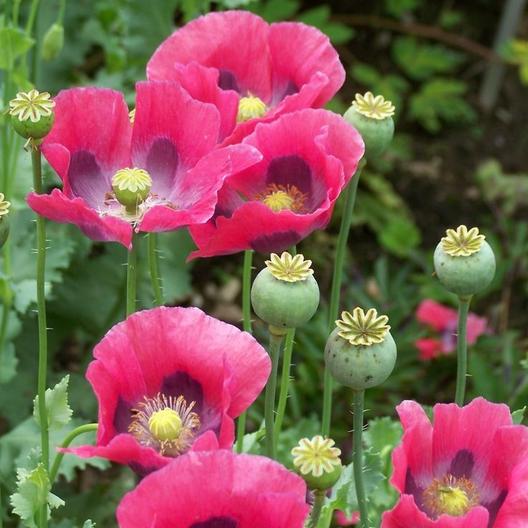
A unique ornamental annual grown as much for its extraordinary seed capsules as for its elegant flowers. The blooms are typically soft shades of white, blush pink, lavender, or pale mauve with silky, crepe-paper petals that open during late spring and early summer. After flowering, the plants develop unusually large, rounded seed pods—commonly called "pepperboxes"—which have made this heirloom variety a favorite among gardeners, dried flower enthusiasts, and craft designers for generations.
The impressive seed capsules remain attractive for months after the flowers have faded, providing architectural interest in the garden and serving as one of the finest materials for dried floral arrangements. Their distinctive shape inspired the common name "Pepperbox Poppy."
Garden Uses
Pepperbox Poppy is ideal for cottage gardens, heirloom flower collections, cutting gardens, annual borders, dried flower gardens, and ornamental seed pod production. While the delicate flowers provide a beautiful spring display, the large decorative seed pods become the true stars of the garden during summer and fall.
The plants combine beautifully with larkspur, bachelor's buttons, cosmos, nigella, sweet alyssum, ornamental grasses, and other classic cottage garden flowers.
Growing Information
Sow seeds directly outdoors where plants are to mature, as poppies develop deep taproots and do not transplant well. Scatter seed over prepared soil and press gently into the surface, covering only very lightly. Cool temperatures encourage rapid germination and vigorous early growth.
Plants generally grow 36 to 48 inches tall and perform best in full sun with well-drained soil. Once established, they require little maintenance and tolerate moderate drought. Avoid excessive fertilization, which encourages foliage growth at the expense of flowers and seed pod development.
Allow the pods to fully mature if they are to be harvested for dried arrangements or natural reseeding.
Quick Facts
- Botanical Name: Papaver somniferum
- Common Name: Pepperbox Poppy
- Plant Type: Annual
- Height: 36–48 inches
- Spread: 12–18 inches
- Flower Colors: White, blush pink, pale lavender, soft mauve
- Bloom Season: Late spring to early summer
- Primary Feature: Large ornamental seed capsules
- Sun Requirements: Full sun
- Soil Requirements: Well-drained soil
- Water Needs: Low to moderate
- Pollinator Friendly: Yes
- Dried Pod Value: Outstanding
- Self-Sowing: Often
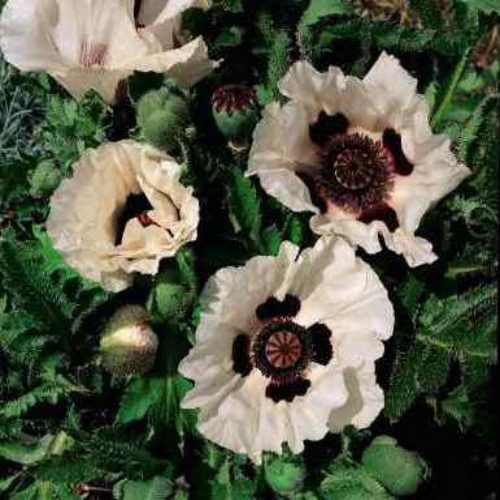
An eye-catching perennial prized for its dramatic bicolor blooms featuring brilliant white petals boldly marked with large black to deep purple blotches at the base. The striking contrast creates a "checkerboard" appearance that inspired the variety's name. Each flower measures an impressive 4 to 6 inches across, with silky, crinkled petals surrounding a prominent dark center that attracts both pollinators and admiring gardeners alike.
Blooming in late spring and early summer, Checkers rises on sturdy stems above deeply divided, coarse green foliage, creating one of the most spectacular floral displays in the perennial garden. Its crisp white flowers stand out beautifully against surrounding greenery and complement almost any garden color palette.
Garden Uses
Checkers Oriental Poppy is an outstanding choice for perennial borders, cottage gardens, pollinator gardens, cutting gardens, and mixed landscape plantings. Its dramatic white flowers pair beautifully with blue delphiniums, purple salvia, lavender, lupines, peonies, catmint, ornamental grasses, and silver-leaved plants.
Because Oriental poppies naturally enter summer dormancy after flowering, they are best planted among later-emerging perennials that will fill the space once the foliage retreats.
Growing Information
Grow Checkers in full sun and well-drained soil. Plants thrive in areas with cool winters and moderate spring temperatures, producing their finest blooms before the arrival of summer heat. Mature plants typically reach 24 to 36 inches in height with a spread of 18 to 24 inches.
Oriental poppies develop deep taproots and should be planted where they can remain undisturbed for many years. Once established, they are exceptionally hardy, drought tolerant, and capable of blooming reliably for decades. After flowering, the foliage may naturally yellow and disappear during summer before fresh growth returns in autumn.
Quick Facts
- Botanical Name: Papaver orientale
- Common Name: Checkers Oriental Poppy
- Plant Type: Herbaceous Perennial
- Height: 24–36 inches
- Spread: 18–24 inches
- Flower Size: 4–6 inches
- Flower Color: White with black to deep purple basal blotches
- Bloom Season: Late spring to early summer
- Sun Requirements: Full sun
- Soil Requirements: Well-drained soil
- Water Needs: Low to moderate
- Pollinator Friendly: Excellent
- Deer Resistance: Good
- Drought Tolerance: High once established
- Summer Dormancy: Normal after flowering
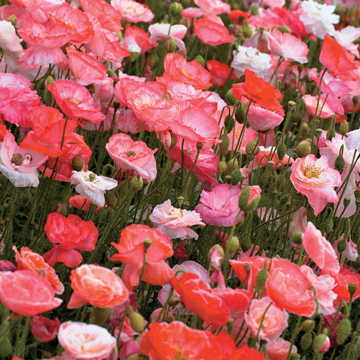
An enchanting Shirley Poppy blend celebrated for its romantic pastel blooms in shades of blush pink, soft rose, creamy white, coral, salmon, lavender, and delicate peach. Every flower is unique, with silky, tissue-like petals that shimmer in the sunlight and sway gracefully on slender stems. The constantly changing blend of soft colors creates the appearance of a watercolor painting, making this one of the most elegant annual poppies available.
Blooming from late spring into early summer, Falling In Love produces masses of delicate flowers above finely textured blue-green foliage. Individual blooms last only a few days, but plants continually produce fresh buds, ensuring a long season of beautiful color. Decorative seed pods follow the flowers, extending the display well beyond the bloom period.
Garden Uses
Falling In Love Poppy is ideal for cottage gardens, cutting gardens, wildflower meadows, annual borders, wedding gardens, and pollinator plantings. The soft pastel blooms blend effortlessly with larkspur, baby's breath, foxgloves, sweet peas, nigella, bachelor's buttons, cosmos, and sweet alyssum.
Large drifts create an especially romantic display, while the ornamental seed pods provide additional interest for dried arrangements and seasonal decorations.
Growing Information
Sow seeds directly outdoors where plants are to grow, as annual poppies develop taproots and dislike transplanting. Scatter seed over finely prepared soil and gently press into the surface. Light promotes germination, so cover only lightly if necessary.
Plants generally mature at 24 to 30 inches tall and thrive in full sun with well-drained soil. Cool spring temperatures produce the strongest growth and most abundant flowering. Once established, they require very little care and tolerate moderate drought.
Allow seed pods to mature if natural reseeding or decorative dried pods are desired. Plants frequently self-sow lightly under favorable growing conditions.
Quick Facts
- Botanical Name: Papaver rhoeas
- Common Name: Falling In Love Poppy
- Plant Type: Hardy Annual
- Height: 24–30 inches
- Spread: 12–18 inches
- Flower Size: 2–4 inches
- Flower Colors: Blush pink, rose, white, peach, salmon, coral, lavender
- Bloom Season: Late spring to early summer
- Sun Requirements: Full sun
- Soil Requirements: Well-drained soil
- Water Needs: Low to moderate
- Pollinator Friendly: Excellent
- Dried Pod Value: Excellent
- Self-Sowing: Often
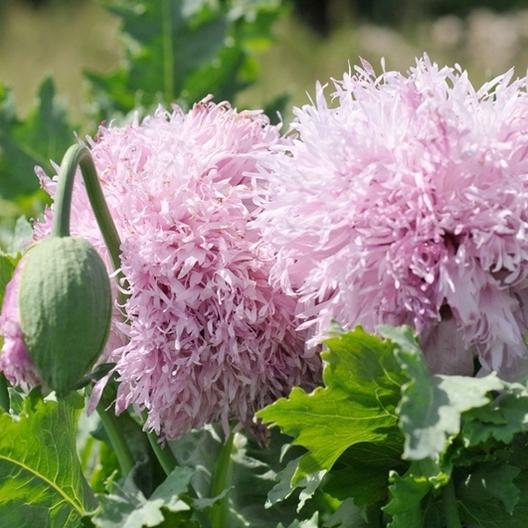
An extraordinary ornamental annual admired for its fully double, deeply fringed blooms in soft lilac, lavender, and pale violet shades. The intricately cut petals form dense, rounded flowers that resemble fluffy pompons or elaborate tissue-paper carnations. Each bloom is a masterpiece of texture, with hundreds of finely divided petals creating one of the most unusual flower forms found among ornamental poppies.
Blooming from late spring through early summer, Lilac Pompom produces large blossoms atop sturdy stems rising above attractive blue-green foliage. After the flowers fade, handsome ornamental seed capsules develop, extending the plant's beauty well into the growing season and providing valuable material for dried floral arrangements.
Garden Uses
Lilac Pompom Poppy is ideal for cottage gardens, heirloom flower collections, annual borders, cutting gardens, pollinator gardens, and Victorian-style landscapes. Its cool lavender tones blend beautifully with delphiniums, larkspur, foxgloves, nigella, white cosmos, baby's breath, and silver-foliaged plants.
The unusual flower form makes this variety especially attractive as a specimen planting or grouped in drifts where its remarkable texture can be fully appreciated.
Growing Information
Sow seeds directly outdoors where plants are to mature, as poppies develop deep taproots and dislike transplanting. Scatter seed onto finely prepared soil and gently press into the surface. Since light encourages germination, cover seed only very lightly if needed.
Plants generally reach 30 to 40 inches tall and perform best in full sun with fertile, well-drained soil. Cool spring temperatures encourage vigorous growth and produce the fullest, most richly colored blooms. Once established, plants require little maintenance and tolerate moderate drought.
Allow seed pods to mature if decorative dried pods or natural reseeding are desired. Plants often self-sow lightly in favorable garden conditions.
Quick Facts
- Botanical Name: Papaver somniferum var. laciniata
- Common Name: Lilac Pompom Poppy
- Plant Type: Annual
- Height: 30–40 inches
- Spread: 12–18 inches
- Flower Form: Fully double, deeply fringed (pompon type)
- Flower Color: Soft lilac, lavender, pale violet
- Bloom Season: Late spring to early summer
- Sun Requirements: Full sun
- Soil Requirements: Well-drained soil
- Water Needs: Low to moderate
- Pollinator Friendly: Moderate
- Dried Pod Value: Excellent
- Self-Sowing: Often
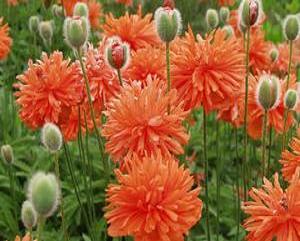
A spectacular heirloom annual that produces large, fully double flowers in a rich blend of crimson, scarlet, cherry red, ruby, rose-red, and deep burgundy. The densely layered petals create lush, peony-like blooms that often reach 4 to 5 inches across, giving the plants a luxurious appearance rarely found among annual flowers. The silky, crepe-paper petals catch the sunlight beautifully, making each flower appear almost handcrafted.
Blooming from late spring into early summer, Red Shades Poppy produces an abundance of brilliant flowers above attractive blue-green foliage. As the blooms fade, large ornamental seed pods develop, providing months of additional beauty and becoming prized materials for dried flower arrangements.
Garden Uses
Red Shades Poppy is an exceptional choice for cottage gardens, heirloom flower collections, annual borders, cutting gardens, Victorian-style landscapes, and pollinator plantings. The vivid red blooms combine beautifully with white larkspur, blue bachelor's buttons, foxgloves, baby's breath, cosmos, nigella, and ornamental grasses.
The brilliant flowers create outstanding focal points, while the attractive seed pods extend the display well beyond the flowering season.
Growing Information
Sow seeds directly outdoors where plants are to mature, as poppies develop deep taproots and resent transplanting. Scatter seed over finely prepared soil and press gently into the surface. Since light encourages germination, cover only very lightly if necessary.
Plants typically grow 30 to 40 inches tall and thrive in full sun with fertile, well-drained soil. Cool spring temperatures produce the strongest plants and the fullest blooms. Once established, they require very little maintenance beyond occasional watering during prolonged dry periods.
Allow several seed pods to mature if natural reseeding or decorative dried pods are desired. Plants often self-sow gently under favorable growing conditions.
Quick Facts
- Botanical Name: Papaver plena
- Common Name: Red Shades Poppy
- Plant Type: Annual
- Height: 30–40 inches
- Spread: 12–18 inches
- Flower Size: 4–5 inches
- Flower Colors: Scarlet, crimson, cherry red, ruby, burgundy, deep rose-red
- Bloom Season: Late spring to early summer
- Sun Requirements: Full sun
- Soil Requirements: Well-drained soil
- Water Needs: Low to moderate
- Pollinator Friendly: Moderate
- Cut Flower Value: Excellent
- Dried Pod Value: Excellent
- Self-Sowing: Often
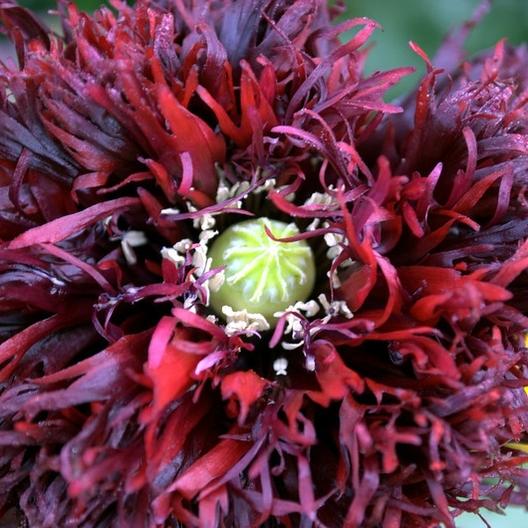
One of the most dramatic ornamental poppies ever introduced. Its extraordinary flowers feature deeply fringed, feather-like petals in rich shades of dark maroon, wine-purple, and nearly black burgundy. The intricate, lace-like blooms create a striking "black swan" effect, giving the variety an elegance and mystery unlike any traditional poppy. In certain lighting, the velvety petals appear almost black, making this one of the most sought-after heirloom poppies for collectors and cottage gardeners alike.
Blooming from late spring into early summer, the large flowers are borne on sturdy stems above attractive blue-green foliage. After flowering, oversized ornamental seed capsules develop, extending the plant's beauty for weeks and providing outstanding material for dried floral arrangements.
Garden Uses
Black Swan Poppy is ideal for cottage gardens, heirloom flower collections, cutting gardens, annual borders, Gothic-inspired gardens, pollinator plantings, and dramatic landscape displays. Its dark flowers contrast beautifully with white foxgloves, silver foliage plants, pale pink roses, lavender, blue delphiniums, ornamental grasses, and white cosmos.
The unique flower form makes it an exceptional specimen plant, while mass plantings create an unforgettable display of texture and rich color.
Growing Information
Sow seeds directly outdoors where plants are to mature, as poppies develop deep taproots and dislike transplanting. Scatter seed over finely prepared soil and gently press into the surface. Light encourages germination, so cover only very lightly if necessary.
Plants typically reach 30 to 40 inches tall and perform best in full sun with fertile, well-drained soil. Cool spring temperatures encourage vigorous growth and produce the richest flower color. Once established, plants require very little maintenance and tolerate moderate drought.
Allow seed pods to mature if ornamental dried pods or natural reseeding are desired. Plants frequently self-sow lightly under favorable growing conditions.
Quick Facts
- Botanical Name: Papaver somniferum var.
- Common Name: Black Swan Poppy
- Plant Type: Annual
- Height: 30–40 inches
- Spread: 12–18 inches
- Flower Form: Deeply fringed, feathered double blooms
- Flower Color: Dark maroon, burgundy, wine-purple to nearly black
- Bloom Season: Late spring to early summer
- Sun Requirements: Full sun
- Soil Requirements: Well-drained soil
- Water Needs: Low to moderate
- Pollinator Friendly: Moderate
- Dried Pod Value: Excellent
- Self-Sowing: Often
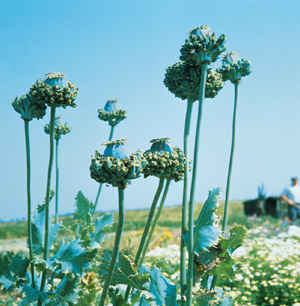
A fascinating heirloom ornamental poppy grown for its extraordinary seed capsules as well as its delicate flowers. After the soft, silky blooms fade, the central seed pod develops a ring of smaller secondary pods clustered around its base, creating the unusual "hens and chicks" effect that gives this variety its name. This curious and highly decorative form makes it one of the most distinctive poppies for collectors, dried flower growers, and cottage garden enthusiasts.
The flowers may appear in soft shades of pale pink, lavender, blush, white, or mauve, followed by large blue-green seed capsules surrounded by smaller attached pods. These unique pods remain attractive for months and are prized for dried arrangements, wreaths, floral crafts, and everlasting displays.
Garden Uses
Hens and Chicks Peony Poppy is ideal for cottage gardens, heirloom flower collections, dried flower gardens, cutting gardens, annual borders, pollinator plantings, and craft gardens. Its unusual seed pods make it especially valuable for gardeners who enjoy plants with ornamental interest beyond the bloom season.
Plant it with larkspur, bachelor’s buttons, nigella, cosmos, foxgloves, sweet alyssum, and ornamental grasses for a classic cottage garden display. The tall stems and unusual pods also add architectural interest to naturalized plantings.
Growing Information
Sow seeds directly outdoors where plants are to mature, as poppies develop deep taproots and dislike transplanting. Scatter seed over prepared soil and press gently into the surface. Light encourages germination, so cover only very lightly if needed.
Plants generally grow 36 to 48 inches tall and perform best in full sun with well-drained soil. Cool spring weather produces the strongest growth and best pod development. Once established, plants require very little care and tolerate moderate drought.
Allow pods to fully mature and dry on the plant if they are desired for arrangements or seed saving. Plants may self-sow lightly in favorable garden conditions.
Quick Facts
- Botanical Name: Papaver somniferum var.
- Common Name: Hens and Chicks Peony Poppy
- Plant Type: Annual
- Height: 36–48 inches
- Spread: 12–18 inches
- Flower Colors: Pale pink, lavender, blush, white, mauve
- Primary Feature: Large central pod surrounded by smaller secondary pods
- Bloom Season: Late spring to early summer
- Sun Requirements: Full sun
- Soil Requirements: Well-drained soil
- Water Needs: Low to moderate
- Pollinator Friendly: Yes
- Dried Pod Value: Outstanding
- Self-Sowing: Often
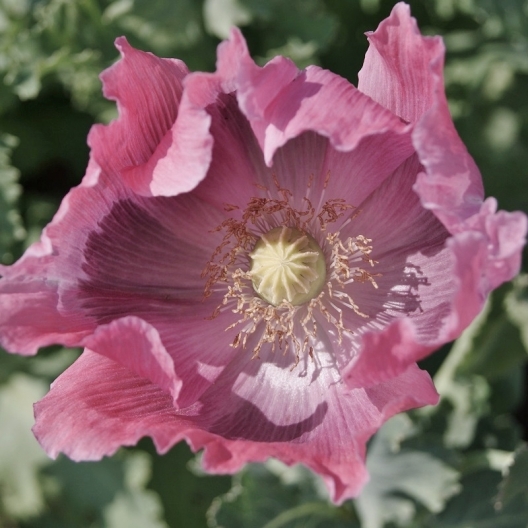
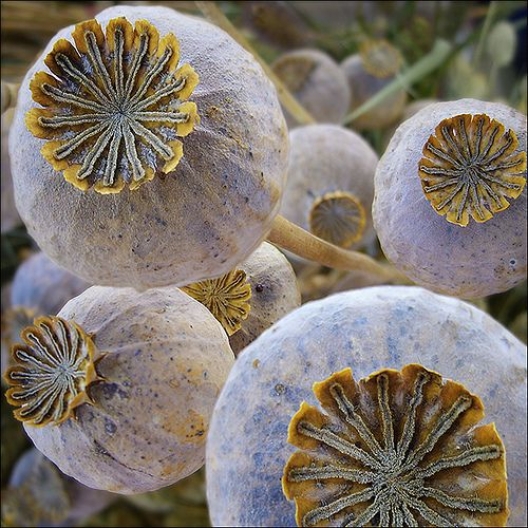
An impressive heirloom ornamental poppy renowned for its towering stature, enormous blooms, and exceptionally large decorative seed capsules. Growing significantly taller than many standard breadseed poppies, this magnificent annual produces broad, satiny flowers in shades ranging from white and blush pink to soft lavender, rose, and mauve, depending on the individual strain. The flowers often measure 5 to 6 inches across and are followed by oversized blue-green seed pods that become one of the plant's greatest ornamental features.
Its commanding height and bold architectural form make The Giant one of the finest statement plants for cottage gardens, annual borders, and heirloom flower collections. From flowering through seed pod maturity, the plant provides months of visual interest and serves as an outstanding specimen in the landscape.
Garden Uses
The Giant Poppy is ideal for cottage gardens, annual borders, pollinator gardens, cutting gardens, dried flower gardens, and dramatic background plantings. Its impressive height allows it to stand above lower annuals while its oversized seed pods continue to provide beauty long after the blooms have faded.
It combines beautifully with larkspur, foxgloves, bachelor's buttons, cosmos, delphiniums, ornamental grasses, and other classic cottage garden favorites.
Growing Information
Sow seeds directly outdoors where plants are to mature, as poppies develop deep taproots and resent transplanting. Scatter seed over prepared soil and gently press into the surface. Since light encourages germination, cover only very lightly if necessary.
Plants typically reach 4 to 5 feet tall under good growing conditions and perform best in full sun with fertile, well-drained soil. Cool spring temperatures encourage vigorous growth and the largest flowers and seed capsules. Once established, plants require little maintenance and tolerate moderate drought.
Allow seed capsules to fully mature if they are desired for dried arrangements or natural reseeding. The Giant often self-sows gently, producing volunteer plants in subsequent seasons.
Quick Facts
- Botanical Name: Papaver somniferum
- Common Name: The Giant Poppy
- Plant Type: Annual
- Height: 48–60 inches
- Spread: 15–20 inches
- Flower Size: 5–6 inches
- Flower Colors: White, blush pink, lavender, rose, mauve (strain dependent)
- Bloom Season: Late spring to early summer
- Primary Feature: Huge flowers and oversized ornamental seed capsules
- Sun Requirements: Full sun
- Soil Requirements: Well-drained soil
- Water Needs: Low to moderate
- Pollinator Friendly: Excellent
- Dried Pod Value: Outstanding
- Self-Sowing: Often
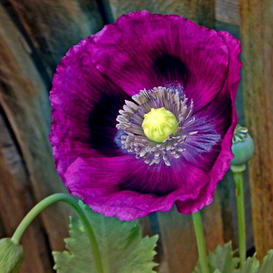
A striking ornamental poppy admired for its rich grape-purple to deep magenta blooms, silky crinkled petals, and dramatic pale centers. The flowers have a luxurious satin-like sheen that catches the light beautifully, creating depth and movement as the petals open and ripple in the breeze. This hybrid selection brings uncommon color and refined elegance to the garden, making it a standout choice for collectors and gardeners who enjoy unusual poppies.
The large, bowl-shaped blooms rise above attractive gray-green foliage and are followed by rounded ornamental seed pods. With its deep wine and grape tones, Laurens Springer Grape creates a sophisticated display that pairs beautifully with both cool and warm garden colors.
Garden Uses
Laurens Springer Grape Poppy is excellent for cottage gardens, mixed borders, pollinator plantings, cutting gardens, heirloom-style flower beds, and dramatic focal plantings. Its rich grape coloring combines beautifully with lavender, white foxgloves, blue larkspur, pale pink roses, silver foliage plants, ornamental grasses, and soft yellow companion flowers.
The bold color makes it especially useful where contrast is needed, while the ornamental seed pods extend the plant's interest after flowering has finished.
Growing Information
Sow seeds directly where plants are to grow, as poppies resent root disturbance and are best not transplanted. Scatter seed onto prepared soil and press gently into the surface. Cover only very lightly, since light helps germination.
Plants perform best in full sun and well-drained soil. Cool spring weather encourages strong growth and the richest flower color. Depending on growing conditions, plants generally reach 24 to 36 inches tall and produce their main bloom display in late spring to early summer.
Water during extended dry periods, but avoid heavy, wet soils. Allow seed pods to mature if ornamental dried pods or possible reseeding are desired.
Quick Facts
- Botanical Name: Papaver x hybrid
- Common Name: Laurens Springer Grape Poppy
- Plant Type: Ornamental poppy, usually grown as an annual or short-lived perennial depending on strain and climate
- Height: 24–36 inches
- Spread: 12–18 inches
- Flower Color: Grape-purple, wine-magenta, deep plum
- Bloom Season: Late spring to early summer
- Sun Requirements: Full sun
- Soil Requirements: Well-drained soil
- Water Needs: Low to moderate
- Pollinator Friendly: Yes
- Dried Pod Value: Good
- Best Use: Cottage gardens, borders, cutting gardens, pollinator plantings
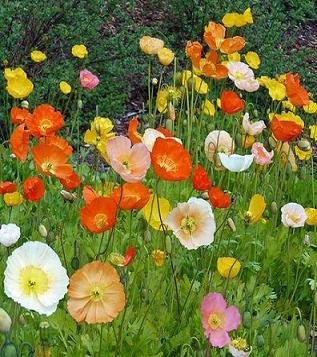
A dazzling blend of large, satiny blooms in shimmering shades of white, cream, lemon, apricot, peach, salmon, soft pink, and pale orange. Many flowers feature delicately frosted or lightly blended petals that give the appearance of crushed ice sparkling in the sunlight, inspiring the variety's name. The silky blooms dance gracefully atop slender, leafless stems, creating a light and airy display that brings elegance to the spring and early summer garden.
Unlike many other poppy species, Iceland Poppies thrive in cool weather and often bloom over an extended period. Their delicate appearance is complemented by surprisingly sturdy plants that produce a succession of flowers, making Crushed Ice Mix one of the finest pastel blends for both gardens and bouquets.
Garden Uses
Crushed Ice Mix is perfect for cottage gardens, cutting gardens, cool-season borders, alpine gardens, rock gardens, pollinator plantings, and containers. The soft pastel colors blend beautifully with pansies, violas, forget-me-nots, sweet alyssum, dianthus, English daisies, and spring-flowering bulbs.
The long stems make excellent cut flowers, while mass plantings create a shimmering carpet of soft color that brightens the landscape.
Growing Information
Sow seeds in early spring or late summer where plants are to grow, or start indoors under cool conditions for transplanting while young. Iceland Poppies prefer cool temperatures and perform best in full sun to light afternoon shade in warmer climates.
Plants typically reach 12 to 18 inches tall with a spread of 8 to 12 inches. They prefer fertile, well-drained soil that remains evenly moist but never waterlogged. Deadheading spent flowers encourages continuous blooming over an extended season.
Although often grown as annuals, Iceland Poppies may behave as short-lived perennials in cooler climates.
Quick Facts
- Botanical Name: Papaver nudicaule
- Common Name: Crushed Ice Mix Iceland Poppy
- Plant Type: Cool-season annual or short-lived perennial
- Height: 12–18 inches
- Spread: 8–12 inches
- Flower Colors: White, cream, lemon, apricot, peach, salmon, pink, pale orange
- Bloom Season: Spring through early summer
- Sun Requirements: Full sun to light afternoon shade
- Soil Requirements: Fertile, well-drained soil
- Water Needs: Moderate
- Pollinator Friendly: Excellent
- Cut Flower Value: Excellent
- Cold Tolerance: Excellent
- Best Use: Borders, rock gardens, containers, cutting gardens
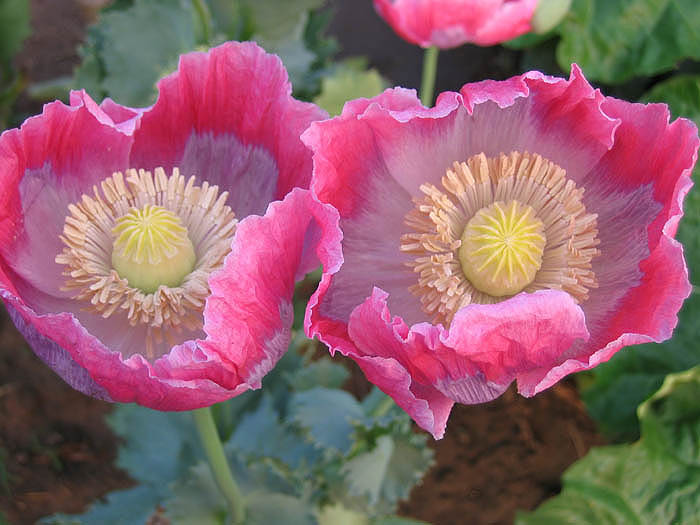
An impressive heirloom ornamental poppy celebrated for its enormous satiny blooms in soft shades of blush pink, shell pink, rose-pink, and pure white. Many flowers display delicate transitions between pink and white, creating a luminous, watercolor-like effect that enhances their elegant beauty. The giant flowers, often measuring 5 to 6 inches across, are followed by exceptionally large blue-green seed capsules that remain highly ornamental long after flowering.
Towering above attractive blue-green foliage on sturdy stems, Pink and White Giganteum combines graceful pastel coloring with impressive size, making it one of the finest giant breadseed poppies for cottage gardens, cutting gardens, and heirloom flower collections.
Garden Uses
Pink and White Giganteum is ideal for cottage gardens, annual borders, pollinator gardens, cutting gardens, heirloom landscapes, and dried flower production. The soft pastel blooms pair beautifully with blue larkspur, lavender, foxgloves, bachelor's buttons, sweet peas, nigella, baby's breath, and ornamental grasses.
Its towering stems and oversized flowers make outstanding background plants, while the large decorative seed pods continue providing interest well into summer and autumn.
Growing Information
Sow seeds directly outdoors where plants are to mature, as breadseed poppies develop deep taproots and resent transplanting. Scatter seed over prepared soil and gently press into the surface. Since light aids germination, cover seed only very lightly if necessary.
Plants commonly reach 4 to 5 feet tall under favorable conditions and thrive in full sun with fertile, well-drained soil. Cool spring temperatures encourage vigorous growth, larger flowers, and exceptional seed capsule development. Once established, plants require little maintenance beyond occasional watering during prolonged dry weather.
Allow the impressive seed capsules to mature fully if dried arrangements or natural reseeding are desired. Plants frequently self-sow lightly in suitable garden conditions.
Quick Facts
- Botanical Name: Papaver somniferum var.
- Common Name: Pink and White Giganteum Poppy
- Plant Type: Annual
- Height: 48–60 inches
- Spread: 15–20 inches
- Flower Size: 5–6 inches
- Flower Colors: Blush pink, shell pink, rose-pink, white, pink-and-white bicolor
- Bloom Season: Late spring to early summer
- Primary Feature: Giant flowers and oversized ornamental seed capsules
- Sun Requirements: Full sun
- Soil Requirements: Well-drained soil
- Water Needs: Low to moderate
- Pollinator Friendly: Excellent
- Dried Pod Value: Outstanding
- Self-Sowing: Often
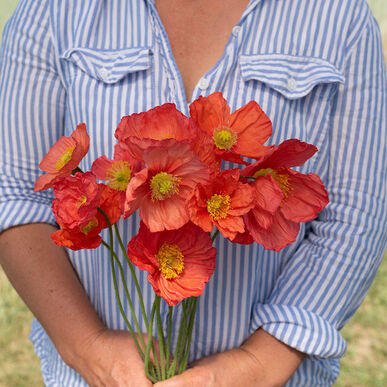
A graceful ornamental annual admired for its delicate champagne-pink, peach, coral, and soft rose blooms. The silky petals have a luminous, crinkled texture that gives each flower a light, airy appearance, while the yellow-green centers add a fresh contrast to the warm pastel coloring. The overall effect is soft, elegant, and cheerful, much like bubbles rising in a glass of rosé champagne.
Garden Uses
Champagne Pink Bubbles Poppy is excellent for cottage gardens, cutting gardens, annual borders, pollinator plantings, romantic flower beds, and heirloom-style landscapes. Its warm pastel blooms pair beautifully with lavender, blue larkspur, white alyssum, nigella, baby's breath, foxgloves, cosmos, and ornamental grasses.
The attractive seed pods provide added interest after flowering and are useful for dried arrangements and garden crafts.
Growing Information
Sow seeds directly outdoors where plants are to grow, as poppies dislike transplanting. Scatter seed over prepared soil and press gently into the surface. Cover only very lightly, since light helps germination. Best growth occurs in full sun and well-drained soil during cool spring weather.
Plants generally grow 30 to 40 inches tall. Once established, they are easy to maintain and tolerate moderate drought. Water during prolonged dry periods, but avoid wet or overly rich soil. Allow seed pods to mature if dried pods or natural reseeding are desired.
Quick Facts
- Botanical Name: Papaver somniferum var.
- Common Name: Champagne Pink Bubbles Poppy
- Plant Type: Annual
- Height: 30–40 inches
- Spread: 12–18 inches
- Flower Color: Champagne pink, peach, coral, soft rose
- Bloom Season: Late spring to early summer
- Sun: Full sun
- Soil: Well-drained soil
- Water Needs: Low to moderate
- Best Use: Cottage gardens, borders, cutting gardens, dried pods
- Pollinator Friendly: Yes
- Self-Sows: Often in favorable conditions
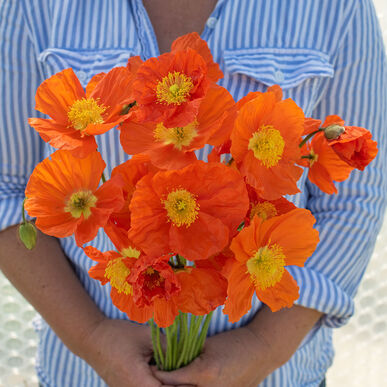
A bright and cheerful ornamental annual admired for its glowing orange, tangerine, apricot-orange, and golden-coral blooms. The flowers have delicate, crinkled petals with a soft satin sheen, surrounding bright yellow stamens and fresh green centers. Their warm, sparkling color gives the garden a lively, sunlit appearance, making this variety especially attractive in cottage gardens and mixed annual borders.
Garden Uses
Champagne Orange Bubbles Poppy is excellent for cottage gardens, annual borders, cutting gardens, pollinator plantings, meadow-style gardens, and heirloom flower displays. Its vivid orange blooms pair beautifully with blue larkspur, purple salvia, white alyssum, nigella, bachelor's buttons, lavender, and ornamental grasses.
The rounded seed pods add ornamental value after bloom and may be used in dried arrangements and garden crafts.
Growing Information
Sow seeds directly outdoors where plants are to grow, as poppies dislike transplanting. Scatter seed over prepared soil and press gently into the surface, covering only very lightly. Cool weather encourages best germination and strong early growth.
Plants generally grow 30 to 40 inches tall and perform best in full sun with well-drained soil. Once established, they require little care and tolerate moderate drought. Water during extended dry periods, but avoid soggy soil or heavy fertilization.
Quick Facts
- Botanical Name: Papaver somniferum var.
- Common Name: Champagne Orange Bubbles Poppy
- Plant Type: Annual
- Height: 30–40 inches
- Spread: 12–18 inches
- Flower Color: Orange, tangerine, apricot-orange, golden coral
- Bloom Season: Late spring to early summer
- Sun: Full sun
- Soil: Well-drained soil
- Water Needs: Low to moderate
- Best Use: Cottage gardens, borders, cutting gardens, dried pods
- Pollinator Friendly: Yes
- Self-Sows: Often in favorable conditions
A striking peony-flowered annual admired for its large, fully double coral-pink to salmon-rose blooms. The flowers are packed with finely ruffled, feathered petals that create a soft, pompom-like appearance, giving each bloom remarkable texture and fullness. Rising above blue-green foliage on strong stems, Venus brings warm color and dramatic form to cottage gardens, annual borders, and cutting gardens.
Garden Uses
Venus Poppy is excellent for cottage gardens, cutting gardens, annual borders, heirloom flower beds, pollinator plantings, and romantic mixed borders. Its coral-pink blooms pair beautifully with purple salvia, blue larkspur, lavender, white alyssum, nigella, foxgloves, baby's breath, and ornamental grasses.
The rounded seed pods that follow bloom are useful for dried arrangements and add ornamental interest after flowering has finished.
Growing Information
Sow seeds directly outdoors where plants are to grow, as poppies dislike transplanting. Scatter seed over prepared soil and press gently into the surface. Cover only very lightly, since light helps germination. Best growth occurs in full sun and well-drained soil during cool spring weather.
Plants generally grow 30 to 40 inches tall. Once established, they are easy to maintain and tolerate moderate drought. Water during extended dry periods, but avoid soggy soil or heavy fertilization. Allow seed pods to mature if dried pods or natural reseeding are desired.
Quick Facts
- Botanical Name: Papaver paeoniflorum
- Common Name: Venus Poppy
- Plant Type: Annual
- Height: 30–40 inches
- Spread: 12–18 inches
- Flower Color: Coral-pink, salmon-rose, warm pink
- Flower Form: Fully double, ruffled, pompom-like
- Bloom Season: Late spring to early summer
- Sun: Full sun
- Soil: Well-drained soil
- Water Needs: Low to moderate
- Best Use: Cottage gardens, borders, cutting gardens, dried pods
- Pollinator Friendly: Moderate
- Self-Sows: Often in favorable conditions
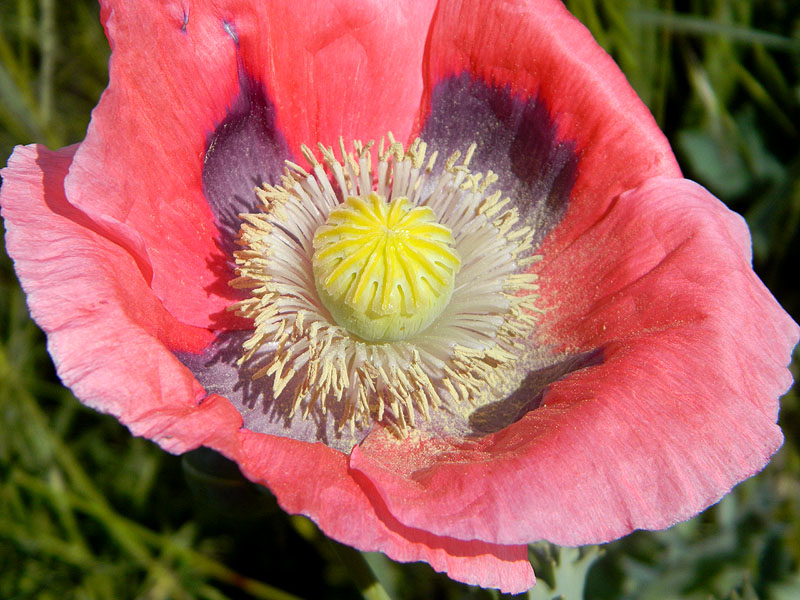
A beautiful heirloom ornamental poppy treasured for its large, silky blooms and handsome ornamental seed capsules. Flower colors typically range through soft shades of rose, blush pink, lavender, mauve, and occasional white, with each blossom displaying delicate crepe-paper petals surrounding a prominent pale green seed capsule encircled by golden stamens. Elegant yet easy to grow, this variety offers classic cottage garden beauty from late spring into early summer.
Following its impressive bloom display, Cory's Poppy develops large, rounded blue-green seed pods that remain highly decorative for weeks. These ornamental capsules make the variety equally valuable after flowering, providing lasting interest in the garden and outstanding material for dried floral arrangements.
Garden Uses
Cory's Poppy is ideal for cottage gardens, heirloom flower collections, cutting gardens, annual borders, pollinator gardens, dried flower gardens, and naturalized plantings. The soft flower colors combine beautifully with bachelor's buttons, larkspur, foxgloves, nigella, sweet peas, cosmos, lavender, and ornamental grasses.
The flowers provide graceful spring color, while the attractive seed capsules extend ornamental interest well into summer and autumn.
Growing Information
Sow seeds directly outdoors where plants are to mature, as breadseed poppies develop deep taproots and dislike transplanting. Scatter seed over finely prepared soil and gently press into the surface. Cover only very lightly, as light promotes germination.
Plants typically reach 30 to 42 inches tall and thrive in full sun with fertile, well-drained soil. Cool spring temperatures encourage vigorous growth and abundant flowering. Once established, plants require little maintenance beyond occasional watering during extended dry periods.
Allow several seed capsules to mature if dried arrangements or natural reseeding are desired. Plants frequently self-sow lightly under favorable growing conditions.
Quick Facts
- Botanical Name: Papaver somniferum var.
- Common Name: Cory's Poppy
- Plant Type: Hardy Annual
- Height: 30–42 inches
- Spread: 12–18 inches
- Flower Colors: Rose, blush pink, lavender, mauve, white
- Bloom Season: Late spring to early summer
- Primary Feature: Elegant flowers and ornamental seed capsules
- Sun Requirements: Full sun
- Soil Requirements: Well-drained soil
- Water Needs: Low to moderate
- Pollinator Friendly: Excellent
- Dried Pod Value: Excellent
- Self-Sowing: Often
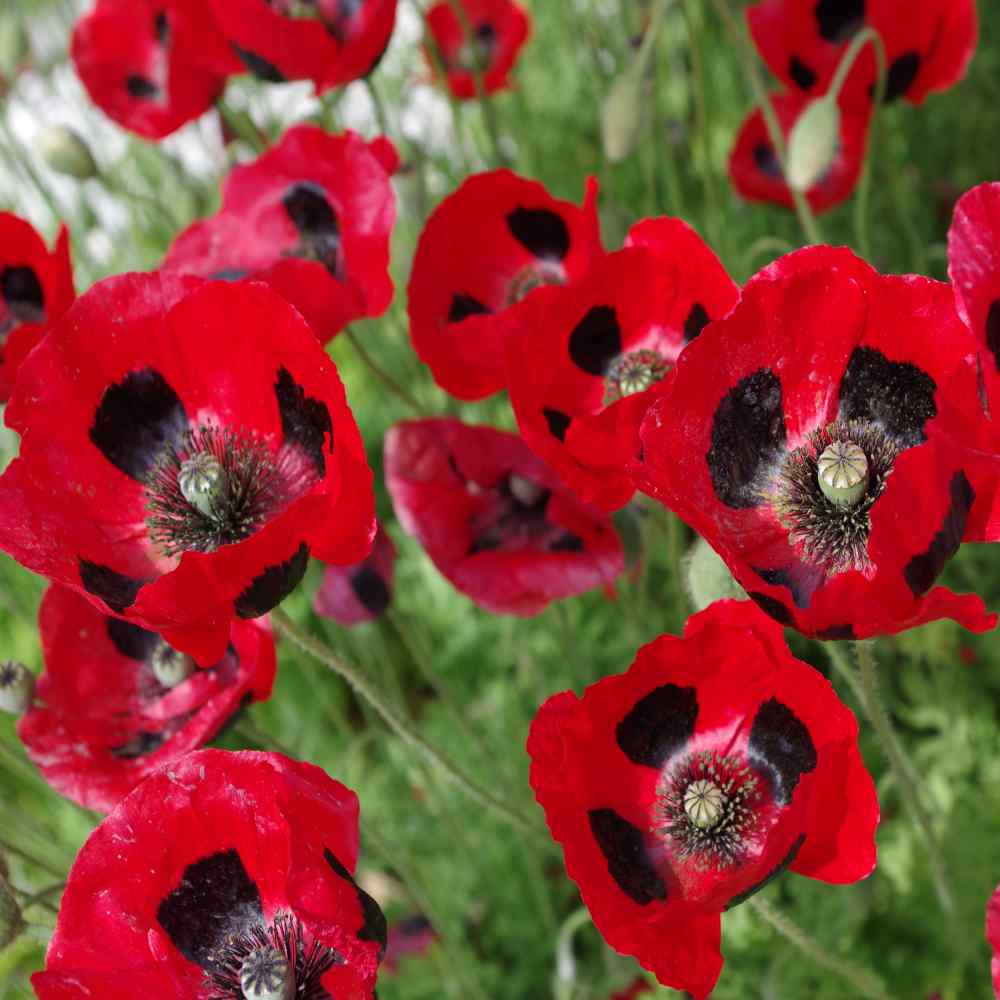
One of the most distinctive annual poppies ever introduced, producing brilliant scarlet-red flowers dramatically marked with bold black spots at the base of each petal. These striking markings closely resemble the wing patterns of a ladybird beetle (ladybug), giving this heirloom variety its memorable common name. The silky, bowl-shaped blooms measure 3 to 4 inches across and sway gracefully atop slender stems, creating a lively display of vivid color throughout late spring and early summer.
Native to the Caucasus region and neighboring parts of western Asia, Lady Bird Poppy combines exceptional garden performance with one of the most recognizable flower patterns found in the poppy family. Its bold coloration makes it a favorite for cottage gardens, wildflower plantings, and pollinator habitats.
Garden Uses
Lady Bird Poppy is ideal for cottage gardens, wildflower meadows, annual borders, pollinator gardens, naturalized plantings, and cutting gardens. The brilliant scarlet flowers create spectacular contrast when planted alongside blue bachelor's buttons, white sweet alyssum, lavender, larkspur, cornflowers, nigella, and ornamental grasses.
Mass plantings create a dazzling display, while the decorative seed pods continue adding interest after the blooms have faded.
Growing Information
Sow seeds directly outdoors where plants are to bloom, as poppies develop delicate taproots and dislike transplanting. Scatter seed over finely prepared soil and gently press into the surface, covering only lightly since light improves germination.
Plants generally reach 18 to 24 inches tall and thrive in full sun with well-drained soil. Cool spring temperatures encourage vigorous growth and abundant flowering. Once established, Lady Bird Poppy requires little maintenance and tolerates moderate drought.
Allow seed capsules to mature if natural reseeding is desired. Plants frequently self-sow lightly, producing cheerful displays in subsequent seasons.
Quick Facts
- Botanical Name: Papaver commutatum
- Common Name: Lady Bird Poppy
- Plant Type: Hardy Annual
- Height: 18–24 inches
- Spread: 10–15 inches
- Flower Size: 3–4 inches
- Flower Color: Brilliant scarlet-red with bold black basal spots
- Bloom Season: Late spring to early summer
- Sun Requirements: Full sun
- Soil Requirements: Well-drained soil
- Water Needs: Low to moderate
- Pollinator Friendly: Excellent
- Dried Pod Value: Good
- Self-Sowing: Often
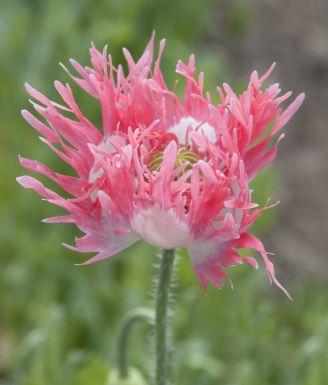
An elegant heirloom annual celebrated for its spectacular deeply fringed flowers in soft shades of rose-pink, blush, and creamy white. The finely cut petals give each bloom a feathery, almost lace-like appearance, while the contrasting bicolor pattern creates a delicate watercolor effect that changes subtly from flower to flower. Large, fluffy blossoms seem to float above blue-green foliage, bringing both texture and graceful color to the late spring garden.
Unlike traditional poppies with smooth petals, the intricate fringing of Pink Bicolor Fringed Poppy produces blooms that resemble finely ruffled carnations or exotic chrysanthemums. Decorative seed pods continue the display after flowering, making this variety attractive for many weeks.
Garden Uses
Pink Bicolor Fringed Poppy is an outstanding choice for cottage gardens, heirloom flower collections, annual borders, cutting gardens, pollinator gardens, and Victorian-style landscapes. The soft pink and white blooms blend beautifully with blue larkspur, lavender, white foxgloves, baby's breath, nigella, cosmos, and ornamental grasses.
The unusual fringed flowers provide remarkable texture, making this variety an excellent focal point in mixed annual plantings or romantic garden designs.
Growing Information
Sow seeds directly outdoors where plants are to mature, as poppies develop deep taproots and resent transplanting. Scatter seed over finely prepared soil and gently press into the surface. Since light encourages germination, cover only very lightly if necessary.
Plants typically reach 30 to 36 inches tall and thrive in full sun with fertile, well-drained soil. Cool spring weather promotes vigorous growth and produces the largest, most beautifully fringed flowers. Once established, plants require little maintenance beyond occasional watering during prolonged dry periods.
Allow seed capsules to mature if decorative dried pods or natural reseeding are desired. Plants frequently self-sow lightly under favorable growing conditions.
Quick Facts
- Botanical Name: Papaver laciniata
- Common Name: Pink Bicolor Fringed Poppy
- Plant Type: Hardy Annual
- Height: 30–36 inches
- Spread: 12–18 inches
- Flower Size: 4–5 inches
- Flower Color: Soft pink and creamy white bicolor
- Flower Form: Deeply fringed, fully double
- Bloom Season: Late spring to early summer
- Sun Requirements: Full sun
- Soil Requirements: Well-drained soil
- Water Needs: Low to moderate
- Pollinator Friendly: Good
- Dried Pod Value: Excellent
- Self-Sowing: Often
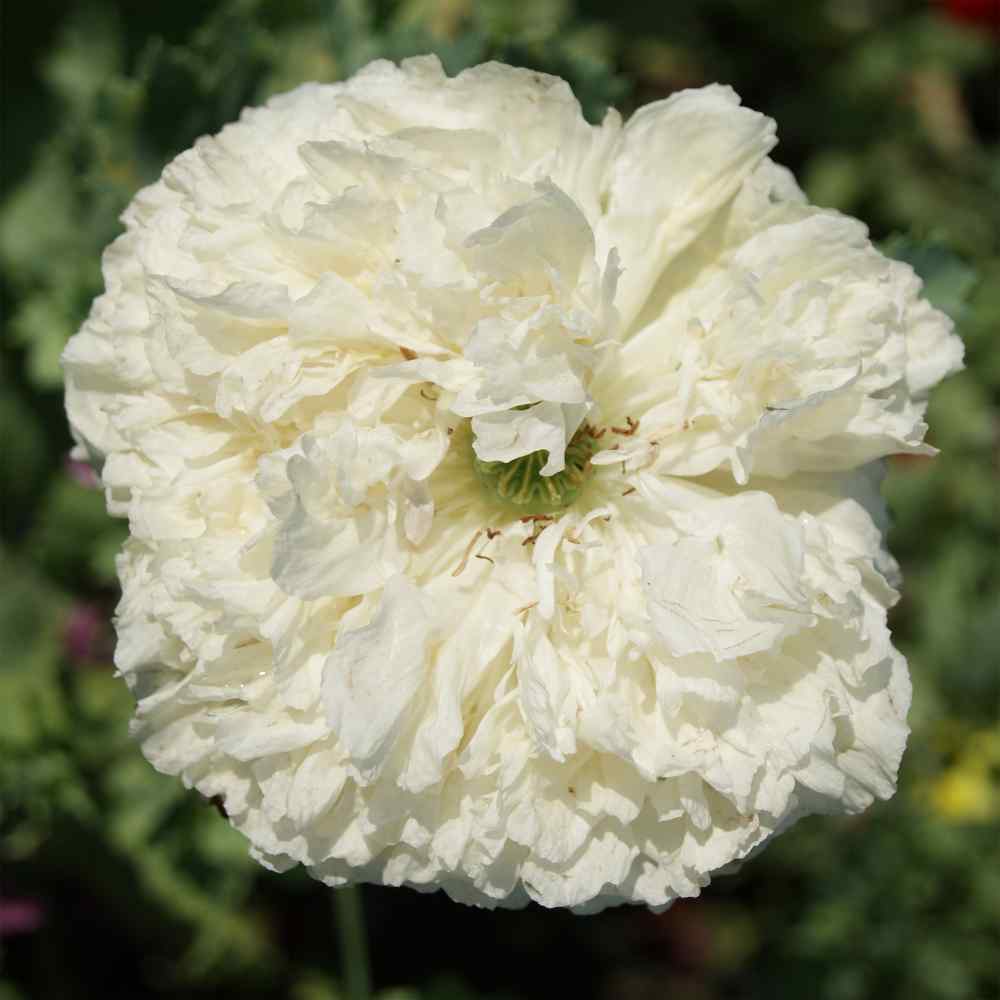
An elegant heirloom annual prized for its enormous, fully double blooms in soft ivory, creamy white, and pale buttercream tones. The densely layered petals form lush, peony-like flowers that often measure 4 to 5 inches across, creating a luxurious display of texture and refinement. The delicate cream coloring gives the blooms a timeless elegance, making this variety equally at home in classic cottage gardens, formal borders, and romantic cutting gardens.
Blooming from late spring into early summer, Cream Peony Poppy rises on sturdy stems above attractive blue-green foliage. After the flowers fade, large ornamental seed capsules remain, extending the plant's beauty well beyond the blooming season and providing valuable material for dried floral arrangements.
Garden Uses
Cream Peony Poppy is an exceptional choice for cottage gardens, wedding gardens, heirloom flower collections, cutting gardens, annual borders, and Victorian-style landscapes. The soft cream flowers pair beautifully with lavender, blue delphiniums, pink foxgloves, white cosmos, baby's breath, nigella, and silver-foliaged plants.
Its neutral coloring blends effortlessly with almost any garden palette, making it one of the most versatile peony-flowered poppies available.
Growing Information
Sow seeds directly outdoors where plants are to bloom, as peony poppies develop deep taproots and dislike transplanting. Scatter seed over finely prepared soil and gently press into the surface. Cover only lightly, since light promotes germination.
Plants generally mature at 30 to 40 inches tall and perform best in full sun with fertile, well-drained soil. Cool spring weather encourages vigorous growth and produces the largest, fullest blooms. Once established, plants require little maintenance and tolerate moderate drought.
Allow several seed capsules to mature if ornamental dried pods or natural reseeding are desired. Plants often self-sow gently under favorable growing conditions.
Quick Facts
- Botanical Name: Papaver paeoniflorum
- Common Name: Cream Peony Poppy
- Plant Type: Hardy Annual
- Height: 30–40 inches
- Spread: 12–18 inches
- Flower Size: 4–5 inches
- Flower Color: Cream, ivory, soft buttercream, creamy white
- Bloom Season: Late spring to early summer
- Sun Requirements: Full sun
- Soil Requirements: Well-drained soil
- Water Needs: Low to moderate
- Pollinator Friendly: Moderate
- Cut Flower Value: Excellent
- Dried Pod Value: Excellent
- Self-Sowing: Often
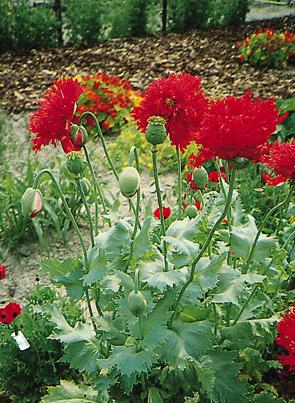
A magnificent heirloom annual admired for its enormous, fully double blooms in rich crimson-red with velvety undertones. The densely packed, finely ruffled petals form lush, peony-like blossoms that often measure 4 to 5 inches across, creating one of the most luxurious flower displays found among annual poppies. Their deep, saturated color provides dramatic contrast against the plant's attractive blue-green foliage, making Crimson Peony Poppy a standout in any garden.
Blooming from late spring into early summer, the sturdy stems support these massive blossoms with remarkable strength. Once flowering is complete, large ornamental seed capsules develop, extending the beauty of the plant well into summer and providing excellent material for dried floral arrangements.
Garden Uses
Crimson Peony Poppy is an exceptional choice for cottage gardens, heirloom flower collections, cutting gardens, annual borders, pollinator gardens, and formal landscape plantings. The rich crimson flowers combine beautifully with white foxgloves, blue delphiniums, lavender, baby's breath, nigella, ornamental grasses, and silver-foliaged perennials.
Its bold color creates spectacular focal points, while the decorative seed pods provide months of additional ornamental value after flowering.
Growing Information
Sow seeds directly outdoors where plants are to mature, as peony poppies develop deep taproots and dislike transplanting. Scatter seed over finely prepared soil and gently press into the surface. Cover only lightly, as light aids germination.
Plants typically mature at 30 to 40 inches tall and thrive in full sun with fertile, well-drained soil. Cool spring temperatures encourage vigorous growth and produce the fullest, richest-colored blooms. Once established, plants require little maintenance beyond occasional watering during prolonged dry periods.
Allow several seed capsules to mature if dried arrangements or natural reseeding are desired. Plants frequently self-sow gently under favorable garden conditions.
Quick Facts
- Botanical Name: Papaver paeoniflorum
- Common Name: Crimson Peony Poppy
- Plant Type: Hardy Annual
- Height: 30–40 inches
- Spread: 12–18 inches
- Flower Size: 4–5 inches
- Flower Color: Rich crimson-red, velvety deep red
- Flower Form: Fully double, peony-like
- Bloom Season: Late spring to early summer
- Sun Requirements: Full sun
- Soil Requirements: Well-drained soil
- Water Needs: Low to moderate
- Pollinator Friendly: Moderate
- Cut Flower Value: Excellent
- Dried Pod Value: Excellent
- Self-Sowing: Often
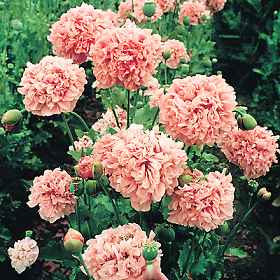
A spectacular heirloom annual grown for its enormous, fully double rose-pink blooms that resemble giant garden peonies. The densely packed petals create large, rounded flowers with a soft, fluffy appearance, often measuring 4 to 5 inches across. Their warm rose coloring and lush flower form make this variety a standout in cottage gardens, cutting gardens, and romantic annual borders.
Garden Uses
Bombast Rose Peony Poppy is excellent for cottage gardens, cutting gardens, annual borders, heirloom flower beds, pollinator plantings, and Victorian-style gardens. Its full rose-pink blooms pair beautifully with blue larkspur, lavender, white alyssum, foxgloves, nigella, baby's breath, cosmos, and ornamental grasses.
The large decorative seed pods that follow bloom are useful for dried arrangements, wreaths, and garden crafts.
Growing Information
Sow seeds directly outdoors where plants are to grow, as poppies dislike transplanting. Scatter seed over prepared soil and press gently into the surface. Cover only very lightly, since light helps germination. Plants perform best in full sun and well-drained soil during cool spring weather.
Bombast Rose generally grows 30 to 40 inches tall. Once established, plants are easy to maintain and tolerate moderate drought. Water during prolonged dry periods, but avoid soggy soil or excessive fertilizer, which may encourage weak growth.
Quick Facts
- Botanical Name: Papaver paeoniflorum
- Common Name: Bombast Rose Peony Poppy
- Plant Type: Annual
- Height: 30–40 inches
- Spread: 12–18 inches
- Flower Color: Rose pink
- Flower Form: Fully double, peony-like
- Bloom Season: Late spring to early summer
- Sun: Full sun
- Soil: Well-drained soil
- Water Needs: Low to moderate
- Best Use: Cottage gardens, borders, cutting gardens, dried pods
- Pollinator Friendly: Moderate
- Self-Sows: Often in favorable conditions
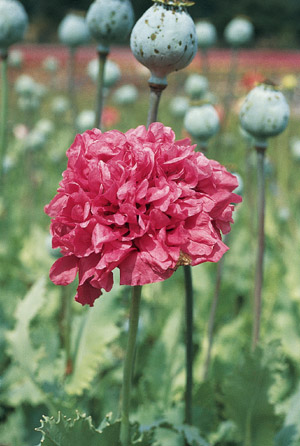
A magnificent heirloom annual producing enormous, fully double blooms in brilliant crimson-red to scarlet. The densely layered petals form perfectly rounded flowers that closely resemble giant peonies, often reaching 4 to 5 inches across. Each bloom is packed with hundreds of silky, crepe-paper petals that create exceptional fullness and texture, making Bombast Red one of the most dramatic ornamental poppies available for the spring garden.
Blooming from late spring into early summer, sturdy stems hold the large blossoms well above attractive blue-green foliage. Once flowering is complete, impressive ornamental seed capsules develop, extending the plant's decorative value for weeks and providing excellent material for dried floral arrangements.
Garden Uses
Bombast Red Peony Poppy is an outstanding choice for cottage gardens, cutting gardens, heirloom flower collections, annual borders, pollinator gardens, and Victorian-style landscapes. The brilliant red blooms create spectacular combinations with white foxgloves, blue delphiniums, purple larkspur, baby's breath, lavender, nigella, and ornamental grasses.
Its bold flowers create striking focal points, while the handsome seed pods continue adding beauty long after the petals have fallen.
Growing Information
Sow seeds directly outdoors where plants are to mature, as peony poppies develop deep taproots and resent transplanting. Scatter seed over finely prepared soil and gently press into the surface. Cover only lightly, as light encourages germination.
Plants generally reach 30 to 40 inches tall and perform best in full sun with fertile, well-drained soil. Cool spring weather produces vigorous growth and exceptionally large blooms. Once established, plants require very little maintenance and tolerate moderate drought.
Allow several seed capsules to mature if dried arrangements or natural reseeding are desired. Under favorable conditions, plants frequently self-sow gently from year to year.
Quick Facts
- Botanical Name: Papaver paeoniflorum
- Common Name: Bombast Red Peony Poppy
- Plant Type: Hardy Annual
- Height: 30–40 inches
- Spread: 12–18 inches
- Flower Size: 4–5 inches
- Flower Color: Brilliant crimson-red to scarlet
- Flower Form: Fully double, peony-like
- Bloom Season: Late spring to early summer
- Sun Requirements: Full sun
- Soil Requirements: Well-drained soil
- Water Needs: Low to moderate
- Pollinator Friendly: Moderate
- Cut Flower Value: Excellent
- Dried Pod Value: Excellent
- Self-Sowing: Often
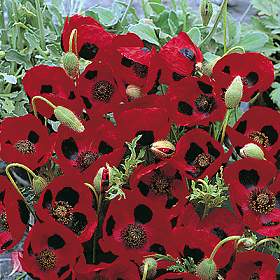
A dazzling annual species admired for its brilliant scarlet-red flowers that closely resemble elegant tulips before fully opening. As the blooms expand, the satiny petals form large, glowing cups often accented by bold black blotches at the base, creating one of the most striking color combinations found among ornamental poppies. The flowers seem to glow in bright sunshine, while the attractive blue-green foliage adds further ornamental appeal throughout the growing season.
Native to Turkey, the eastern Mediterranean, and parts of western Asia, Turkish Tulip Poppy has become a favorite among gardeners who appreciate unusual heirloom flowers. Blooming from late spring into early summer, it produces an abundance of vibrant blossoms followed by handsome ornamental seed capsules that continue decorating the garden long after flowering has finished.
Garden Uses
Turkish Tulip Poppy is an outstanding choice for cottage gardens, wildflower meadows, annual borders, Mediterranean-style gardens, pollinator plantings, and naturalized landscapes. The vivid scarlet flowers combine beautifully with blue bachelor's buttons, white sweet alyssum, lavender, larkspur, nigella, ornamental grasses, and silver-foliaged perennials.
Large drifts create spectacular displays that are visible from great distances, making this variety ideal for bold seasonal color.
Growing Information
Sow seeds directly outdoors where plants are to mature, as poppies develop delicate taproots that dislike transplanting. Scatter seed over finely prepared soil and gently press into the surface. Since light encourages germination, cover seed only very lightly.
Plants generally grow 18 to 30 inches tall and perform best in full sun with well-drained soil. Cool spring weather promotes vigorous growth and abundant flowering. Once established, Turkish Tulip Poppy tolerates moderate drought and requires very little maintenance.
Allow seed capsules to mature if natural reseeding is desired. Plants often self-sow lightly under favorable growing conditions without becoming invasive.
Quick Facts
- Botanical Name: Papaver glaucum
- Common Name: Turkish Tulip Poppy
- Plant Type: Hardy Annual
- Height: 18–30 inches
- Spread: 10–15 inches
- Flower Size: 3–4 inches
- Flower Color: Brilliant scarlet-red with black basal markings
- Bloom Season: Late spring to early summer
- Sun Requirements: Full sun
- Soil Requirements: Well-drained soil
- Water Needs: Low to moderate
- Pollinator Friendly: Excellent
- Dried Pod Value: Good
- Self-Sowing: Often
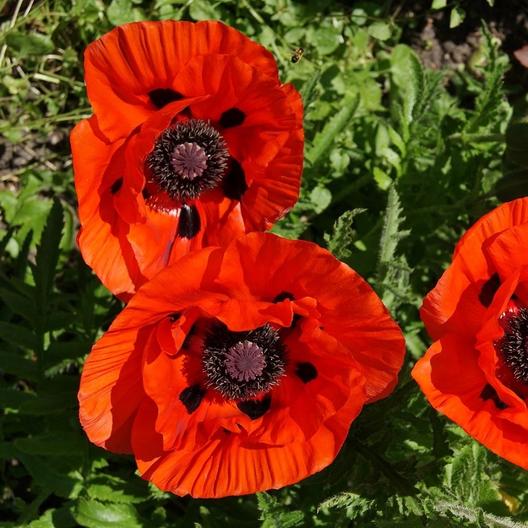
A brilliant perennial poppy grown for its large, glowing orange flowers with dramatic dark central markings. The satiny, crinkled petals create a fiery display in late spring and early summer, rising above coarse, deeply cut green foliage on sturdy stems. With blooms often reaching 4 to 6 inches across, this classic Oriental Poppy brings bold color, movement, and striking garden presence to sunny perennial borders.
Garden Uses
Prince of Orange Poppy is excellent for perennial borders, cottage gardens, pollinator plantings, rock garden edges, mixed sunny beds, and bold focal points. Its vivid orange blooms pair beautifully with blue salvia, catmint, lavender, irises, delphiniums, yarrow, ornamental grasses, and white or purple companion flowers.
Because Oriental poppies often go dormant after flowering, they are best planted among later-growing perennials that can fill the space as summer progresses.
Growing Information
Grow Prince of Orange Poppy in full sun and well-drained soil. Plants prefer cool winters and moderate spring weather, producing their strongest bloom display before intense summer heat arrives. Mature plants generally reach 24 to 36 inches tall with a spread of 18 to 24 inches.
Oriental poppies form deep taproots and should be planted where they can remain undisturbed. Once established, they are long-lived, drought tolerant, and relatively low maintenance. After flowering, foliage may yellow and disappear during summer dormancy, then return with cooler fall weather.
Quick Facts
- Botanical Name: Papaver orientalis
- Common Name: Prince of Orange Poppy
- Plant Type: Herbaceous Perennial
- Height: 24–36 inches
- Spread: 18–24 inches
- Flower Color: Bright orange with dark central markings
- Flower Size: 4–6 inches
- Bloom Season: Late spring to early summer
- Sun: Full sun
- Soil: Well-drained soil
- Water Needs: Low to moderate once established
- Best Use: Perennial borders, cottage gardens, pollinator gardens
- Pollinator Friendly: Yes
- Deer Resistance: Good
- Summer Dormancy: Common after flowering
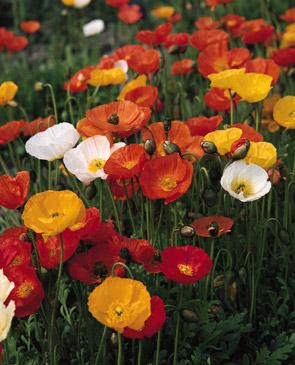
A delightful blend of delicate, silky blooms in nature-inspired shades of creamy white, soft yellow, lemon, apricot, peach, salmon, coral, blush pink, and glowing orange. Each flower is carried on slender, leafless stems above compact mounds of blue-green foliage, where the blooms gently sway in even the lightest breeze. The translucent petals seem to glow when backlit by the sun, creating one of the most graceful displays found among cool-season annual flowers.
Unlike many larger poppy species, Iceland Poppies bloom over an extended period in cool weather, producing an abundance of flowers that brighten spring gardens for weeks. Their cheerful colors and elegant form make Natural Mix one of the finest selections for borders, containers, and cutting gardens.
Garden Uses
Iceland Poppy Natural Mix is perfect for cottage gardens, alpine gardens, rock gardens, cutting gardens, cool-season annual beds, containers, and pollinator plantings. The soft natural colors blend beautifully with pansies, violas, forget-me-nots, English daisies, dianthus, sweet alyssum, tulips, and ornamental grasses.
Large drifts create a beautiful meadow effect, while the long stems make outstanding cut flowers for spring bouquets.
Growing Information
Sow seeds in early spring or late summer where plants are to bloom, or start indoors under cool conditions and transplant while seedlings are still young. Iceland Poppies thrive in cool weather and perform best in full sun in northern climates or with light afternoon shade in warmer regions.
Plants typically grow 12 to 18 inches tall with a spread of 8 to 12 inches. They prefer fertile, well-drained soil that remains evenly moist without becoming waterlogged. Removing spent flowers encourages continuous blooming throughout the season.
Although commonly grown as annuals, Iceland Poppies may behave as short-lived perennials where summers remain cool.
Quick Facts
- Botanical Name: Papaver nudicaule
- Common Name: Iceland Poppy Natural Mix
- Plant Type: Cool-season annual or short-lived perennial
- Height: 12–18 inches
- Spread: 8–12 inches
- Flower Colors: White, cream, yellow, apricot, peach, salmon, coral, pink, orange
- Bloom Season: Spring through early summer
- Sun Requirements: Full sun to light afternoon shade
- Soil Requirements: Fertile, well-drained soil
- Water Needs: Moderate
- Pollinator Friendly: Excellent
- Cut Flower Value: Excellent
- Cold Tolerance: Excellent
- Best Use: Borders, containers, rock gardens, cutting gardens
A note from one of our customers:
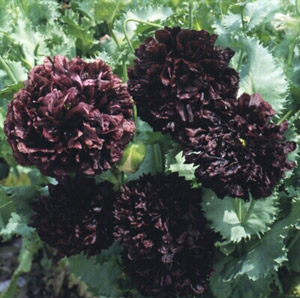
One of the most dramatic and sought-after ornamental poppies, producing enormous, fully double blooms in deep velvety maroon, rich burgundy, and nearly black-purple tones. The densely packed petals form lush, peony-like blossoms that can reach 4 to 5 inches across, creating a luxurious display of texture and color unlike almost any other annual flower. In certain lighting, the blooms appear almost jet black, making this heirloom variety a favorite among collectors and gardeners seeking truly unusual flowers.
Strong upright stems carry the magnificent blossoms above handsome blue-green foliage throughout late spring and early summer. After flowering, large ornamental seed capsules develop, providing additional beauty well into the growing season and becoming prized additions to dried floral arrangements.
Garden Uses
Double Black Flowered Peony Poppy is ideal for cottage gardens, heirloom flower collections, cutting gardens, annual borders, gothic-style gardens, moon gardens, and dramatic mixed perennial plantings. Its dark blooms create stunning contrast with white foxgloves, silver foliage, pale pink roses, blue delphiniums, lavender, baby's breath, white cosmos, and ornamental grasses.
The unusual flower color makes this variety an outstanding focal point, especially when planted in groups where the rich blooms create an unforgettable display.
Growing Information
Sow seeds directly outdoors where plants are to mature, as peony poppies develop deep taproots and resent transplanting. Scatter seed over finely prepared soil and gently press into the surface. Cover only lightly, since light encourages germination.
Plants generally reach 30 to 40 inches tall and thrive in full sun with fertile, well-drained soil. Cool spring weather produces the richest flower color and fullest blooms. Once established, plants require very little care and tolerate moderate drought.
Allow seed capsules to mature if ornamental dried pods or natural reseeding are desired. Plants frequently self-sow lightly under favorable growing conditions.
Quick Facts
- Botanical Name: Papaver paeoniflorum
- Common Name: Double Black Flowered Peony Poppy
- Plant Type: Hardy Annual
- Height: 30–40 inches
- Spread: 12–18 inches
- Flower Size: 4–5 inches
- Flower Color: Deep burgundy, maroon, near-black purple
- Flower Form: Fully double, peony-like
- Bloom Season: Late spring to early summer
- Sun Requirements: Full sun
- Soil Requirements: Well-drained soil
- Water Needs: Low to moderate
- Pollinator Friendly: Moderate
- Cut Flower Value: Excellent
- Dried Pod Value: Excellent
- Self-Sowing: Often
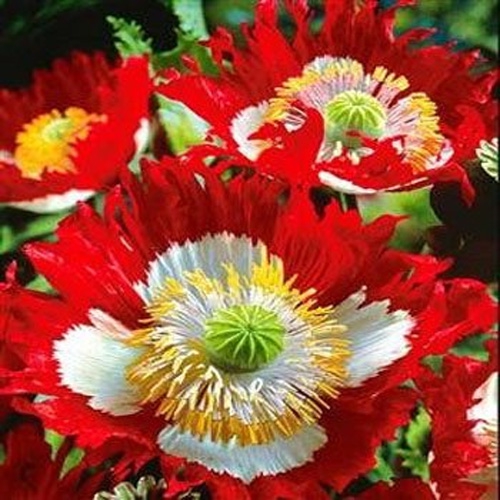
One of the most recognizable heirloom ornamental poppies ever introduced, producing spectacular scarlet-red flowers boldly marked with a brilliant white cross that closely resembles the national flag of Denmark. The large, satiny blooms typically measure 4 to 5 inches across and feature delicately crinkled petals surrounding a prominent pale green seed capsule encircled by dark stamens. Each flower is uniquely patterned, making every bloom a striking work of natural art.
After flowering, the plants develop large blue-green ornamental seed capsules that continue providing architectural beauty throughout the summer. With its patriotic appearance and unusual markings, Danish Flag Poppy has remained a favorite among collectors and cottage gardeners for generations.
Garden Uses
Danish Flag Poppy is ideal for cottage gardens, heirloom flower collections, cutting gardens, annual borders, pollinator gardens, and conversation gardens. The brilliant red and white flowers combine beautifully with blue bachelor's buttons, white foxgloves, lavender, larkspur, nigella, baby's breath, and ornamental grasses.
Its distinctive blooms make excellent specimen plants, while mass plantings create an unforgettable display during the spring flowering season.
Growing Information
Sow seeds directly outdoors where plants are to mature, as breadseed poppies develop deep taproots and resent transplanting. Scatter seed over finely prepared soil and gently press into the surface. Cover only very lightly since light encourages germination.
Plants generally mature at 30 to 42 inches tall and thrive in full sun with fertile, well-drained soil. Cool spring temperatures encourage vigorous growth and produce the finest flower coloration. Once established, Danish Flag Poppy requires little maintenance and tolerates moderate drought.
Allow several seed capsules to mature if ornamental dried pods or natural reseeding are desired. Plants frequently self-sow gently under favorable growing conditions.
Quick Facts
- Botanical Name: Papaver somniferum
- Common Name: Danish Flag Poppy
- Plant Type: Hardy Annual
- Height: 30–42 inches
- Spread: 12–18 inches
- Flower Size: 4–5 inches
- Flower Color: Scarlet-red with a bold white cross
- Bloom Season: Late spring to early summer
- Primary Feature: Distinctive Danish flag flower pattern
- Sun Requirements: Full sun
- Soil Requirements: Well-drained soil
- Water Needs: Low to moderate
- Pollinator Friendly: Excellent
- Dried Pod Value: Excellent
- Self-Sowing: Often
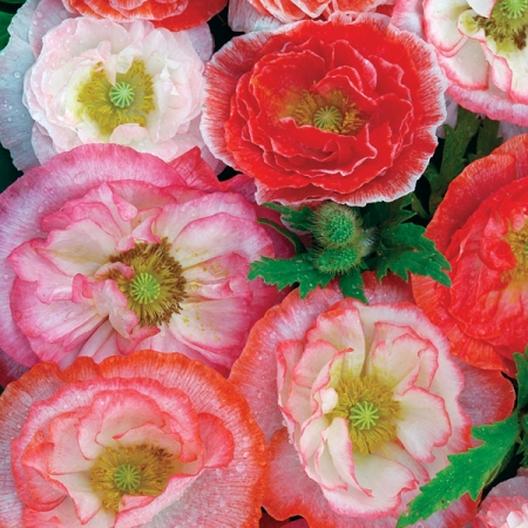
A beautiful heirloom blend combining the graceful elegance of Shirley Poppies with richly doubled, ruffled blooms in a stunning range of colors. Flowers appear in brilliant scarlet, crimson, rose, salmon, blush pink, lavender, white, and numerous bicolor combinations, each displaying layers of silky, crepe-paper petals that give the blooms a soft, romantic appearance. Every plant offers unique color variations, creating a lively tapestry that changes daily as new flowers open.
Blooming from late spring into early summer, the flowers dance atop slender stems that sway gracefully in the breeze. After flowering, attractive ornamental seed capsules remain, extending the display well beyond the bloom season while providing beautiful material for dried arrangements.
Garden Uses
Corn Poppy/Shirley Double Mix is perfect for cottage gardens, heirloom flower collections, cutting gardens, wildflower meadows, annual borders, pollinator gardens, and naturalized landscapes. The colorful mixture blends beautifully with bachelor's buttons, larkspur, foxgloves, nigella, sweet alyssum, baby's breath, cosmos, and ornamental grasses.
Large drifts create an old-fashioned meadow effect filled with soft movement, brilliant color, and continuous seasonal interest.
Growing Information
Sow seeds directly outdoors where plants are to mature, as Shirley poppies develop delicate taproots that dislike transplanting. Scatter seed over finely prepared soil and gently press into the surface. Cover only very lightly since light promotes germination.
Plants generally reach 24 to 36 inches tall and thrive in full sun with well-drained soil. Cool spring temperatures encourage vigorous growth and abundant flowering. Once established, they require little maintenance and tolerate moderate drought.
Allow seed capsules to mature if natural reseeding is desired. Plants frequently self-sow lightly, creating beautiful colonies in subsequent growing seasons.
Quick Facts
- Botanical Name: Papaver rhoeas
- Common Name: Corn Poppy/Shirley Double Mix
- Plant Type: Hardy Annual
- Height: 24–36 inches
- Spread: 12–15 inches
- Flower Size: 3–4 inches
- Flower Colors: Scarlet, crimson, rose, salmon, pink, lavender, white, and bicolors
- Flower Form: Semi-double to fully double
- Bloom Season: Late spring to early summer
- Sun Requirements: Full sun
- Soil Requirements: Well-drained soil
- Water Needs: Low to moderate
- Pollinator Friendly: Excellent
- Dried Pod Value: Excellent
- Self-Sowing: Often
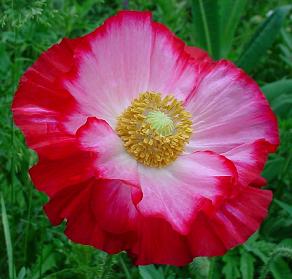
A classic hardy annual poppy known for its brilliant scarlet-red blooms and graceful wildflower charm. The delicate, crinkled petals glow in sunlight and surround dark central markings that give each flower striking contrast. Blooming in late spring to early summer, this variety creates a vivid meadow-like display that is both old-fashioned and timeless.
Garden Uses
Corn Poppy/Shirley Red is ideal for wildflower meadows, cottage gardens, pollinator plantings, annual borders, naturalized areas, and memorial gardens. Its bright red blooms combine beautifully with bachelor's buttons, larkspur, alyssum, nigella, daisies, and ornamental grasses.
Growing Information
Sow seeds directly outdoors where plants are to grow, as poppies dislike transplanting. Scatter seed over prepared soil and press lightly into the surface. Cover only very lightly, since light helps germination. Plants grow best in full sun and well-drained soil.
Plants generally reach 18 to 30 inches tall. Once established, they require little care and tolerate moderate drought. Allow seed pods to mature if natural reseeding is desired.
Quick Facts
- Botanical Name: Papaver rhoeas
- Common Name: Corn Poppy/Shirley Red
- Plant Type: Hardy Annual
- Height: 18–30 inches
- Spread: 10–15 inches
- Flower Color: Scarlet red
- Bloom Season: Late spring to early summer
- Sun: Full sun
- Soil: Well-drained soil
- Water Needs: Low to moderate
- Best Use: Meadows, cottage gardens, borders, pollinator plantings
- Pollinator Friendly: Yes
- Self-Sows: Often
Jim's Plant Growth Stimulator
To see the results for yourself, we advise using it on some plants and not on others and see the difference.
Note: We only ship this product to addresses inside the USA. The following ingredients are used in making Jim's Plant Growth Stimulator:
Gibberellic Acid
Gibberellic Acid is EPA approved, and is commercially used to grow most fruits and vegetables we eat.
B1 Vitamins and Plant Hormones
Micronutrients
Other ingredients
Each 8 ounce bottle of JPG01 Plant Growth Stimulator makes 16 gallons spray-on solution, you can also use a drench and pour it around the base of the plant if you prefer. The bottle comes with a 1/2 ounce measuring spoon, simply mix a half ounce of plant growth stimulator with a gallon of water and spray onto the plants, or drench the soil around the plant. :
The best times to start growing poppies and plant seeds is either early fall, or in the first part of March. Planting in Fall will result in earlier blooms the following Spring, whereas planting in Spring will result in Summer blooms. Alternately, you can plant half your seeds in the Fall, and half in the Spring. Although the optimal germination temperature is about 60 degrees Fahrenheit, the seeds will germinate at warmer temperatures, but they germinate best when planted in cool to cold soil, the warming soil will trigger germination.
Do not start papaver types in warm to hot weather. Germination will be poor and plants may not grow, start them in late fall to early spring.
To plant, simply cast seeds directly on top of loose, moist soil. Press seeds lightly into soil, but do not cover them more than the thickness of the seed.
Be sure to be aware of all the creatures that will ruin your poppy growing experience. Birds, for one, like to eat poppy seeds. So you may need to put up a net above the seeds until they sprout. Or, you can start them indoors under lights or on a window sill. Poppies have very sensitive root systems and do not transplant well, so be sure to start them in deep trays or pots.
Keep the soil moist for the first couple weeks until you see the sprouts come up. Then, cut back on the watering, only watering thoroughly every few days. This helps the new sprouts develop a strong root system by forcing them to search for water deep below the surface. Plus, it lowers the chance of mold and root rot, which poppies are very susceptible to.
Be careful when watering not to wash away the seeds or any new sprouts. Water gently with a spray bottle, or use a drip system.

Contact Us | Privacy Policy | About Us
Serving gardeners since 1992
State of Mississippi Seedmen's Permit #C-391, Ohio 90152, Minnesota 20086777