
Venus Flytrap Seeds
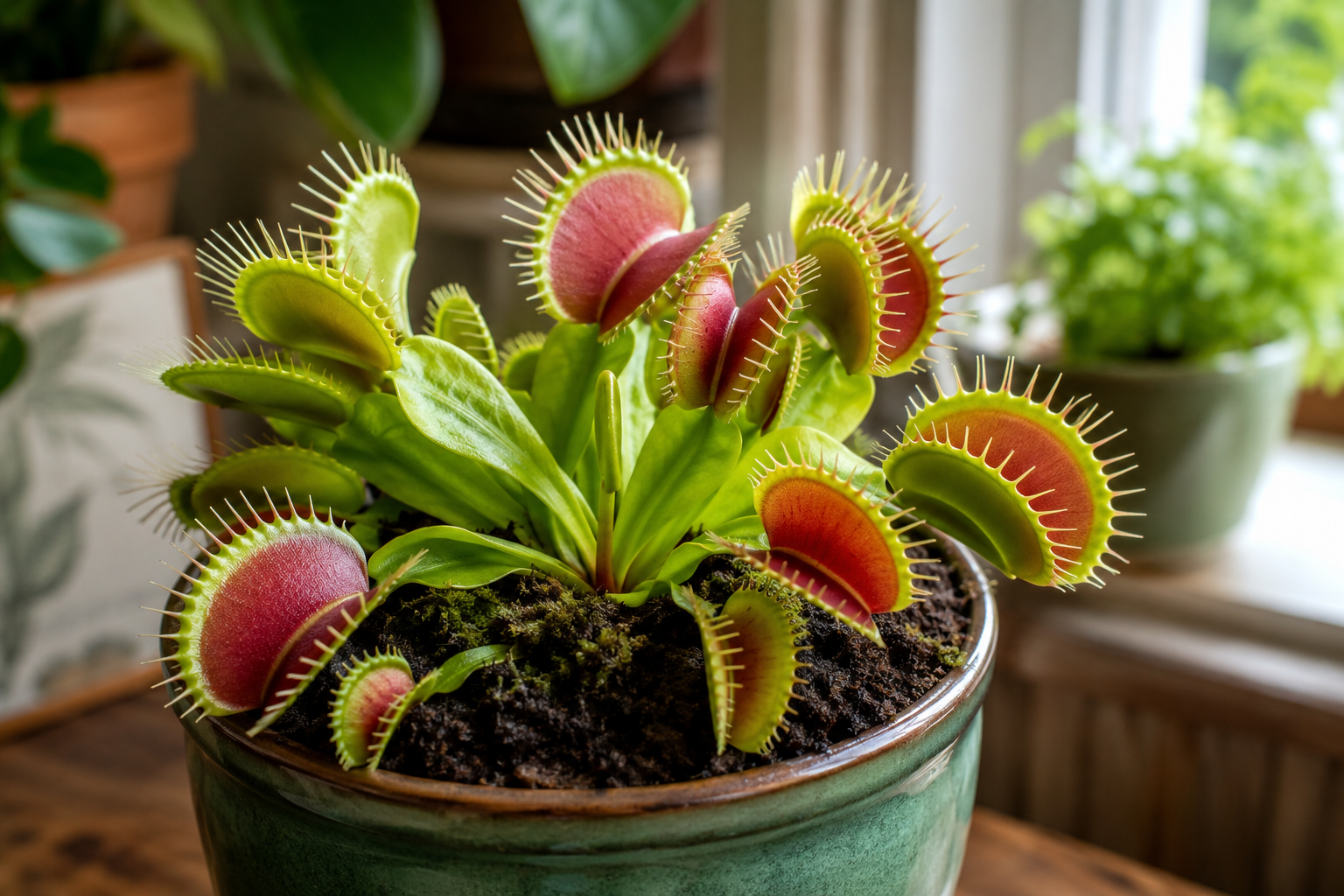
The world's most famous carnivorous plant! The Venus Flytrap is one of nature's most remarkable creations. Native to the bogs of North and South Carolina, this fascinating plant captures insects using specialized leaf traps that snap shut with astonishing speed. Its unique appearance and insect-catching abilities have made it a favorite among plant enthusiasts, collectors, and curious gardeners for generations.
Despite its exotic reputation, the Venus Flytrap can make an excellent houseplant when provided with the proper conditions. Its compact size, unusual growth habit, and interactive nature make it one of the most entertaining plants you can grow indoors.
Why Grow Venus Flytrap?- One of the most unusual and fascinating houseplants available.
- Produces specialized traps that capture small insects.
- Excellent conversation piece for home or office.
- A favorite educational plant for children and adults alike.
- Long-lived when given proper care.
- Compact enough for windowsills, terrariums, and small spaces.
The Venus Flytrap was first described to European scientists in the 1700s and quickly became one of the botanical wonders of the age. Charles Darwin was fascinated by carnivorous plants and devoted considerable study to them, calling the Venus Flytrap "one of the most wonderful plants in the world."
The plant's scientific name, Dionaea, honors Dione, the mother of Aphrodite in Greek mythology. Its common name comes from the Roman goddess Venus, a reference to the plant's unusual beauty.
Nature's Ingenious TrapEach trap contains tiny trigger hairs. When an insect touches these hairs twice within a few seconds, the trap rapidly closes. This clever mechanism helps prevent the plant from wasting energy on raindrops, falling debris, or other false alarms.
Once captured, the insect is digested over several days, allowing the plant to obtain nutrients that are scarce in its naturally nutrient-poor bog habitat.
Growing as a HouseplantVenus Flytraps are different from most common houseplants and should not be treated like ordinary potted plants.
- Light: Requires very bright light and benefits from several hours of direct sun daily.
- Water: Use only rainwater, distilled water, or reverse-osmosis water.
- Soil: Plant in a carnivorous plant mix, typically peat moss and perlite.
- Humidity: Appreciates moderate to high humidity.
- Fertilizer: Never fertilize Venus Flytraps.
- Feeding: The plant can catch its own insects and usually does not require feeding.
Unlike tropical houseplants, Venus Flytraps naturally experience a winter dormancy period. During this time growth slows, some leaves may die back, and the plant rests before resuming vigorous growth in spring. This dormancy helps maintain long-term health and vigor.
Seed GerminationSow seeds on the surface of a moist carnivorous plant mix and do not cover deeply. Provide bright light, high humidity, and consistently moist conditions using distilled, rain, or reverse-osmosis water. Germination generally occurs within several weeks, though patience is often rewarded with stronger seedlings.
Wildlife and Ecological ImportanceVenus Flytraps are native to a very limited natural range in the southeastern United States. Conservation efforts help protect wild populations, making cultivated plants an excellent way to enjoy this species without disturbing native habitats.
Ratings
Houseplant Appeal: ★★★★★
Conversation Piece: ★★★★★
Ease of Growing: ★★★☆☆
Educational Value: ★★★★★
Uniqueness: ★★★★★
Venus Flytraps can count! Research suggests the plant responds differently depending on how many times its trigger hairs are stimulated. This allows it to distinguish between a potential meal and a false alarm, making it one of the most sophisticated plants in the natural world.
Whether grown for science, curiosity, or pure enjoyment, the Venus Flytrap remains one of the most captivating houseplants ever discovered.
How to make your own Carnivorus Plant Potting Mix.
For over a thousand more unique seed varieties, all in stock and ready to ship, visit our Seed Catalog Index Page .