
Our favorite Cactus Seeds from around the world
Jim's Note: I know of no other plant that can take as much abuse and neglect as the cacti and still provide us with profuse blooms and its unique appearance. They are hardy, resilient and take up very little space. Often they will grow where no other plant will. They are truly the perfect windowsill plant. I have listed a few of my favorites below.
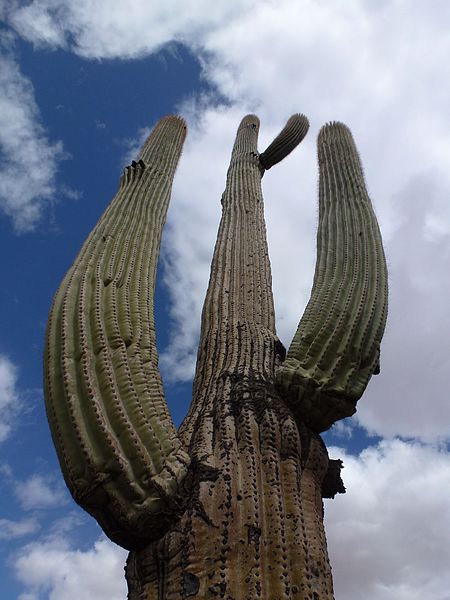

Property Value & Prestige: A mature, multi-armed Saguaro is worth thousands of dollars. Because they grow so slowly (about an inch a year for the first decade), having a large one on your land is a sign of a well-established, high-value estate.
Architectural Sentinel: Nothing matches the "wow factor" of a vertical giant. It provides a natural, towering focal point that anchors a landscape, making even a small yard feel like a vast desert sanctuary.
Low-Maintenance Luxury: Once established, a Saguaro is nearly indestructible. It requires zero pruning, zero fertilizing, and can survive on natural rainfall alone. It’s the highest impact for the lowest effort.
A Living Time Capsule: Planting a Saguaro seedling is a gift to the future. It’s a way to leave a 150-year legacy for your children and grandchildren, as the plant will continue to grow and "arm out" long after we’re gone.
Cultural Iconography: Owning a Saguaro brings the "Spirit of the West" home. It’s a conversation starter that evokes the rugged, resilient beauty of the Sonoran Desert.
The Giant Saguaro is primarily hardy in USDA Zones 8 through 11, making it well-suited for warm, arid climates. While it is a desert specialist that thrives in heat exceeding 100°F, its cold tolerance is more limited and highly dependent on the duration of the freeze.
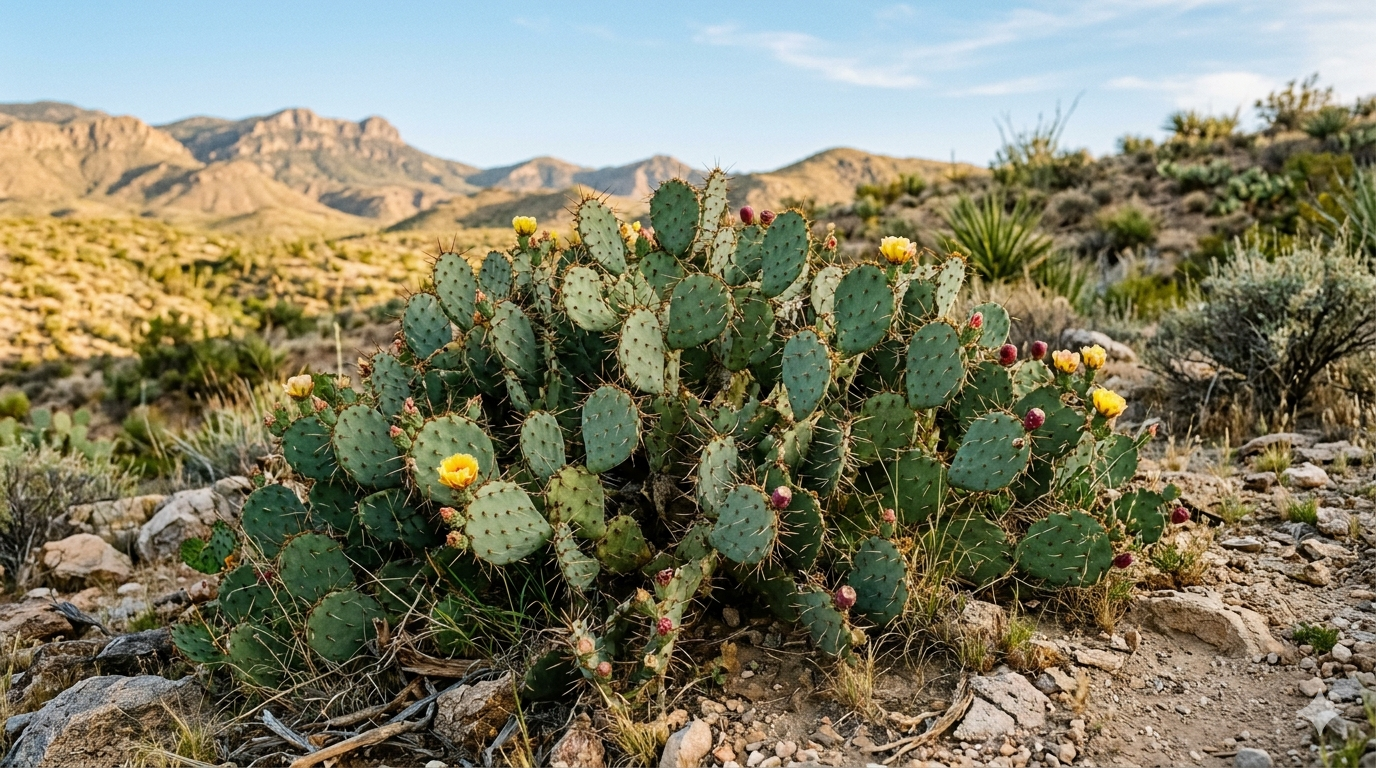
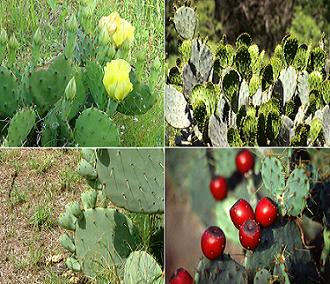
Tulip Pricklypear features mounding habit of flattened green pads with clusters of striking spines in shades of brown, yellow, or gray, and glochids that require careful handling. This hardy species thrives in full sun, demanding minimal water, resisting drought, and requires sandy or rocky soils. Ideal for rock gardens or container planting, it attracts pollinators and small mammals, bringing vibrant life and activity to your outdoor spaces. Whether you're a seasoned gardener or new to cacti, Tulip Pricklypear is a resilient, low-maintenance choice with surprising beauty and versatility.
An exceptionally resilient cactus with a native hardiness range spanning USDA Zones 4 through 9.
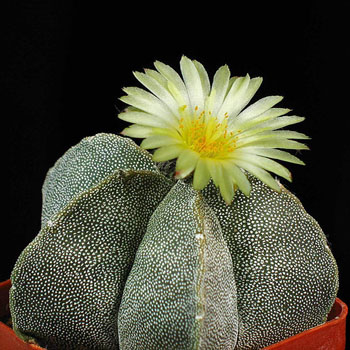
The "Ouch-Free" Cactus: Unlike almost every other species we've discussed, the Bishop’s Cap is entirely spineless. It’s the perfect choice for households with curious pets or children, and you’ll never have to worry about a "prickly" encounter during repotting.
Geometric Perfection: It grows in a stunning, symmetrical star shape (usually five ribs) that looks mathematically perfect. Its surface is dusted with thousands of tiny white "flocking" dots, giving it a sophisticated, silvery-suede texture.
Space-Saving Elegance: It’s a slow grower that stays relatively small, making it the ultimate "apartment cactus." It fits perfectly on a sunny windowsill, a bookshelf, or a minimalist office desk without ever outgrowing its welcome.
Frequent Bloomer: Once it reaches maturity (around 3–5 years), it’s a generous bloomer. It produces large, creamy silk-yellow flowers with a red throat directly from its center, often several times throughout the summer.The
Collector’s "Stone": Its common name comes from its resemblance to a miter (a bishop's hat). In a pot of dark gravel, it looks like a rare mineral, making it a high-end "living decor" piece for modern interiors.
It’s the thinking person’s cactus. If you value symmetry, texture, and a plant that stays "neat" and manageable, the Bishop’s Cap is your top-tier choice.


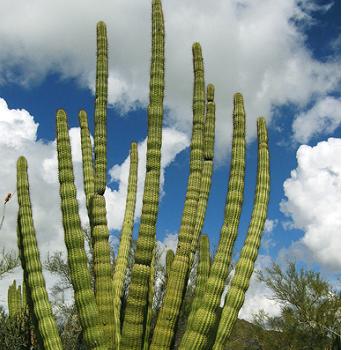
It grows in clusters of tall, upright stems branching from a short base, resembling the pipes of a church organ. Mature plants typically reach 15–23 feet (4.5–7 meters) in height and can spread up to 12 feet wide. This species is exceptionally slow-growing, taking roughly 150 years to reach full maturity. It often takes 35 years just to produce its first flower.
Large, creamy-white to pale lavender funnel-shaped flowers bloom in late spring to early summer. They are nocturnal, opening at night to be pollinated primarily by nectar-feeding bats.It produces a sweet, edible red fruit known locally as pitaya dulce. Historically, these fruits have been a vital food source for the Tohono O'odham and Seri people. Suited for USDA zones 9–11.
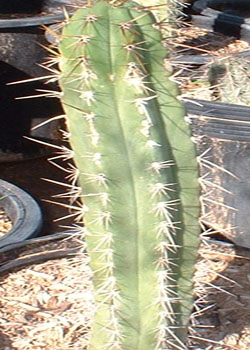
Explosive Growth: Unlike the slow-moving Saguaro, the Peruvian Torch is a fast-track grower. Under the right conditions, it can add 12 inches or more per year. It’s the perfect choice if you want to see a small seedling transform into a massive, multi-columnar centerpiece in just a few seasons.
Electric Blue Hue: Its skin often boasts a stunning glaucous blue-green tint. This frosted, silvery-blue color provides a high-contrast pop against typical green garden foliage, making it a visual standout in any collection.
Ancient Heritage: This isn't just a plant; it's a piece of ethnobotanical history. It has been used for over 3,000 years by indigenous cultures in the high Andes for its spiritual and medicinal properties, giving it a "mystique" that few other houseplants can claim.
Nocturnal Giant Blooms: When it matures, it produces some of the most spectacular flowers in the cactus kingdom—massive, fragrant white blooms (up to 10 inches across) that open at night and can perfume an entire garden.
Indestructible Resilience: It is incredibly "forgiving." While it thrives in the sun, it is more tolerant of higher rainfall and cooler temperatures than many desert cacti, making it an easier grow for people in climates that aren't strictly arid.
It’s the "Instant Impact" Cactus. If you want the dramatic look of a massive columnar cactus without waiting 50 years to see it, the Peruvian Torch is your best bet.
Cold hardy to 25 degrees when mature.
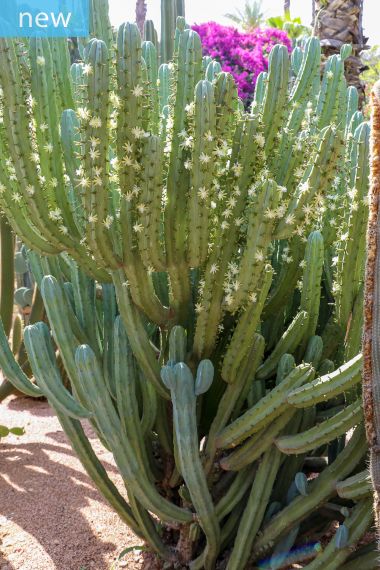
Unlike typical green cacti, the Blue Candle is famous for its glaucous blue-gray skin. It looks like it’s been dusted with fine silver powder, providing a high-end, "cool-toned" aesthetic that makes it pop against white walls or terracotta pots.
Living up to its name (geometrizans), this cactus grows in a very organized, candelabra-like fashion. It starts as a single column and then branches out perfectly, making it look like a designer floor lamp made of living tissue.
The "Blueberry" Cactus: Here is the surprise: it produces small, dark purple fruits that look and taste remarkably like sweet blueberries. In Mexico, these "garambullos" are a prized seasonal treat, often used in jams and ice creams.
Child & Pet Friendly: While it does have spines, they are very small, dark, and infrequent compared to a Barrel or Saguaro. It’s much easier to handle and less intimidating for a high-traffic living room.
One of the Fastest Growers: If you are impatient, this is your plant. It can grow up to a foot per year in the right conditions, giving you that "large plant" look in a fraction of the time.
It’s the "Influencer" of the cactus world. If you want a plant that looks like it belongs on the cover of an architectural magazine—and provides a snack once a year—the Blue Candle is the clear winner.
For zones 9b-11 outside. Full sun. Heat tolerant. Moderate water. Origin: Northern central Mexico.
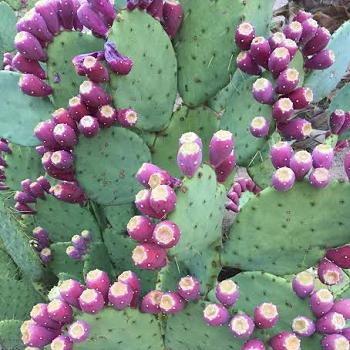
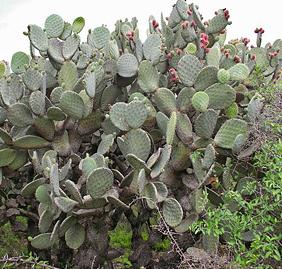
Edible Double-Feature: This plant provides two distinct harvests. The juicy, deep-red fruits (called tunas) are sweet like watermelon or berries and perfect for jellies, syrups, and margaritas. Meanwhile, the tender young pads (nopales) are a staple in Mexican cuisine, often grilled or sautéed with eggs.
A "Critter Café" for Wildlife: It is a foundational species for local ecosystems. Its nectar-rich yellow and orange flowers attract bees and hummingbirds, while the fruit feeds everything from mockingbirds to tortoises.
Natural "Burglar Bars": Growing up to 6 feet tall and 15 feet wide, its robust, spiny pads make an excellent living fence or natural security barrier that deters foot traffic and keeps unwanted guests (and deer) at bay.
Drought-Defying Resilience: Once established, it can survive on natural rainfall alone, thriving in habitats ranging from lush piney woods to harsh deserts. It is the perfect "lazy gardener" plant—requiring virtually no fertilization or watering.
Health & Wellness Powerhouse: Long used in traditional medicine, the pads are rich in fiber and antioxidants that can help stabilize blood sugar and lower cholesterol. The gel inside can even be used like aloe to soothe skin burns and wounds.
Landscape Tip: For the best look, position them as a central "thriller" in a rock garden or use them for erosion control on sloped areas, as they root easily from any pad that touches the ground.
It can take severe drought and hard freezes and is suitable to USDA Zones 6 and above. The fruits are edible and popular for making jelly and jam.
Good container cacti.
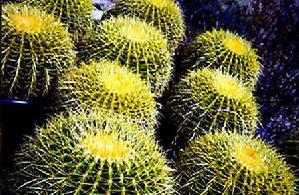
Here is why the Golden Barrel is the perfect investment for your home or garden:
1. Instant Designer AppealWith its nearly perfect spherical shape and vibrant, neon-gold spines, the Golden Barrel looks like a piece of living modern art. It provides a striking geometric contrast to softer leafy plants and instantly elevates any patio, rock garden, or sunny windowsill.
2. The Ultimate "Set It and Forget It" PlantForget the stress of a watering schedule. Built for the harsh Mexican desert, this cactus thrives on neglect. It’s incredibly drought-tolerant, making it the perfect companion for busy professionals or frequent travelers. If you have a sunny spot, you have a happy Golden Barrel.
3. A Lifetime CompanionA Golden Barrel isn't just a purchase; it's a legacy. These slow-growing beauties can live for over 100 years. As it matures, it develops deep, dramatic ribs and, eventually, a "crown" of delicate yellow flowers—a rewarding milestone for any grower.
4. Sustainable & RareWhile they are iconic in high-end landscaping, they are actually endangered in the wild. By growing a Golden Barrel, you are cultivating and preserving one of nature’s most unique botanical treasures.Add a bold, golden glow to your collection today.
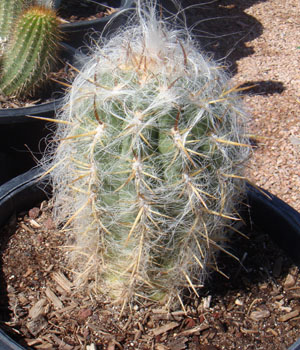
Jim's Note: Oreocereus need a minimum temperature of 45° F. Grow them in rich, porous, sandy soil and let their soil dry out between waterings. Repot in the spring, when their roots become cramped. Generally, they should be repotted every other year in order to provide fresh soil. However, this doesn't necessarily mean they'll need larger pots. Fill about a quarter of the pot with broken crocks, gravel, etc. to promote good drainage. Firm the potting soil. After repotting, do not water for a week or more.
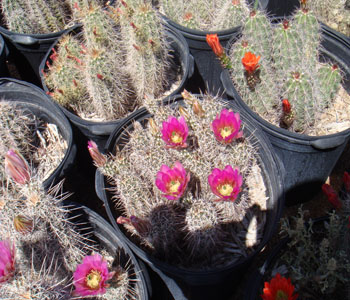
Here is why a Hedgehog Cactus belongs in your collection:
1. Explosive, Technicolor BloomsThe #1 reason to own a Hedgehog is the bloom. Unlike many cacti that have small, subtle flowers, the Echinocereus erupts in massive, cup-shaped blossoms in electric shades of magenta, scarlet, and neon orange. It’s a seasonal showstopper that turns a quiet windowsill into a gallery of color.
2. The Perfect "Space Saver"Not everyone has room for a three-foot barrel. The Hedgehog stays relatively small and often grows in charming, multi-stemmed "clumps." It’s the ideal choice for decorative bowls, fairy gardens, or small apartment balconies where space is at a premium.
3. Built for the Cold (and the Heat) Many Echinocereus species are surprisingly "cold-hardy." While most cacti shiver at the sight of frost, many Hedgehog varieties can handle temperatures well below freezing if kept dry. This makes them a rugged, versatile choice for outdoor rock gardens in climates where other succulents might struggle.
4. Low Maintenance, High RewardLike its barrel cousins, the Hedgehog requires very little water and thrives on sunshine. It’s a tough-as-nails plant that asks for almost nothing but gives back some of the most spectacular floral displays in the botanical world.Bring home the desert’s most vibrant bloomer.
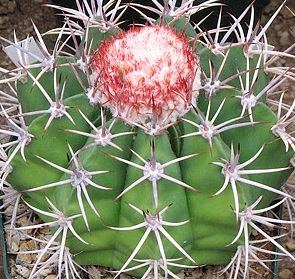
Here is why a Melocactus is a must-have for your collection:
1. The Iconic "Cephalium"The Melocactus is world-famous for its "cap" (the cephalium). Once the cactus reaches maturity, it stops growing its green body and begins producing a dense, velvety, reddish-orange crown of wool and bristles. It looks like the cactus is wearing a regal fez—a transformation unlike any other plant on Earth.
2. A Living EvolutionOwning a Melocactus is like watching a biological miracle. Once that crown appears, the plant focuses all its energy on producing tiny pink flowers and bright, berry-like fruits that pop out of the wool like hidden gems. It’s a sophisticated, "two-phase" life cycle that keeps you fascinated for years.
3. Tropical Vibes, Desert StyleUnlike many desert cacti, the Melocactus hails from the Caribbean and coastal South America. This means it loves warmth and can handle a bit more humidity than its peers. It’s the perfect choice for enthusiasts in warmer, coastal climates or those looking for a unique indoor specimen that feels a bit more "tropical."
4. Compact and PrestigousBecause the green body stops growing once the cap forms, the Melocactus stays a manageable size, making it a premium choice for high-end pottery and prominent display shelves. It doesn't just sit there—it presides over the room.
Claim your crown with the desert's most sophisticated silhouette.
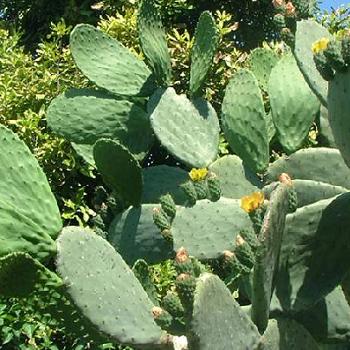
Feed the cuttings directly to your reptiles or plant and grow and have a non-ending fresh supply. Plant is heat tolerant and requires little to no water. Hardy to 18°F. Tree like opuntia grows rapidly to 16' tall with heat, water and sun.
Opuntia ficus indica have no large spines. The plant is high in calcium and fiber and low in protein and fats. Has a long shelf life if refrigerated after arrival. Can last for weeks or longer properly stored.
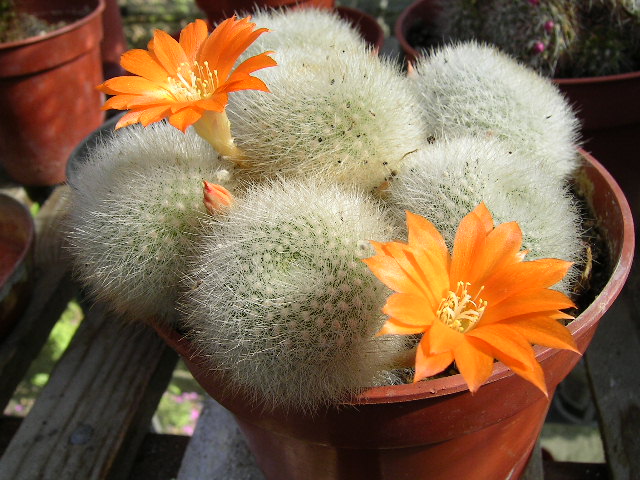
Rebutia muscula forms form low cushion covered by dense furry white spines and produces vibrant orange-red flower. The dense spines would protect it from the extremes of cold and sunshine. Hardy to 28 degrees.
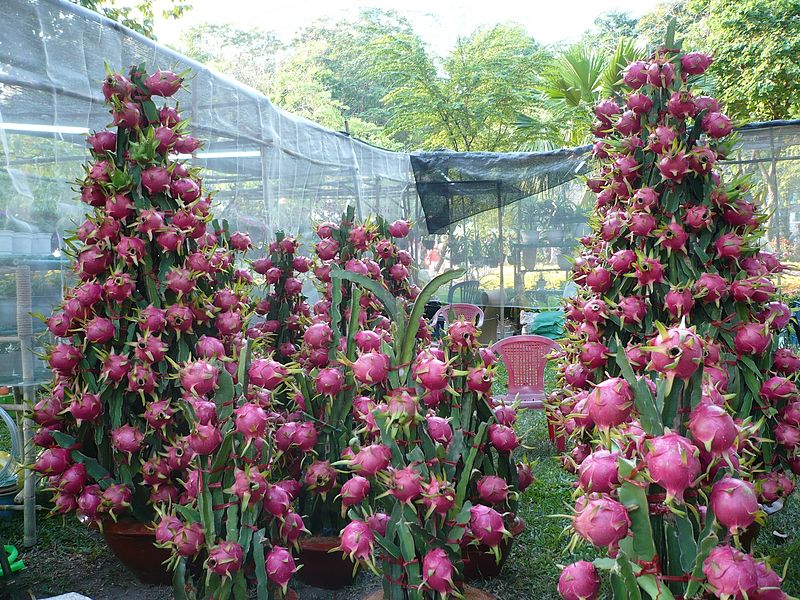

Hylocereus undatus is a vine-like cactus that is often grown as a night-flowering ornamental plant and as a fruit crop. The fruit is highly decorative, with a bright red skin, studded with green scales. The flesh is white, juicy and delicious in flavor, with tiny black seeds. Its exact native range is uncertain but is considered to be in Central America. Since the late twentieth century it has been widely planted on a commercial scale as a fruit crop in many tropical regions, particularly in Vietnam and other South-East Asian countries.
Hylocereus undatus is one of the most unruly species in the entire cactus family. It is a hemi-epiphyte, its fleshy, three-angled, jointed stems clamber over other plants and produce fibrous, aerial roots that cling to any available surface. In their natural habitat support is provided by trees, shrubs and rocks in the dry, open woodland of Central America and northern South America, where the species is thought to have originated. Zones 10 and higer outside, can be grown inside in cooler zones if good light provided.
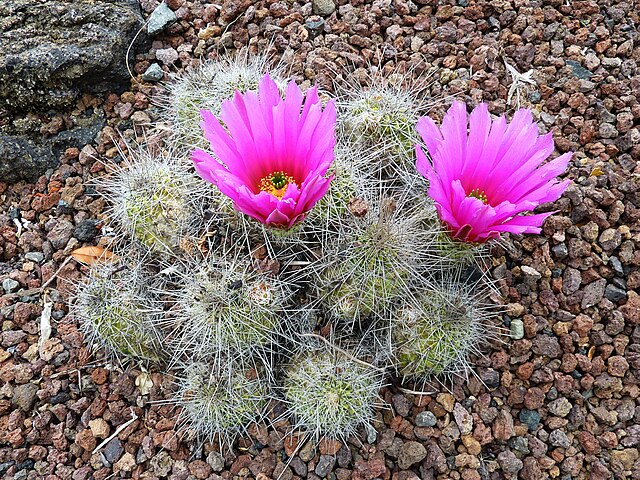

The fruit of the Echinocereus stramineus is strawberry-flavored and can grow up to 2.5 inches in length and width. To eat the fruit, you can slice it in half and scoop out the pulp and seeds. Good container plant, can withstand down to 25 degrees outside.

.jpg)
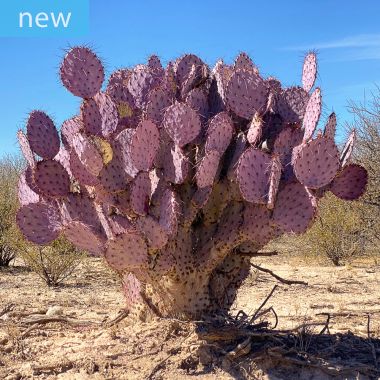
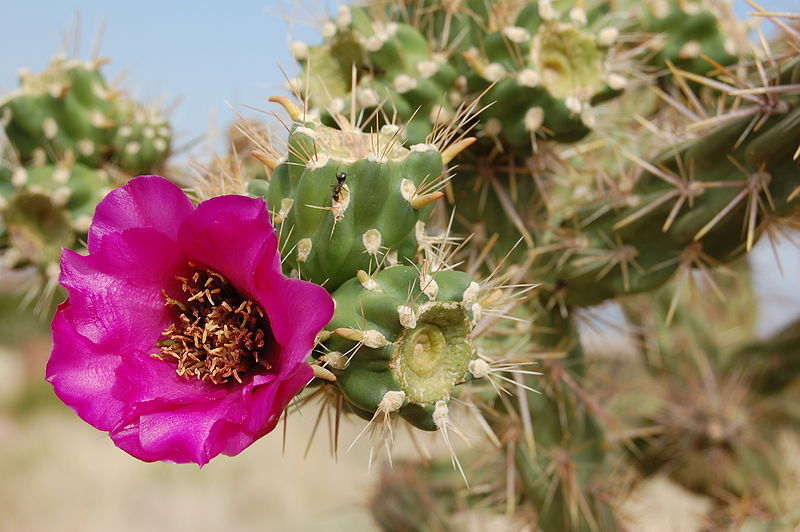
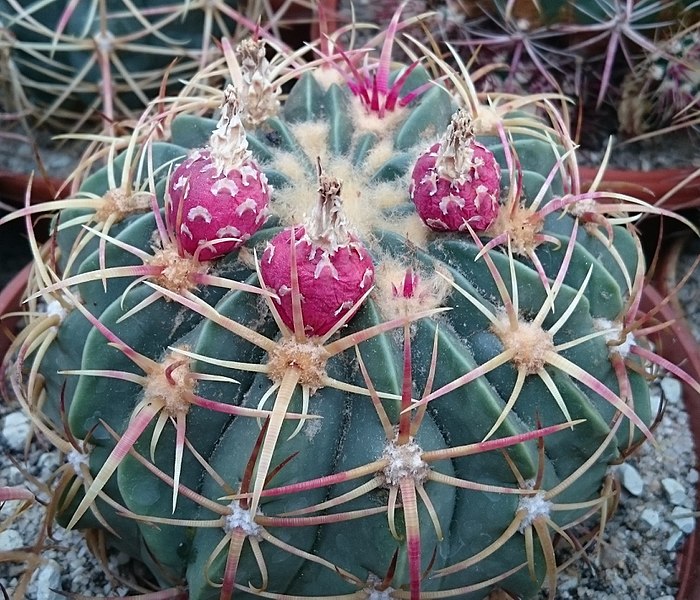
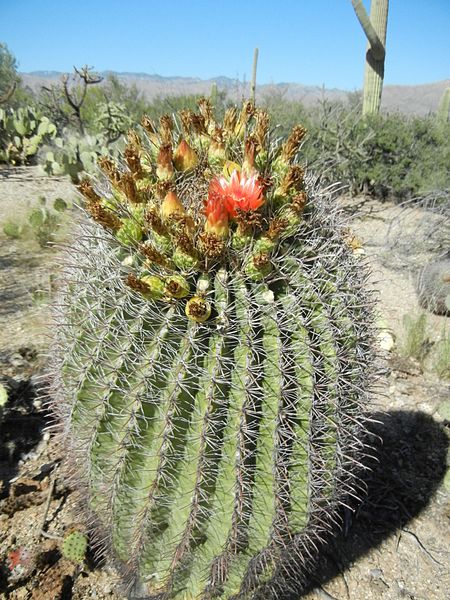
The spiny stems are jointed and cylindrical. Large, showy flowers open out wide and are reddish-purple in color. Fruits ripen from green to rose to yellow.
Considered invasive in places in the SouthWest as the joints that fall to the ground regenerate new plants quickly. It can take severe drought and hard freezes and is suitable to USDA Zones 6 and above.
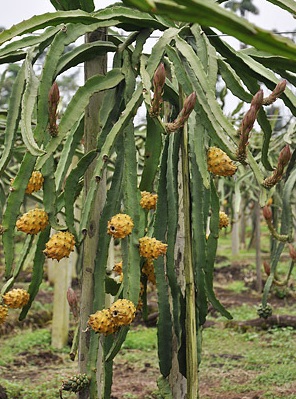
Yellow Dragon fruit have an oblong shape and are slightly smaller in size than the more common red varieties. Their thick yellow skin is covered in small knobby protrusions, which when immature displays small spines that will naturally fall off as the fruit matures. Beneath the skin is a dense white flesh containing numerous petite, edible black seeds. Yellow Dragon fruit has a crisp, juicy texture and very sweet, tropical flavor with floral hints and no acidity.
Yellow Dragon fruit is typically eaten raw, either straight out of the skin or scooped out and cubed, balled or sliced. For the best flavor, refrigerate the fruit for 2 hours before preparing raw. Add to tropical fruit salads or serve alone as dessert. Yellow Dragon fruit flesh can be pureed and made into a sauce or syrup or added to smoothies and cocktails. Freeze the pureed pulp for sorbet or a granitas. Use the flesh to flavor pastries or other baked goods. Yellow Dragon fruit can be kept at room temperature for a few days and will keep in the refrigerator for up to a week.
The Yellow Dragon fruit has been used for centuries by the native people of northern South America. It was used for both medicinal and culinary purposes. It has only been since the early 2000s that Yellow Dragon fruit was approved for export to North America and Europe.
It is native to the northern region of South America, what is now Colombia and Ecuador. The fruits are still cultivated there, with Colombia being the largest producer, and are exported all over the world. They are also grown in Bolivia, Peru, and Mexico and in California and Florida in the United States. Growers specializing in rare fruits in the United States, specifically in southern California and Florida, grow Yellow Dragon fruit on a smaller scale. The Yellow Dragon fruit cactus has long extending stems that can grow up to 20 feet long and require some form of trellising or support to grow on. The cactus prefers arid tropical and subtropical climates and is fairly heat resistant and somewhat cold-hardy. Yellow Dragon fruits can be spotted at most markets and specialty stores and at farmer’s markets in Southern California and Florida.
Zones 10 and higer outside, can be grown inside in cooler zones if good light provided.
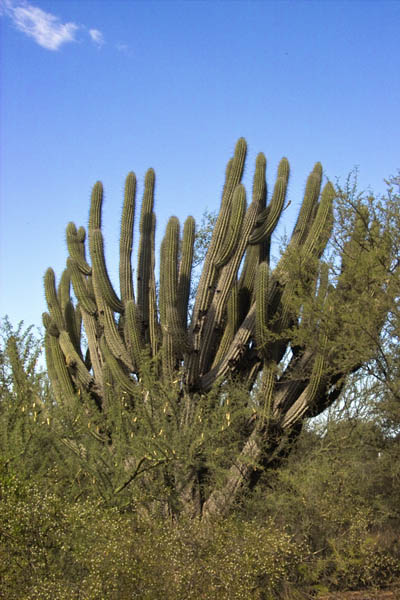

The plant is large, arborescent habit , tree-like reaches a growth height of 5 to 8 meters up to 12 meters. The trunk is thick and short, measuring about 4 dm in diameter, with numerous erect or somewhat bent branches form from a trunk. The blue-green shoots, turn greenish-gray with age, usually not jointed and have a diameter of 9 to 10 centimeters. There are 8 to 9 blunt-edged, somewhat notched ribs that are 1 to 1.5 centimeters high. The yellow spines, which later turn black, are straight and stiff.
The central spine grows to 2–5 cm long and are thickened at the base., the 7 to 9 spreading marginal spines to 3 centimeters long. There is a single central spine, straight and more robust, which can measure up to 8 cm in length. All are black or yellowish-brown in color, although they eventually turn white with a dark tip.
Hardy to 18 degrees. It flowers from October to April with funnel-shaped flowers that are white and grow up to 15 centimeters in diameter. They open at night and often remain open until the next day. The pericarp is covered with numerous, roof-tile-like, the long corolla tube with scattered scales.
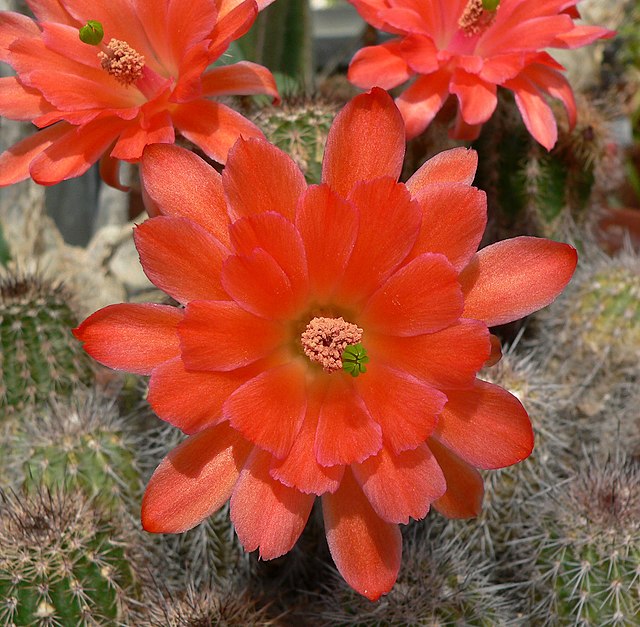
Hardy to 15°F. Full sun, needs little water and good drainage.
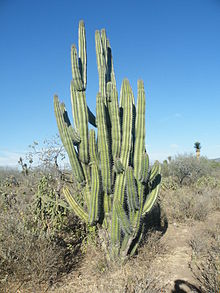
This large columnar cactus is a valuable food source in Mexico where its fruit is harvested and sold in some rural markets. It is native to south central Mexico as far north as Puebla and south to Oaxaca, with plants are also found in the drier parts of Veracruz to the east. This is a tree like columnar cactus that may produce one or more trunks from which little-branching stems arise from the base for a distinctive V-shape. Each stem is gray green, the new growth often bearing a distinctive bloom. This led to its unusual common name, gray ghost organ pipe. Full sun. Heat tolerant. Little to moderate water. Hardy to 23°F. Fast growing to 20' tall. Origin: South-central Mexico.
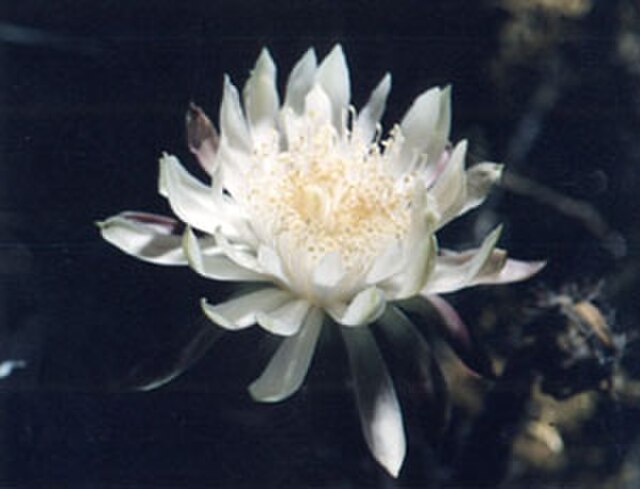
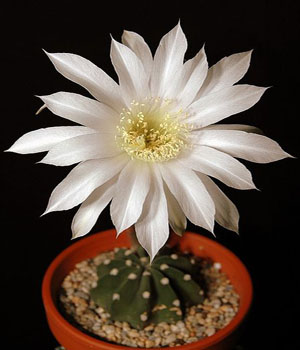
Zones 9 and abover outside, but great container plant for inside.
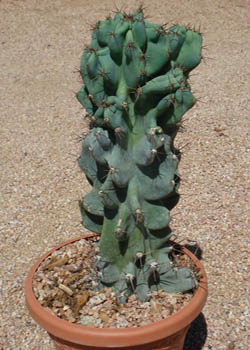
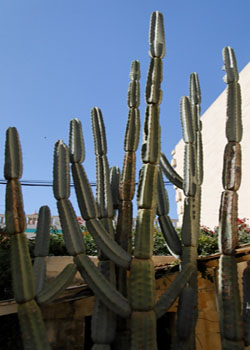

While most cacti bloom in standard yellows or reds, the violaceum is famous for its stunning, funnel-shaped flowers in a sophisticated shade of pale lavender. It’s a literal pop of royal color that stands out in any sea of green.
Even when it isn’t blooming, it’s a work of art. With its symmetrical, honey-colored spines and deep-ribbed globe shape, it looks like a golden sunburst sitting in your pot.
USDA: 8-10. Frost hardy to 25°F. Solitary to clumping growth, up to 2' tall, 6" diameter. Regular water summer; winter keep dry. Full sun to light shade. white to violet flowers. Origin: Banos de Zapallar /San Luis Argentina.
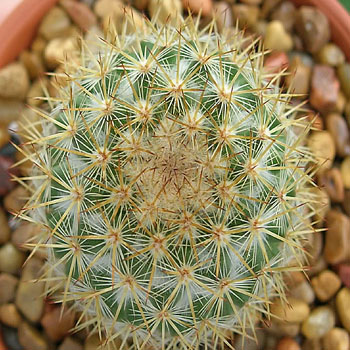
Features a narrow columnar stem, typically 8–25 cm (3–10 inches) tall and 5–18 cm wide. It is mostly solitary but can slowly form small clumps over time.
Spines: The plant is densely covered in spines. It usually has 18–20 white, bristle-like radial spines and 3–7 stouter central spines that are often golden yellow, brownish, or even reddish in some populations.
Flowers: Small, vibrant reddish-pink to magenta flowers bloom in a ring near the apex, typically in summer. They often fail to open fully and barely protrude from the plant's woolly top.
Fruit: Produces club-shaped, orange-red to bright red berries. Hardy to 32 degrees.
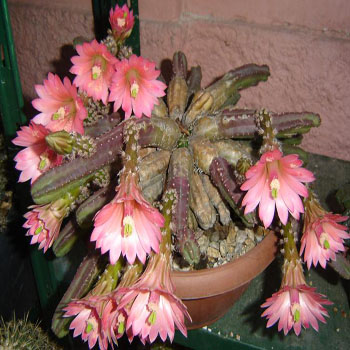
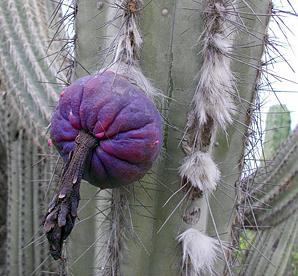
The edible fruits have deep purple flesh. Pilosocereus chrysacanthus is native to dry regions in southern Mexico in the states of Guerrero, Puebla and Oaxaca and adapts well to cultivation in warm temperate and dry tropical climates in USDA Zones 10 and above.
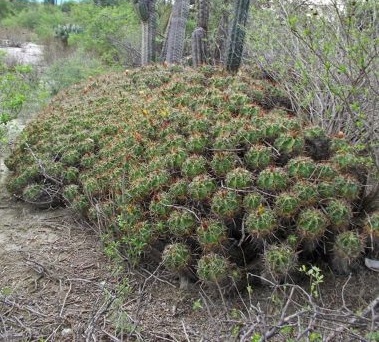
This is a most unique cacti to have in your collection.
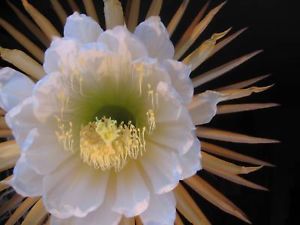
An easy care, fast growing cactus, with a clambering habit, also excellent if used in a hanging basket.
Primarily grown as a container cacti indoors, it is hardy to zone 10a (30 - 35F) outside.
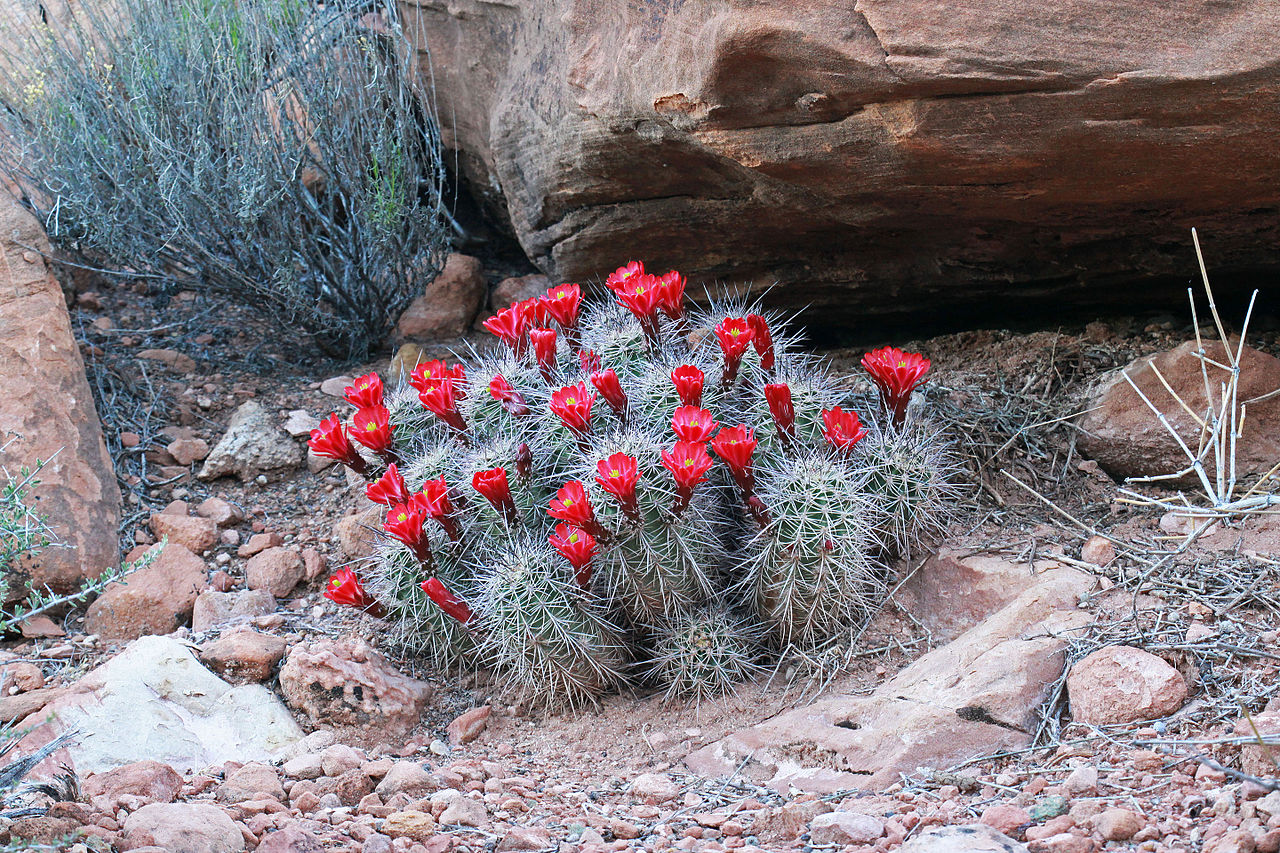
.jpg)
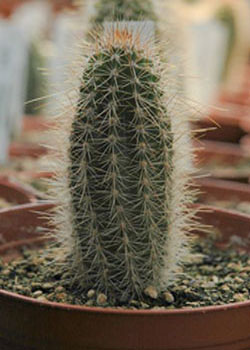
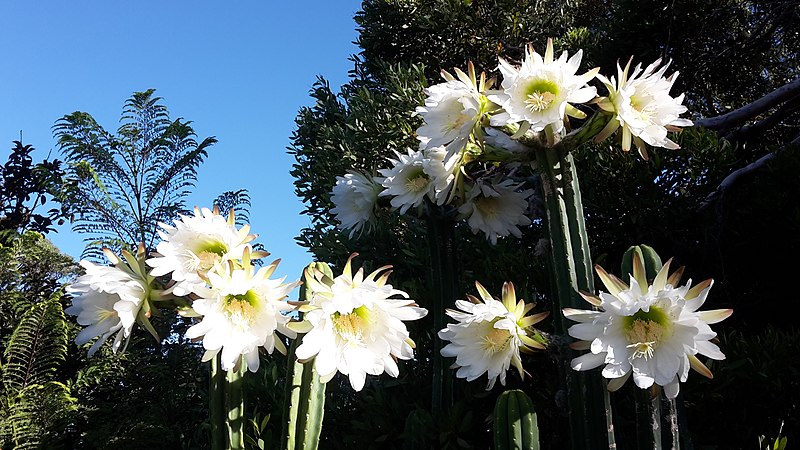

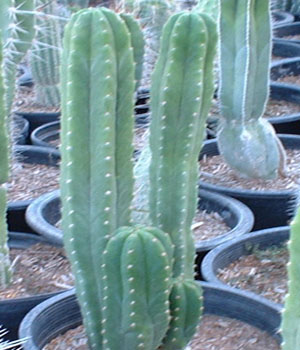
A dark green columnar cacti that can reach 10-20 ft. tall. Bears showy white fragrant flowers at night that can reach 9" across. Cold hardy outside to 15 degrees when mature. Good cacti for beginners.
It has a 2,000-year history of ceremonial use in the Andes for spiritual and divination purposes due to its mescaline content.
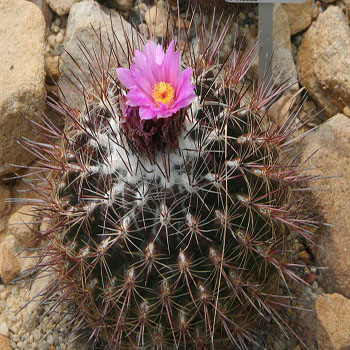
It is a great container cacti, and a great one to for beginners to grow. Large, funnel-shaped flowers (3–5 cm long) bloom from the top of the plant.
Tolerates temperatures down to approximately 20°F (-6°C) and is suitable for USDA zones 9 to 11, and often is grown inside in cooler zones.
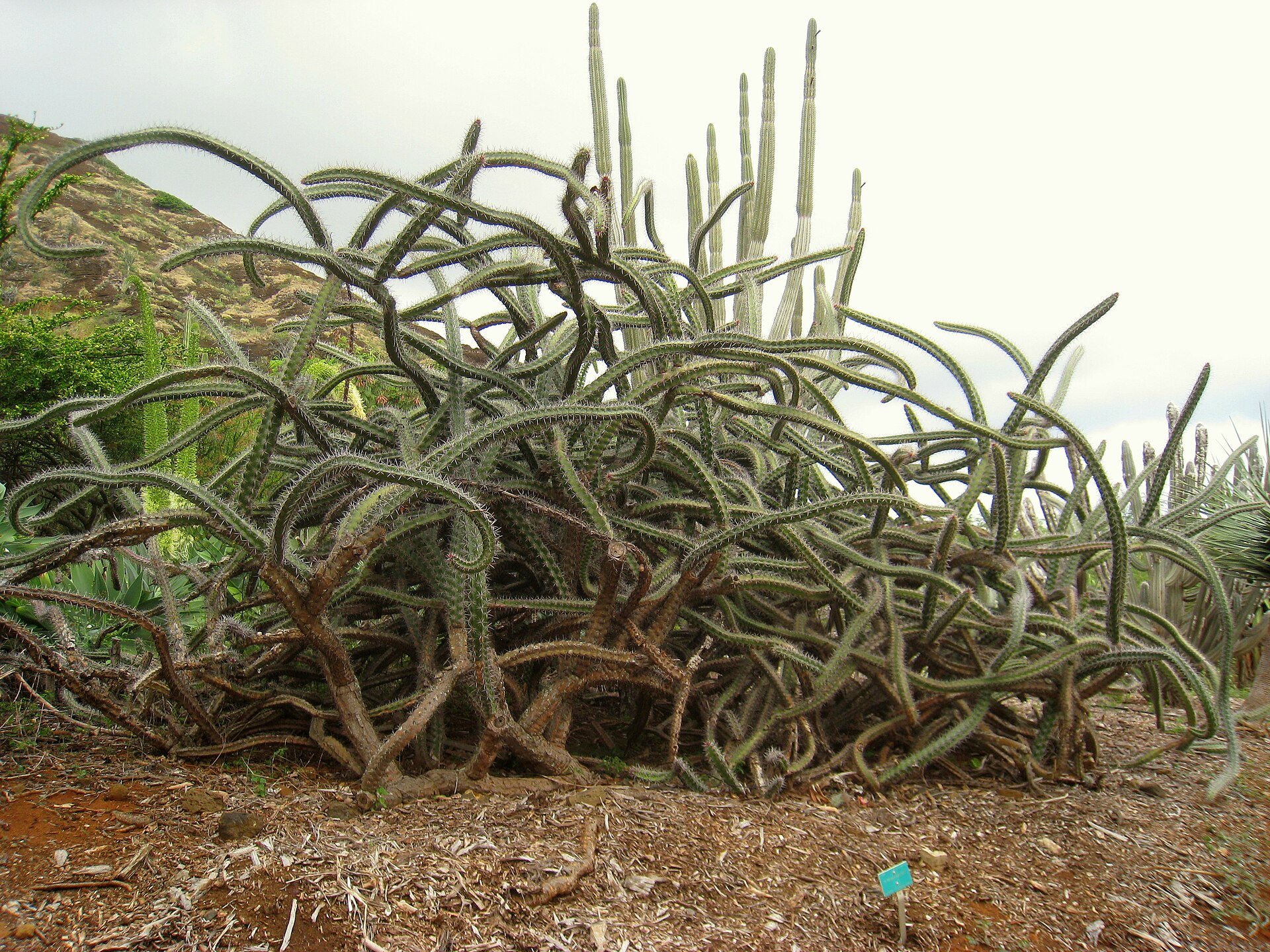

The Octopus Cactus is frequently used as an ornamental or a natural barrier due to its dense, thorny growth. Features bluish-green, columnar stems that reach 2–4 meters (6.5–13 feet) in height. The stems have 5–8 ribs and are densely covered in sharp, whitish spines.
Hardiness: Suitable for USDA zones 9b to 11b; it can tolerate brief freezes down to approximately 25°F–28°F.
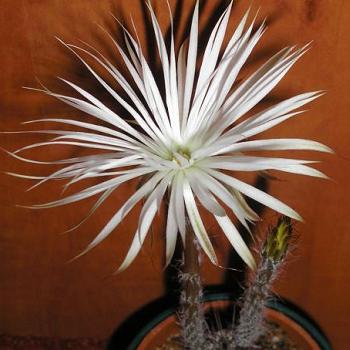
A small, solitary cactus with a slender, cylindrical stem that typically grows up to 6 inches tall and 1 inch in diameter. The stem is a dull yellowish-green to dark brown-green, often appearing almost black, with about 11–12 ribs.
Produces large, tubular, and strongly scented white flowers that emerge near the shoot tips.Nocturnal Blooming: The blooms open at sunset and last only a single night, wilting by the following morning. Hardiness: Suitable for USDA zones 9b to 11b; it can tolerate brief freezes down to approximately 25°F–28°F.
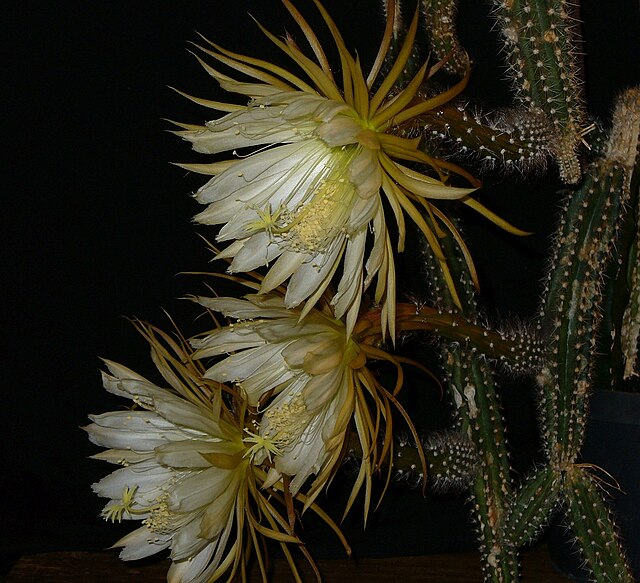
Famous for its "Queen of the Night" status, it produces massive, white, and gold nocturnal flowers up to 5 inches (22 cm) in diameter. These fragrant blooms open in complete darkness and usually close by late morning.Fruit: After successful cross-pollination, it produces a small, bright red, edible fruit with white flesh and crunchy seeds.
Best suited for hardiness zones 10a–11b. It is resilient to heat up to 43°C (109°F) but should not be exposed to temperatures below 10°C (50°F).
Support: Because of its trailing and climbing habit, it is best displayed in hanging baskets or provided with a trellis for its aerial roots to grip.
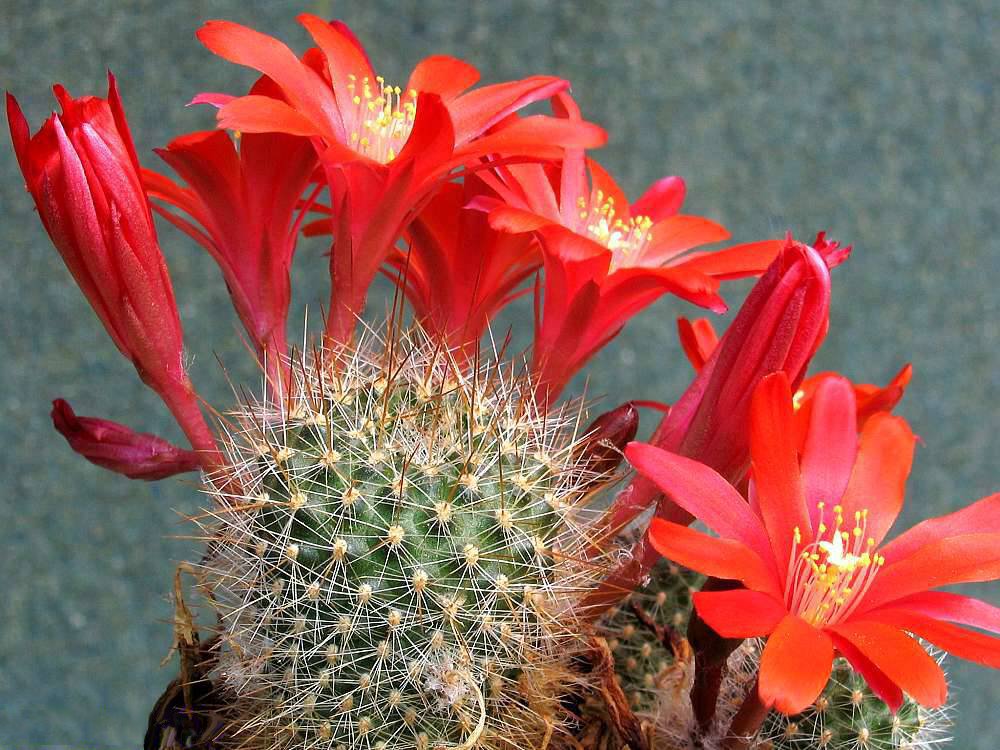

Rebutia albiareolata is ideal for small pots and sunny windowsills or in a cool, protected greenhouse.
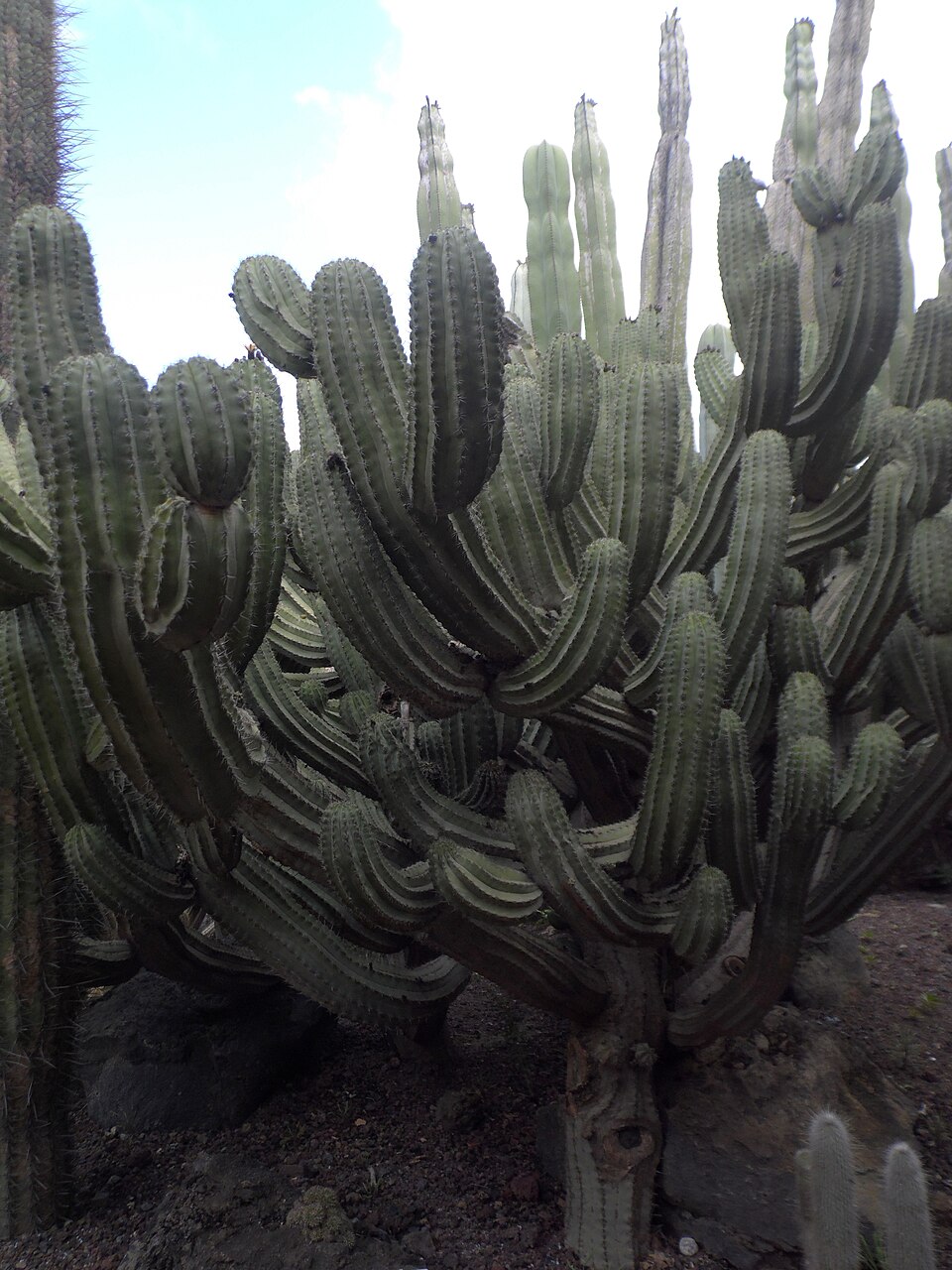

Slowly grows into a branching, tree-like structure reaching heights of 13 to 16.5 feet (4–5 meters). Produces small, cup-shaped flowers that range from yellowish-green to pinkish-white. They typically bloom in late spring or early summer and open at night.
Edible Fruit: Known as "chichituna," the small red spherical fruits are sweet and traditionally harvested for consumption or local dishes in Mexico. Younger growth often has a reddish tint on the rib edges, while older parts develop a powdery, glaucous (greyish-blue) coating.
Care and CultivationLight: Requires full sun (at least 6 hours daily). Indoors, it should be placed near a south-facing window.Watering: Extremely drought-tolerant. Water deeply only when the soil is 90–100% dry. During its winter dormancy (October to March), watering should be reduced or stopped entirely to prevent root rot.Soil: Needs excellent drainage. Use a gritty, mineral-heavy cactus or succulent mix (roughly 70–80% mineral grit like pumice or perlite).
Temperature: Not frost-tolerant. It prefers temperatures between 18–30°C (64–86°F) and should be brought indoors if temperatures drop below 10°C (50°F).
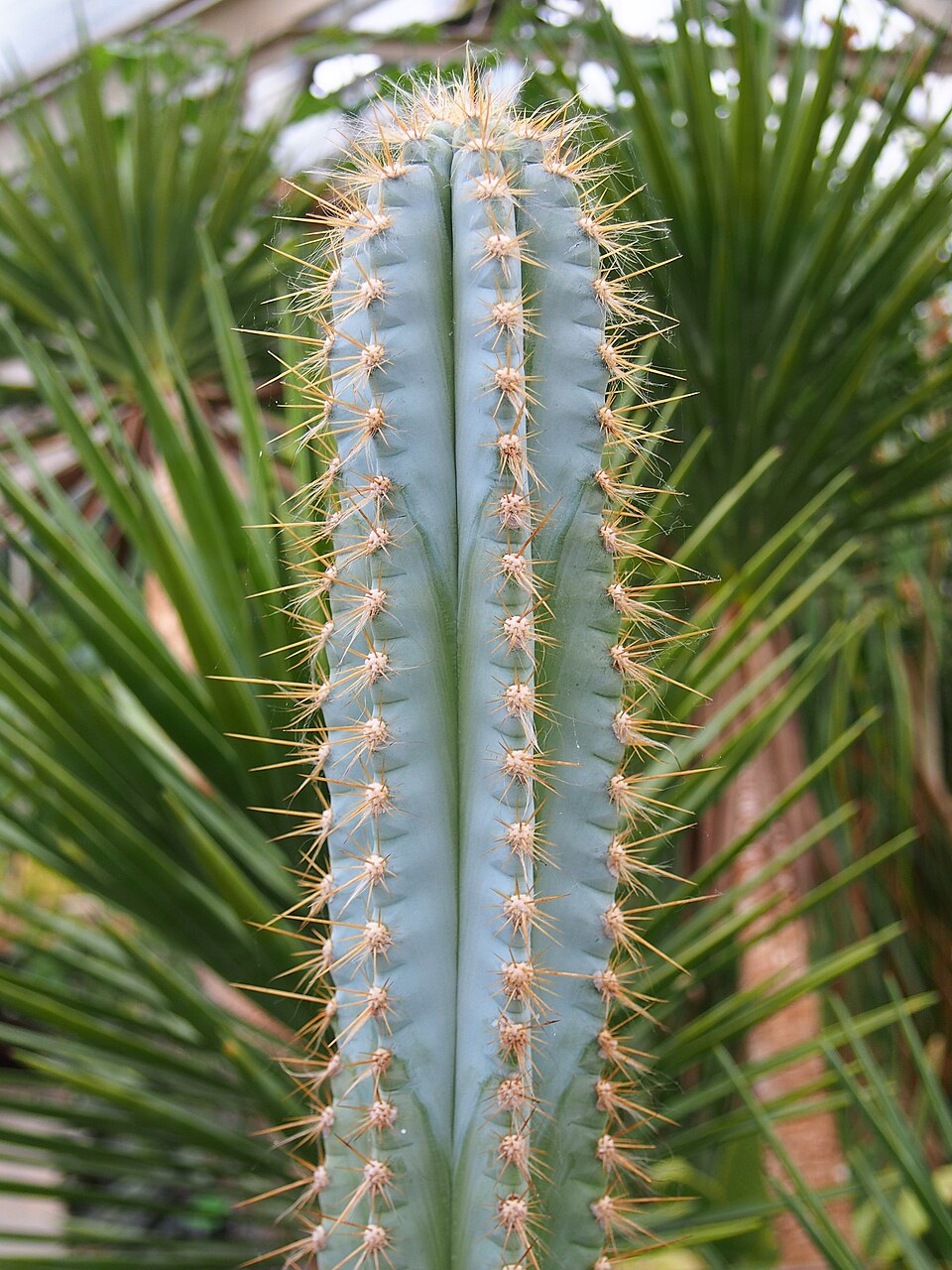
Key CharacteristicsAppearance: The stems feature a distinct glaucous (bluish-silver) coating, which intensifies with age and exposure to bright sunlight.Spines: Clusters of golden-yellow spines line the vertical ribs of the cactus, often turning grey or white as the plant matures.
Flowers: Mature plants produce large, white or pale-yellow, nocturnal flowers that attract pollinators like bats and moths.
To maintain its vibrant blue colour and healthy growth, follow these care requirements: Light: Requires full, direct sun to develop its most intense blue hue. Indoors, place it within one foot of a bright south-facing window.Watering: Extremely drought-tolerant. Water thoroughly only when the soil is completely dry. During winter dormancy, reduce watering to once every 3–4 weeks.Soil: Use a well-draining cactus or succulent mix, ideally amended with extra perlite or pumice to prevent root rot.Temperature: Prefers warm environments above 59 degrees. It is hardy in USDA zones 9–11 and should be moved indoors if temperatures drop near freezing.
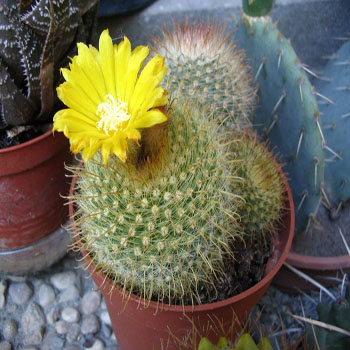
Best suited for USDA Zones 9b–11. It cannot survive a hard frost and should be brought indoors or placed in a frost-free shelter if temperatures drop below freezing.
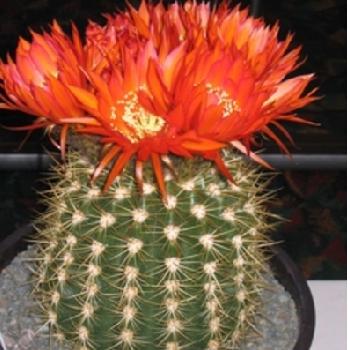
Typically grows as a solitary, globular (ball-shaped) stem that becomes cylindrical with age, reaching up to 50 cm (20 in) in diameter and occasionally over 1 meter in height.
Features 15 to 50 (or more) low, distinct ribs with areoles filled with short white wool. Dense, spreading spines that range in color from yellowish and brownish-orange to silver or whitish. Brilliantly red or orange-red flowers bloom in late spring and summer, emerging from the sides of the plant rather than the very top.
Extremely cold-hardy for a cactus; it can tolerate light frost if kept dry.
.jpg)
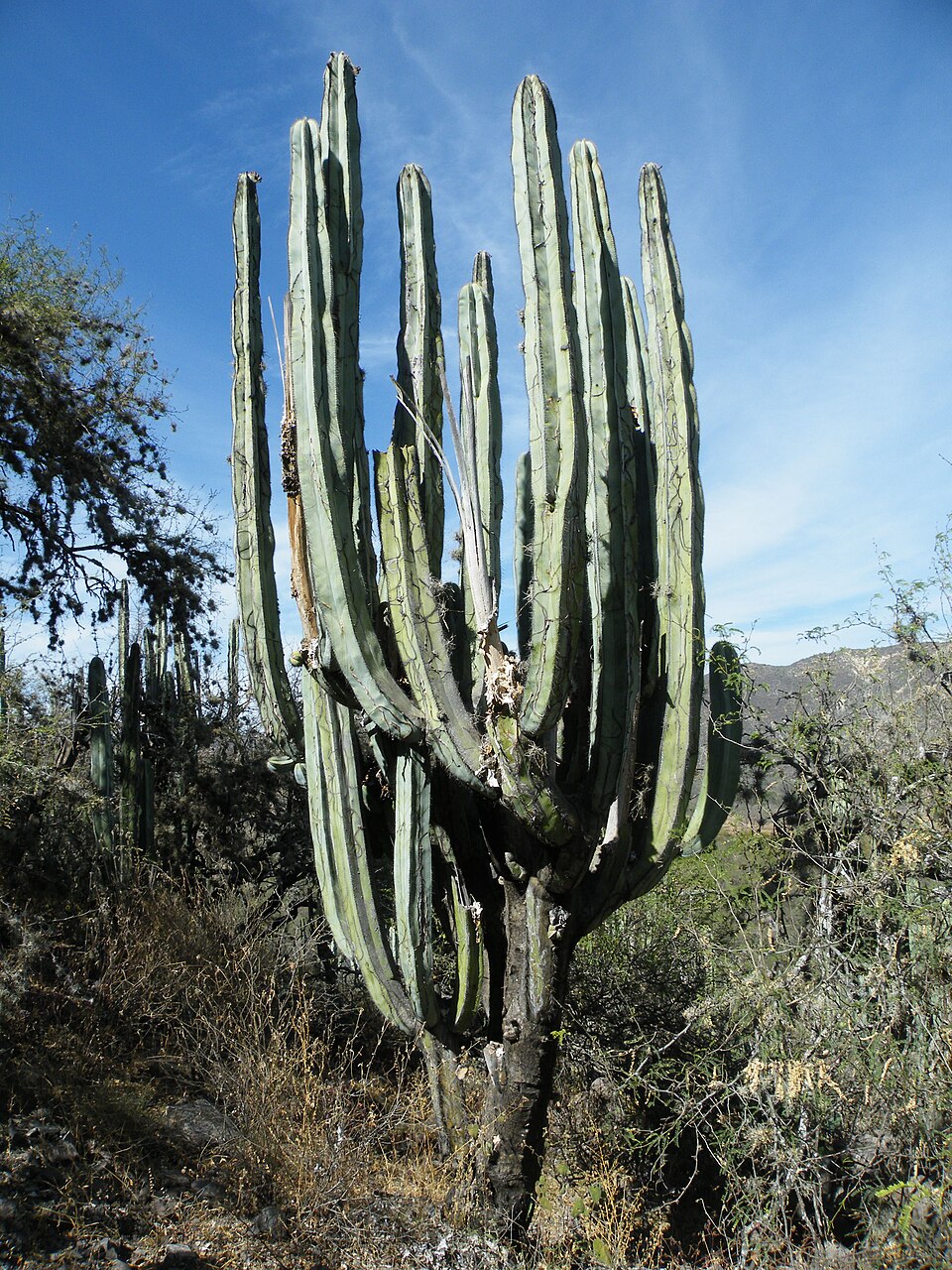
Mature plants can reach heights of 5 to 15 meters. The stems feature 5–8 triangular ribs and are covered in a grayish wax that gives them a glaucous, bluish-green hue. The ribs are lined with closely spaced, dark areoles that bear yellowish-white spines, which can darken over time.
It produces nocturnal, funnel-shaped flowers that are typically pale green to white. They bloom in mid-spring to summer and often remain open until midday. The plant bears edible, globose fruits that turn from green to orange or red when ripe. Prefers hot, dry climates. It is hardy to about degrees, but should generally be protected from freezing.
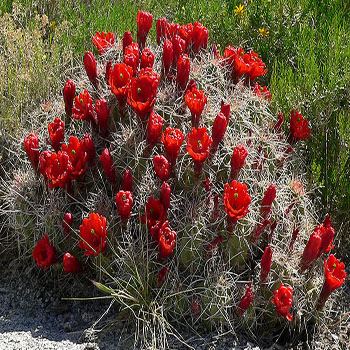
The numerous flowers grow at the top of the stems, all about the same height, giving a full view of all the flowers at one glance. They last for several days. The flowers vary slightly in color as a result of soil type or genetic differences. Zones 7-10. Hardy to 20°F and lower. Full sun to light shade in hotter desert gardens. Needs little water and good drainage.
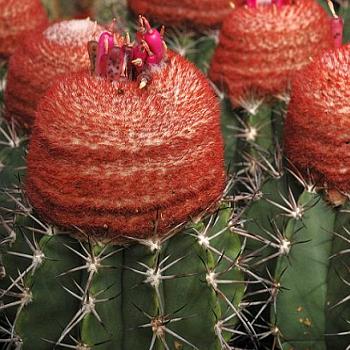
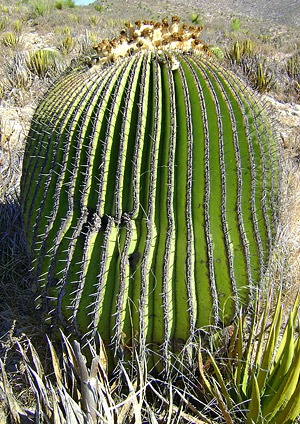
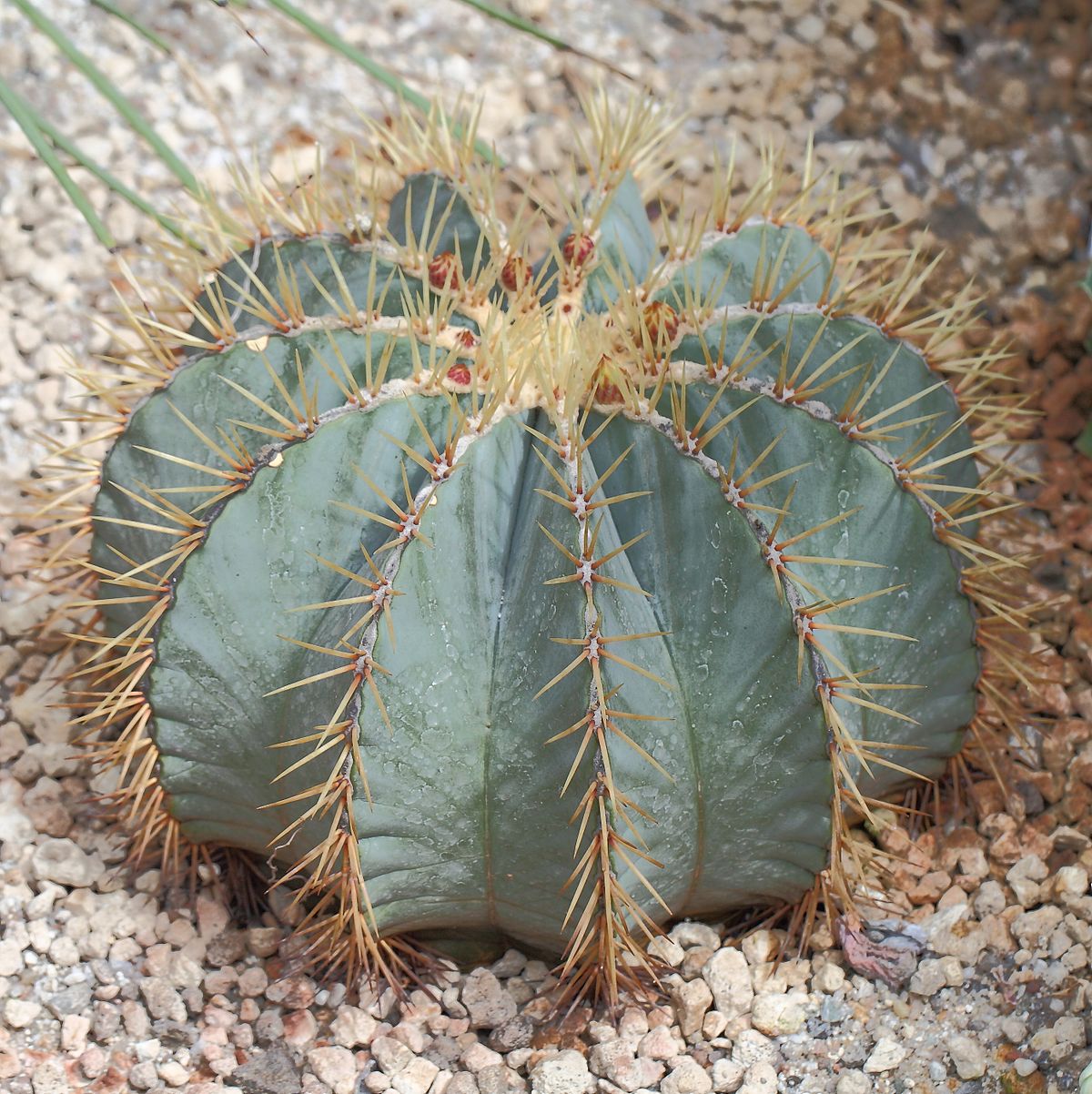
It is native to dry juniper woodlands in central Mexico. It is a robust and easy to grow cactus for desert regions and also makes a very attractive potted plant.
The flower is lemon yellow, funnel-shaped and up to 1.6 inches in diameter.
Zone 9b and higher outside, widely grown inside.
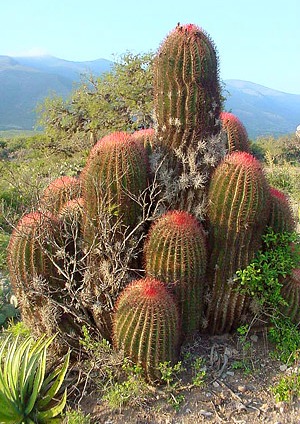
Traditionally, the flower buds of Ferocactus pilosus are harvested and eaten by the indigenous population. Will thrive in hot, dry climates and will tolerate mild frost once established.
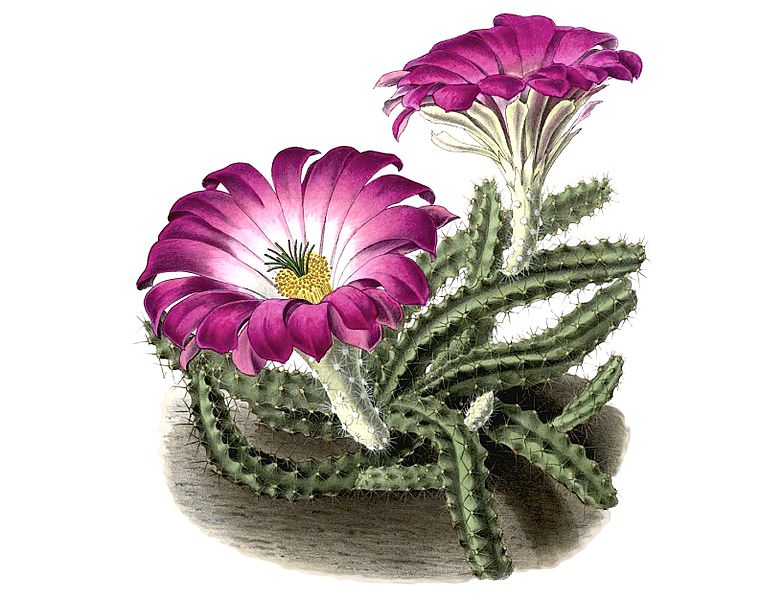
Should not be grown in full sun, actually prefers about 30 percent shade, making for a good patio plant. Easy to grow in pots, zone 9 and higher outside.
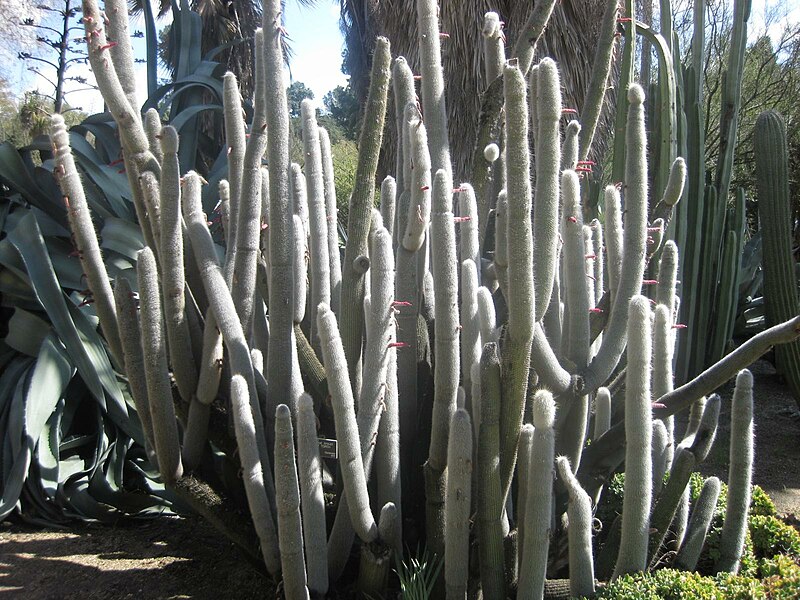

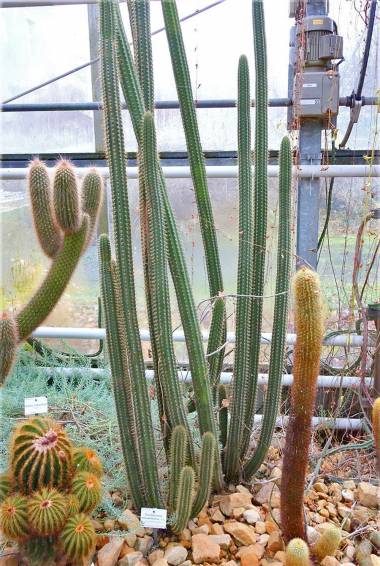
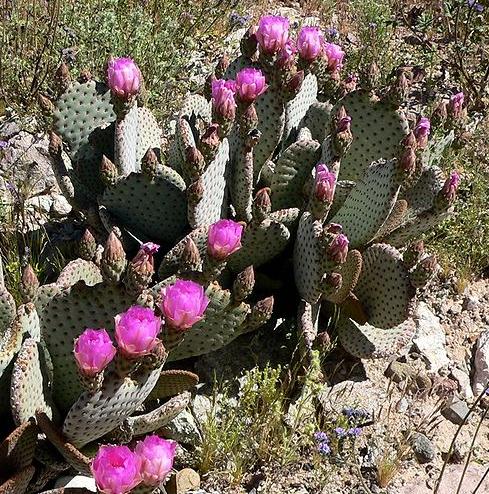
Makes a nice container plant and will live many years in a pot provided it is not overwatered. The Beavertail Cactus is a medium-sized to small prickly pear cactus, depending on variety, growing to about 24 inches tall. A single plant may consist of hundreds of fleshy, flattened pads. These are more or less blue-gray, depending on variety, growing to a length of 6 inches and are maximum 4 inches wide and about 1/2 inch thick. They are typically spineless, but have instead many small barbed bristles, called glochids, that easily penetrate the skin.
PLANTING YOUR SEEDS
With a little patience and effort, you should have no problem raising beautiful cacti from the seeds you receive from us. Please remember that the seeds will sprout over a period of time, so don't be disappointed when only a few first start to sprout. The others will arrive given time. Usually most of the seeds will sprout between 3-10 weeks.Bottom heat will give faster results, but is not an absolute necessity. If you can provide bottom heat, then by all means do so. If you cannot, then use shallow containers that can be covered with glass or plastic. The containers should be large enough to allow for 2 inches of crushed gravel or sharp sand (aquarium sand will do fine) to facilitate drainage. On top of the sand or gravel, you will need to place about 2 inches of sterilized soil. I recommend a mixture of 1 part sharp sand and 1 part peat humus. It is very important that the soil is sterilized. Heating soil in an oven at 200 degrees for 15 minutes is a good way to assure it is properly sterlized.
Soak the soil with water mixed with fungicide. This will prevent damping off later on. Allow excess water to drain off. Press seeds lightly into soil and cover with about 1/8 inch of soil. Cover with glass or plastic and place in warm location. Keep soil damp but not wet. I suggest misting the surface regularly.
After the seeds have begun to sprout, leave the glass or plastic in place. Leave on for about two weeks. In the meantime make sure the container does not receive direct sunlight as this may kill the plants. When the cover is removed, make sure that the plants do not receive any strong drafts or sudden temperature changes. It will take a couple of days for the seedlings to become hardy.
CARING FOR YOUR PLANTS.
A few tips on caring for your new plants:Never use tap water or alkaline water. Rainwater is best but tap water that has set in an open container for 2 days will be fine.
Cacti cannot tolerate high alkaline soil. Check your soil for ph if you have problems with cacti.
Use fungicide mixed in with your water often when watering.
Use very weak solutions of plant food when feeding. Too much fertilize will distort your plants.
Never expose young seedlings to direct sunlight. They need bright, diffused sunlight.
The quickest way to kill a cacti is overwatering it. Let soil dry out before rewatering.
Cacti are succeptable to aphids, mealy bugs, white flies and spider mites. Treat soil with systemic insecticides and add paradichlorobenzene crystals to soil if possible.
If a plant show signs of rot due to overwatering, cut out the affected part immediately. If the top of the plant is cut off, let it air dry for a few days then repot. Often it will reroot itself.
Brown scarring is often a sign of too much sunlight. Move plants to a more protected location.
If possible, let plants spend first winter in original planter the seeds were sowed in. If overcrowding will not allow this, try to disturb the roots as little as possible.
Many thanks to our friends at Sticky Situation Cacti for the use of their photos. Please visit their site for live plants.
Also, check out our:
Succulent Plant seeds
Yucca Plant seeds
Most cacti seeds require light for germination. For maximum germination, we highly recommend using our VG07 Seedcover for tiny and pelleted seeds.

Contact Us | Privacy Policy | About Us
Serving gardeners since 1992
State of Mississippi Seedmen's Permit #C-391, Ohio 90152, Minnesota 20086777