
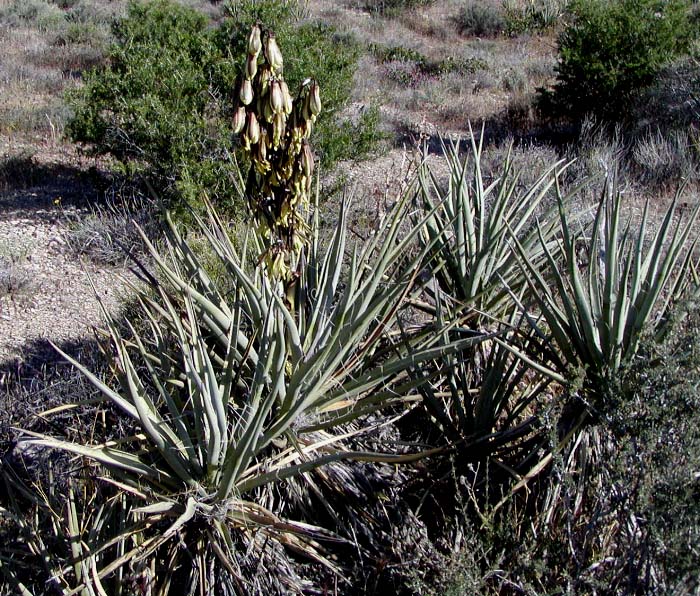
Banana Yucca is one of the most useful and attractive native plants of the American Southwest. This hardy evergreen species forms large rosettes of blue-green sword-like leaves and produces spectacular flower stalks bearing clusters of creamy white blossoms. Its common name comes from the large fleshy fruits that resemble short bananas and have been an important food source for indigenous peoples for centuries.
Extremely drought tolerant and remarkably cold hardy, Banana Yucca is an outstanding choice for xeriscapes, desert gardens, rock gardens, and water-wise landscapes. Its architectural form provides year-round interest, while its flowers and fruits add seasonal beauty and wildlife value.
- Botanical Name: Yucca baccata
- Common Names: Banana Yucca, Datil Yucca, Blue Yucca
- Plant Type: Evergreen succulent
- Mature Height: 2 to 4 feet
- Mature Spread: 4 to 8 feet
- Flower Spike Height: 3 to 8 feet
- Growth Rate: Slow to moderate
- USDA Zones: 4 to 9
- Flower Color: Creamy white to pale ivory
- Foliage: Blue-green sword-shaped leaves
Banana Yucca is an excellent choice for xeriscapes, desert landscapes, native plant gardens, rock gardens, Southwestern-themed gardens, and drought-tolerant borders. Its bold form makes it an outstanding focal point among lower-growing desert plants.
The plant combines beautifully with agaves, cacti, ornamental grasses, desert marigolds, and other low-water species.
Germination InformationSeeds germinate best when provided warmth and excellent drainage.
- Soak seeds in warm water for 24 hours.
- Sow 1/4 to 1/2 inch deep.
- Use a sandy, well-drained germination mix.
- Maintain temperatures between 70 and 85°F.
- Keep lightly moist during germination.
- Germination generally occurs within 2 to 8 weeks.
Banana Yucca thrives in full sun and well-drained soils. It tolerates sandy, rocky, alkaline, and poor soils with ease. Once established, it requires very little supplemental irrigation and is highly resistant to drought and heat.
Unlike some desert plants, Banana Yucca is also quite cold hardy and tolerates winter conditions throughout much of the western United States.
Avoid overwatering, particularly during cooler months, as excessive moisture may lead to root problems.
Container GrowingBanana Yucca grows well in large containers and makes an attractive patio specimen. Use a cactus or succulent soil mix and ensure excellent drainage.
Container-grown plants require minimal maintenance and are ideal for gardeners seeking dramatic architectural plants with low water requirements.
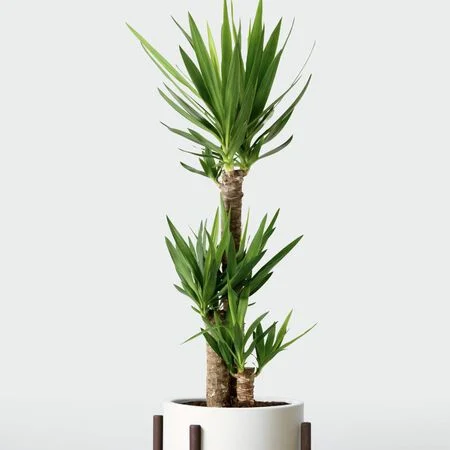
Blue Stem Yucca is a striking architectural houseplant prized for its blue-green foliage, rugged desert character, and exceptional drought tolerance. With its sculptural form and dramatic leaves, this unique yucca brings the beauty of the American Southwest into homes, offices, sunrooms, and indoor plant collections.
Unlike many tropical houseplants, Blue Stem Yucca thrives on neglect and rewards growers with years of dependable beauty. Its bold silhouette and attractive coloration make it a favorite among those who appreciate low-maintenance plants with a strong visual presence.
Yuccas are native to some of the harshest environments in North America. Many species thrive in deserts, rocky hillsides, grasslands, and arid mountain regions where temperatures can soar during the day and drop dramatically at night.
The blue coloration found in many Yucca species is more than just attractive—it helps reflect intense sunlight and conserve moisture, allowing these plants to survive conditions that would quickly defeat many other species.
Growing as a Houseplant- Light: Prefers bright light and several hours of direct sun daily.
- Water: Allow soil to dry between waterings.
- Soil: Use a fast-draining cactus or succulent mix.
- Humidity: Thrives in average indoor humidity.
- Temperature: Performs well in typical household temperatures.
- Fertilizer: Feed lightly during active growth.
Blue Stem Yucca is exceptionally well suited to container growing. Select a sturdy pot with excellent drainage, as standing water can cause root problems. Terracotta containers are particularly useful because they allow excess moisture to evaporate more readily.
The plant's upright growth habit makes it ideal for corners, entryways, offices, and bright windows where its dramatic shape can be fully appreciated.
Seed GerminationSow seeds in a well-drained cactus or succulent seed-starting mix. Cover lightly and maintain warm temperatures with consistent moisture until germination occurs. Good drainage and bright light are important for healthy seedling development.
Young plants grow steadily and gradually develop the characteristic blue-green foliage that makes this group of Yuccas so desirable.
Landscape PotentialIn suitable climates, Blue Stem Yucca can eventually become a stunning outdoor specimen. Its tolerance of heat, drought, and poor soils has made it a favorite landscape plant throughout arid and semi-arid regions.
Container-grown plants can spend warm months outdoors on patios and decks before returning indoors during colder weather.
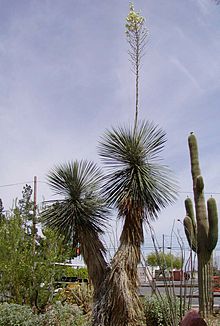
Soaptree Yucca is one of the most iconic plants of the American Southwest. Native to the deserts and grasslands of Texas, New Mexico, Arizona, and northern Mexico, this striking species is prized for its elegant blue-green foliage, towering flower stalks, extreme drought tolerance, and rich history of practical uses. Its tall trunk crowned with a fountain of narrow leaves creates a dramatic silhouette that instantly evokes the beauty of the desert landscape.
During flowering season, mature plants produce spectacular flower spikes that may reach 10 to 20 feet tall and are covered with hundreds of creamy-white bell-shaped blossoms. These impressive floral displays attract pollinators and can often be seen from great distances across open desert terrain.
- Botanical Name: Yucca elata
- Common Names: Soaptree Yucca, Soapweed Yucca, Palmilla
- Plant Type: Evergreen desert tree-like succulent
- Mature Height: 10 to 20 feet including trunk
- Flower Spike Height: Up to 20 feet
- Growth Rate: Slow to moderate
- USDA Zones: 5 to 10
- Flower Color: Creamy white
- Foliage: Narrow blue-green sword-shaped leaves
Soaptree Yucca is an outstanding choice for xeriscapes, desert gardens, rock gardens, drought-tolerant landscapes, Southwestern-themed plantings, and specimen plantings. Its architectural form makes it particularly valuable as a focal point in low-water landscapes.
The plant pairs beautifully with agaves, cacti, desert grasses, and other drought-tolerant species.
Germination InformationSeeds are generally easy to germinate when provided warmth and moisture.
- Soak seeds in warm water for 24 hours before planting.
- Sow approximately 1/4 to 1/2 inch deep.
- Use a well-drained cactus or succulent mix.
- Maintain temperatures between 70 and 85°F.
- Keep lightly moist until germination.
- Germination usually occurs within 2 to 8 weeks.
Soaptree Yucca thrives in full sun and well-drained soils. It tolerates sandy, rocky, alkaline, and poor soils exceptionally well.
Once established, it is among the most drought-tolerant landscape plants available and requires very little supplemental irrigation. Overwatering and poorly drained soils are the primary causes of failure.
Mature plants develop a sturdy trunk topped by a graceful crown of leaves that remains attractive year-round.
Container GrowingYoung plants adapt well to container culture and make attractive patio specimens. Use deep containers with excellent drainage and a gritty soil mix.
Container-grown plants require very little water and should be allowed to dry between waterings.
As plants mature, landscape planting is recommended to allow full development of the trunk and flowering stalk.
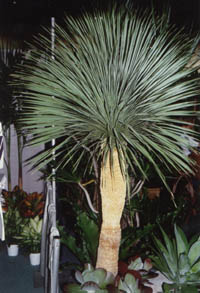
Beaked Yucca is widely regarded as one of the most beautiful and elegant yuccas in cultivation. Native to the deserts and rocky slopes of Texas and northern Mexico, this highly ornamental species develops a stout trunk topped with a perfectly symmetrical globe of narrow blue-gray leaves. Its architectural form, exceptional drought tolerance, and striking coloration have made it one of the most sought-after plants for modern xeriscape and desert-inspired landscapes.
When mature, Beaked Yucca produces impressive flower spikes bearing hundreds of creamy white blossoms that rise above the foliage, creating a spectacular display against its silvery-blue crown. Few plants combine such dramatic beauty with such remarkable toughness.
- Botanical Name: Yucca rostrata
- Common Names: Beaked Yucca, Big Bend Yucca
- Plant Type: Evergreen tree-form yucca
- Mature Height: 8 to 15 feet
- Mature Spread: 4 to 8 feet
- Flower Spike Height: Up to 5 feet above foliage
- Growth Rate: Slow
- USDA Zones: 5 to 11
- Flower Color: Creamy white
- Foliage: Narrow blue-gray leaves forming a dense spherical crown
Beaked Yucca is one of the premier specimen plants for xeriscapes, desert gardens, modern landscapes, Mediterranean-style gardens, rock gardens, and architectural plantings. Its sculptural form makes it an outstanding focal point in both residential and commercial landscapes.
The silvery-blue foliage contrasts beautifully with darker green plants, natural stone, gravel gardens, and contemporary hardscapes.
Germination InformationSeeds germinate readily when warmth and drainage are provided.
- Soak seeds in warm water for 24 hours before sowing.
- Sow 1/4 to 1/2 inch deep.
- Use a fast-draining cactus or succulent mix.
- Maintain temperatures between 70 and 85°F.
- Keep lightly moist until germination.
- Germination typically occurs within 2 to 8 weeks.
Beaked Yucca thrives in full sun and exceptionally well-drained soils. It tolerates intense heat, drought, poor soils, and reflective conditions with ease.
Once established, it requires very little supplemental irrigation and is highly resistant to pests and diseases. Excellent drainage is essential, particularly in regions with wet winters.
Its remarkable cold tolerance allows it to succeed in climates far beyond what many people expect for a desert plant.
Container GrowingYoung Beaked Yuccas make outstanding container specimens. Their symmetrical shape and striking blue foliage provide year-round interest on patios, terraces, and entryways.
Use a gritty, free-draining soil mix and avoid overwatering. Container-grown plants can remain attractive for many years.
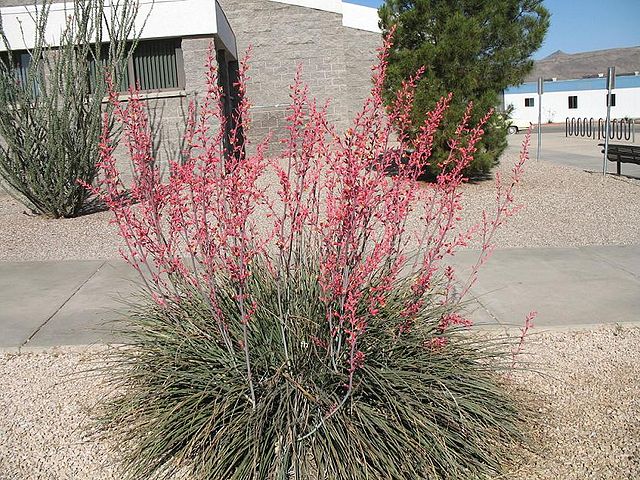
Red Yucca is one of the most valuable flowering plants for drought-tolerant landscapes. Despite its common name, it is not a true yucca but a close relative that shares the same rugged durability. Native to Texas and northern Mexico, this evergreen succulent forms graceful clumps of narrow arching foliage and produces spectacular flower spikes covered with coral-red, pink, or salmon-colored tubular blooms.
The flowering stalks rise well above the foliage and can bloom continuously from late spring through fall, attracting hummingbirds in remarkable numbers. Its combination of beauty, toughness, and long bloom period has made Red Yucca one of the most widely planted xeriscape plants in the American Southwest.
- Botanical Name: Hesperaloe parviflora
- Common Names: Red Yucca, Red Hesperaloe, Coral Yucca
- Plant Type: Evergreen succulent perennial
- Mature Height: 2 to 4 feet
- Mature Spread: 3 to 5 feet
- Flower Stalk Height: 4 to 8 feet
- Growth Rate: Moderate
- USDA Zones: 5 to 11
- Flower Color: Coral-red, salmon, pink, occasionally yellow
- Foliage: Narrow blue-green arching leaves
Red Yucca is an outstanding choice for xeriscapes, rock gardens, Southwestern landscapes, median plantings, commercial landscapes, wildlife gardens, and water-wise borders.
Its graceful fountain-like habit softens hardscape features and contrasts beautifully with agaves, cacti, ornamental grasses, and native wildflowers.
Germination InformationSeeds germinate readily under warm conditions.
- Soak seeds in warm water for 12 to 24 hours.
- Sow approximately 1/4 inch deep.
- Use a well-drained cactus or succulent mix.
- Maintain temperatures between 70 and 85°F.
- Keep lightly moist until germination.
- Germination typically occurs within 2 to 6 weeks.
Red Yucca thrives in full sun and well-drained soils. Once established, it is exceptionally drought tolerant and requires very little supplemental irrigation.
The plant tolerates extreme heat, reflected sunlight, poor soils, and periods of drought that would challenge many other landscape plants.
Removing spent flower stalks can encourage additional blooming and maintain a tidy appearance.
Container GrowingRed Yucca performs exceptionally well in containers and large decorative planters. Its graceful foliage and prolonged flowering season make it an excellent choice for patios, courtyards, and entryways.
Use a fast-draining soil mix and allow the soil to dry between waterings.
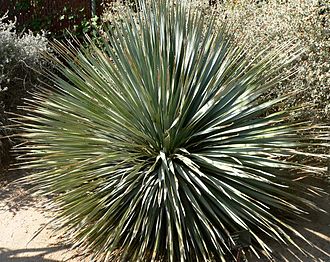
Desert Spoon is one of the most distinctive and architecturally striking plants of the American Southwest. Native to the deserts and rocky slopes of Arizona, New Mexico, Texas, and northern Mexico, this rugged evergreen species forms a dramatic spherical rosette of narrow blue-gray leaves that radiate outward in near-perfect symmetry.
Its sculptural appearance, exceptional drought tolerance, and low maintenance requirements have made Desert Spoon a favorite among landscape architects and xeriscape designers. Whether planted as a solitary specimen or incorporated into a desert-themed landscape, it provides year-round beauty and texture with very little care.
- Botanical Name: Dasylirion wheeleri
- Common Names: Desert Spoon, Common Sotol, Blue Sotol
- Plant Type: Evergreen desert succulent
- Mature Height: 3 to 6 feet
- Mature Spread: 4 to 8 feet
- Flower Stalk Height: 8 to 15 feet
- Growth Rate: Slow to moderate
- USDA Zones: 7 to 11
- Flower Color: Cream, tan, or greenish-white
- Foliage: Narrow blue-gray leaves with finely toothed margins
Desert Spoon is ideal for xeriscapes, rock gardens, desert landscapes, Mediterranean-style gardens, modern landscapes, and drought-tolerant plantings. Its bold form creates an outstanding focal point among boulders, gravel beds, agaves, yuccas, cacti, and ornamental grasses.
The plant's symmetrical shape provides year-round structure and visual interest even when not flowering.
Germination InformationSeeds are generally easy to germinate when provided warmth and proper drainage.
- Soak seeds in warm water for 24 hours.
- Sow approximately 1/4 inch deep.
- Use a fast-draining cactus or succulent mix.
- Maintain temperatures between 70 and 85°F.
- Keep lightly moist during germination.
- Germination typically occurs within 2 to 6 weeks.
Desert Spoon thrives in full sun and well-drained soils. It tolerates rocky, sandy, alkaline, and nutrient-poor soils with ease.
Once established, it requires very little supplemental irrigation and is highly resistant to drought, heat, wind, and reflected sunlight.
Overwatering is one of the few conditions that can cause problems, particularly in heavy soils with poor drainage.
Container GrowingYoung Desert Spoons perform very well in containers and decorative planters. Their symmetrical form and attractive blue-gray foliage make them excellent patio specimens.
Use a gritty, well-drained soil mix and allow soil to dry between waterings. Container-grown specimens can remain attractive for many years.
Please check out our Complete Yucca Plant Growing Guide

Contact Us | Privacy Policy | About Us
Serving gardeners since 1992
State of Mississippi Seedmen's Permit #C-391, Ohio 90152, Minnesota 20086777