
New! Check out our new line of Rose seeds for making a wonderful living fence, hedge or privacy screen.
Seeds for Hedges ( Perennials )
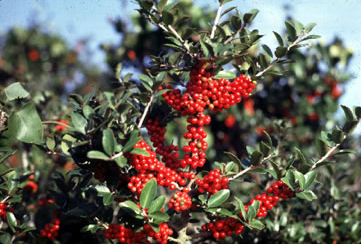
Yaupon Holly is one of North America's most versatile native shrubs and small trees. Naturally found throughout the southeastern United States, this attractive evergreen produces dense glossy foliage, bright red berries, and exceptional wildlife value. It is equally at home as a specimen plant, privacy screen, clipped hedge, foundation planting, or naturalized wildlife shrub.
Female plants produce abundant clusters of brilliant red berries that persist through winter, creating a colorful display while providing an important food source for birds and other wildlife. Yaupon Holly is remarkably tolerant of heat, drought, salt spray, pruning, and a wide range of soil conditions, making it one of the easiest native shrubs to grow.
Plant Characteristics- Botanical Name: Ilex vomitoria
- Common Names: Yaupon Holly, Cassina, Native Holly
- Plant Type: Evergreen shrub or small tree
- USDA Zones: 7-10
- Height: 10-25 feet
- Spread: 6-15 feet
- Sun Requirements: Full sun to partial shade
- Flower Color: Small white flowers
- Bloom Time: Spring
- Fruit: Bright red berries on female plants
Yaupon Holly produces masses of bright red berries that often remain on the plant throughout winter. While not generally consumed by humans, the berries are highly attractive to numerous species of songbirds including cedar waxwings, mockingbirds, robins, bluebirds, and other native birds.
The fruits become especially valuable during winter when other food sources are scarce. The dense evergreen growth also provides excellent nesting and shelter habitat.
Landscape Uses- Evergreen privacy hedge
- Formal clipped hedge
- Wildlife habitat planting
- Bird garden centerpiece
- Foundation shrub
- Windbreak planting
- Coastal landscapes
- Naturalized woodland edge
- Small ornamental tree
- Bonsai subject
Yaupon Holly seeds possess natural dormancy and often require patience.
- Clean seeds from ripe berries.
- Soak seeds in water for 24 hours.
- Cold stratify for 60-90 days in moist peat or vermiculite at 34-40°F.
- Sow 1/4 inch deep in a well-drained seed-starting mix.
- Maintain temperatures between 70-80°F.
- Keep soil evenly moist.
- Germination may occur in 2-12 months.
- Some seeds may continue sprouting over a second season.
Patience is often rewarded with strong, long-lived seedlings.
Growing InformationYaupon Holly is one of the most adaptable native shrubs available. It tolerates sandy soils, clay soils, drought, periodic flooding, coastal conditions, heat, humidity, and urban environments. Once established, it requires very little maintenance.
Plants respond well to pruning and can be maintained as tightly clipped hedges or allowed to develop naturally into graceful small trees.
Female plants require a nearby male plant for reliable berry production.
Hedge Growing InformationYaupon Holly is considered one of the finest evergreen hedge plants for the southern United States.
- Space plants 3-5 feet apart for hedges.
- Tolerates frequent pruning.
- Forms dense screening foliage.
- Retains attractive appearance year-round.
- Excellent for privacy barriers.
- Highly resistant to heat and drought once established.
Regular trimming encourages thick, lush growth and creates an attractive formal appearance.
Container GrowingDwarf forms and young plants perform well in containers.
- Use large containers with drainage holes.
- Provide quality potting soil.
- Water regularly during establishment.
- Prune to maintain desired size.
- Fertilize lightly in spring.
Container-grown specimens are popular for patios, entrances, and decorative landscape accents.
Yaupon Holly holds a unique place in North American history. Native American tribes of the southeastern United States brewed a ceremonial tea from its leaves. Remarkably, Yaupon Holly is the only plant native to North America known to naturally contain significant amounts of caffeine.
European settlers later adopted the beverage, and interest in Yaupon tea has experienced a resurgence in recent years as people rediscover this native source of caffeine.
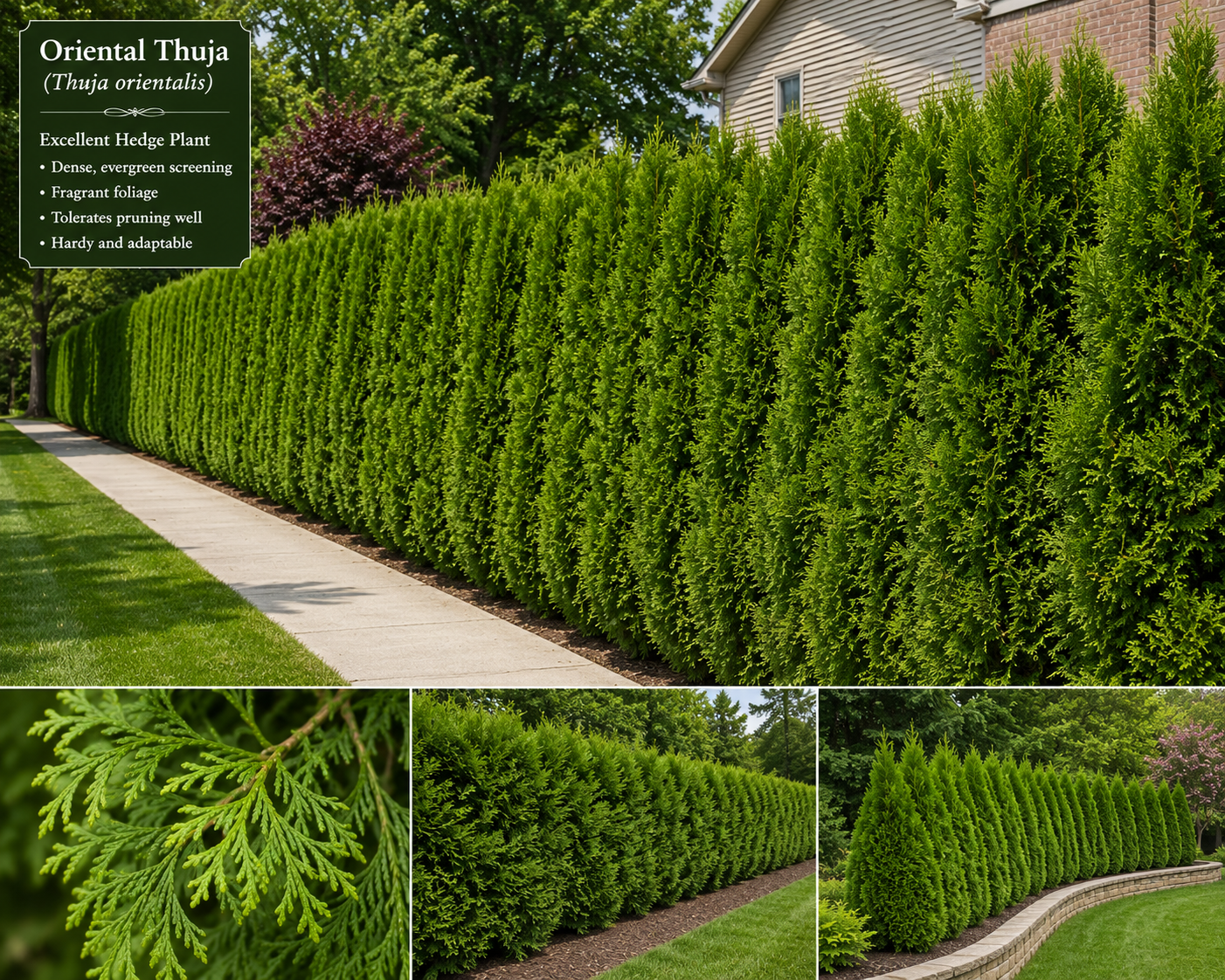
Oriental Thuja is one of the world's most popular evergreen hedge and screening plants. Native to northern China, Korea, and parts of eastern Asia, it has been cultivated for centuries as a living fence, privacy screen, windbreak, and ornamental landscape plant.
Its dense evergreen foliage forms a natural wall of greenery that remains attractive throughout the year. Unlike many hedge plants that require constant maintenance, Oriental Thuja combines beauty, durability, and adaptability into a remarkably easy-to-grow package.
Whether used as a formal clipped hedge or allowed to develop naturally, this handsome evergreen provides year-round structure, privacy, and landscape value.
Plant Characteristics- Botanical Name: Platycladus orientalis (formerly Thuja orientalis)
- Common Names: Oriental Thuja, Oriental Arborvitae, Chinese Arborvitae
- Plant Type: Evergreen conifer
- USDA Zones: 5-9
- Height: 15-40 feet
- Spread: 8-15 feet
- Sun Requirements: Full sun to partial shade
- Growth Rate: Moderate
- Foliage Color: Bright green to rich emerald green
- Winter Interest: Excellent evergreen foliage
Oriental Thuja is prized for its versatility and is widely used throughout residential and commercial landscapes.
- Privacy hedges
- Living fences
- Windbreaks
- Property screens
- Foundation plantings
- Formal garden hedges
- Noise barriers
- Specimen evergreen plantings
When planted in rows, the trees gradually form an attractive green wall that provides year-round privacy and shelter.
Important Hedge NoteOriental Thuja responds exceptionally well to pruning and shaping. This characteristic has made it one of the most popular hedge plants in gardens worldwide. Regular trimming encourages dense branching and creates an attractive, uniform hedge.
Germination Instructions- Cold stratify seeds for 30-60 days at 34-40°F.
- Sow seeds on the surface of a well-drained growing medium.
- Lightly cover with fine soil or vermiculite.
- Maintain temperatures of 65-75°F.
- Keep the medium consistently moist.
- Provide bright light.
- Germination typically occurs within 2-6 weeks.
- Transplant seedlings carefully when established.
Oriental Thuja performs best in full sun but tolerates partial shade. It adapts well to a wide range of soil conditions and is considerably more tolerant of drought and difficult soils than many evergreen hedge plants.
Once established, it requires relatively little maintenance beyond occasional pruning.
The species tolerates urban conditions, heat, wind, and moderate drought, making it a dependable landscape choice.
Container GrowingYoung plants grow well in containers and can be maintained for several years before landscape planting.
- Use containers with excellent drainage.
- Provide regular watering.
- Place in full sun whenever possible.
- Feed lightly during the growing season.
- Prune to maintain shape if desired.
Container-grown specimens are often used as patio evergreens or entryway accents.
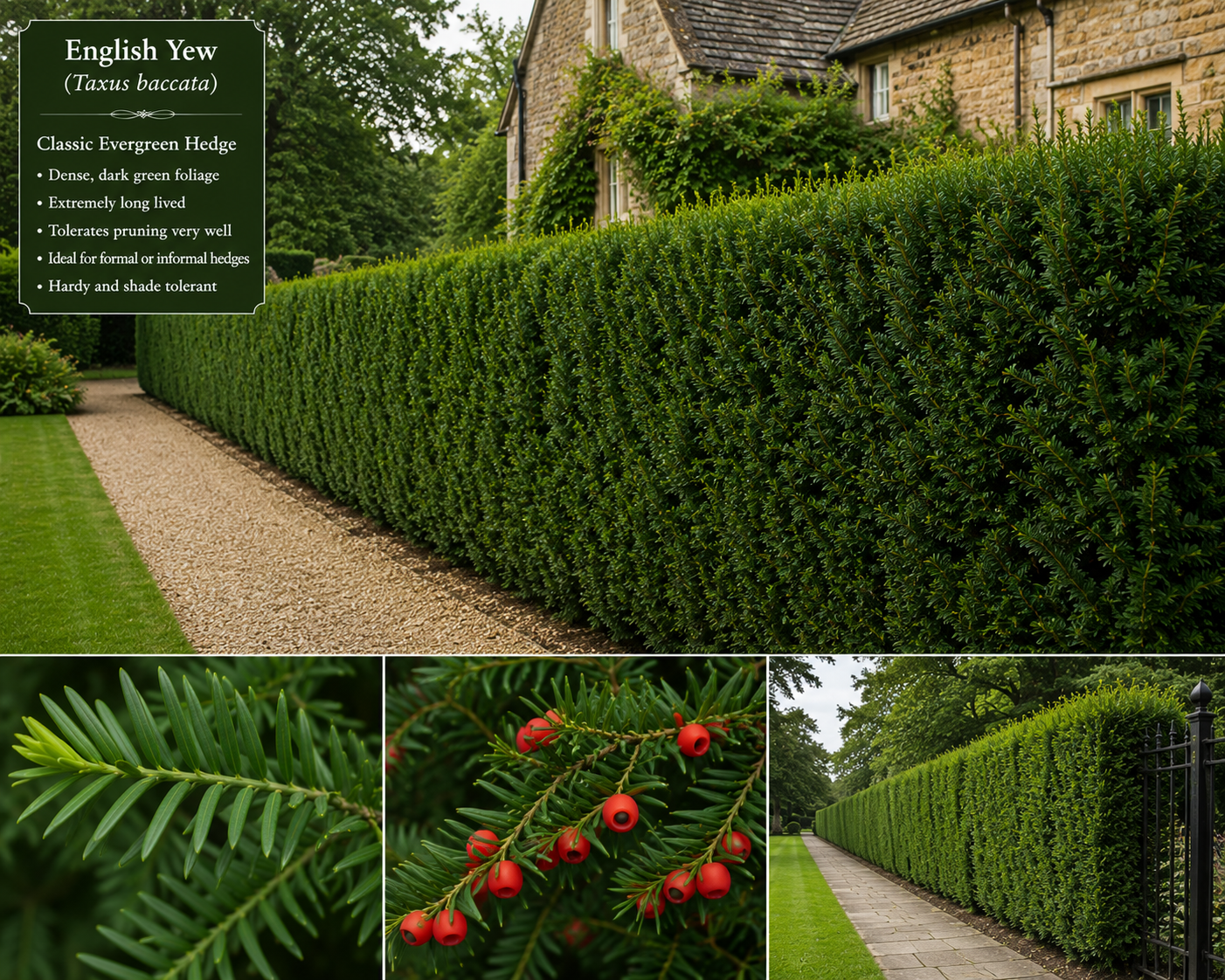
English Yew is one of the most celebrated evergreen hedge plants in horticultural history. Native to Europe, North Africa, and parts of western Asia, this elegant conifer has been cultivated for centuries in formal gardens, estate landscapes, churchyards, and palace grounds.
Its dense dark-green foliage, exceptional longevity, remarkable tolerance of pruning, and ability to thrive in shade have made it one of the world's most desirable hedge plants. Few evergreens can be clipped into such precise shapes while maintaining beauty and vigor for generations.
Whether grown as a stately hedge, privacy screen, topiary, or specimen plant, English Yew remains one of the most prestigious landscape evergreens available.
Plant Characteristics- Botanical Name: Taxus baccata
- Common Names: English Yew, European Yew, Common Yew
- Plant Type: Evergreen conifer
- USDA Zones: 5-8
- Height: 20-60 feet
- Spread: 15-30 feet
- Sun Requirements: Full sun to full shade
- Growth Rate: Slow to moderate
- Foliage Color: Deep rich green
- Winter Interest: Outstanding evergreen color
Few evergreen plants can match its combination of elegance, durability, and pruning tolerance.
Important Hedge NoteEnglish Yew may be the most pruning-tolerant evergreen hedge plant ever cultivated. It can be clipped into highly formal shapes and will often regenerate from old wood where many conifers cannot.
Germination Instructions- Cold stratify for 90-120 days.
- Sow approximately 1/2 inch deep.
- Maintain consistent moisture.
- Provide temperatures of 60-70°F.
- Be patient, as germination can be slow and irregular.
- Transplant seedlings once established.
English Yew performs best in well-drained soils and adapts to both sun and shade. It tolerates pruning better than nearly any other evergreen and responds with dense new growth.
Once established, plants are highly durable and relatively drought tolerant.
The species is particularly valued for locations where dense evergreen screening is needed in partial shade.
Container GrowingYoung plants adapt well to container culture.
- Use large containers with excellent drainage.
- Provide regular moisture.
- Avoid prolonged waterlogging.
- Prune to maintain shape.
- Repot periodically as plants mature.
Container-grown specimens are frequently used in formal garden designs.
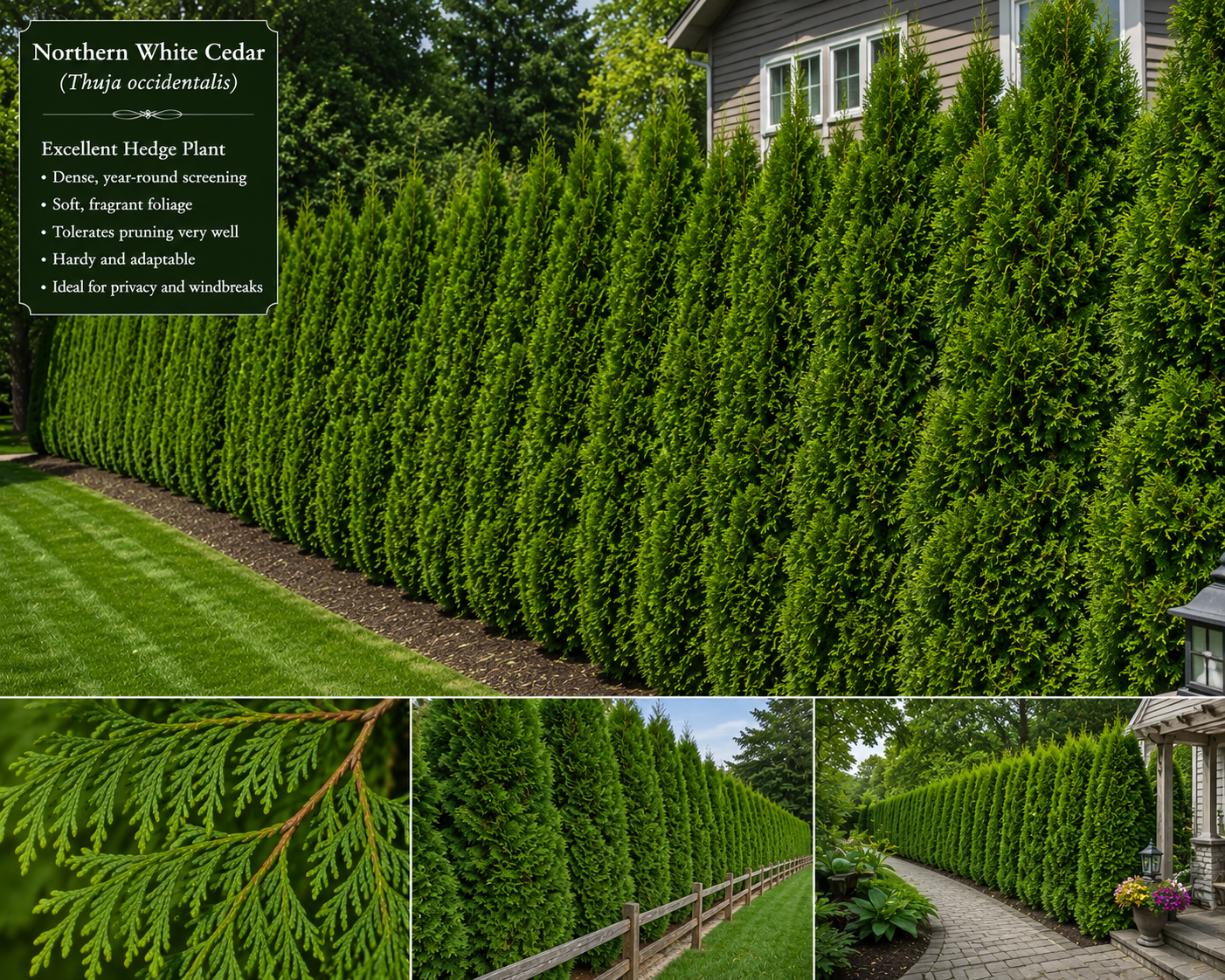
Northern White Cedar is one of North America's most popular evergreen hedge plants. Native to the northeastern United States and much of Canada, this handsome conifer has been used for centuries as a privacy screen, living fence, windbreak, and ornamental landscape plant.
Its dense, feathery evergreen foliage creates an attractive year-round screen that responds exceptionally well to pruning. Hardy, adaptable, long-lived, and attractive, Northern White Cedar has earned a reputation as one of the finest hedge plants available for cold and temperate climates.
Whether planted as a formal hedge, property boundary, wildlife screen, or windbreak, this dependable evergreen provides beauty and function throughout every season.
Plant Characteristics- Botanical Name: Thuja occidentalis
- Common Names: Northern White Cedar, Eastern Arborvitae, American Arborvitae
- Plant Type: Evergreen conifer
- USDA Zones: 3-7
- Height: 30-50 feet
- Spread: 10-15 feet
- Sun Requirements: Full sun to partial shade
- Growth Rate: Moderate
- Foliage Color: Bright green to deep emerald green
- Winter Interest: Excellent evergreen color
Northern White Cedar is one of the most versatile evergreen landscape plants available.
- Privacy hedges
- Living fences
- Windbreaks
- Property borders
- Foundation plantings
- Noise barriers
- Wildlife screens
- Evergreen backdrops
Rows of Northern White Cedar can form a dense green wall that remains attractive and functional throughout the year.
Important Hedge NoteNorthern White Cedar responds exceptionally well to trimming and shaping. Regular pruning encourages dense branching from top to bottom, creating the thick privacy screens for which the species is famous.
Germination Instructions- Cold stratify seeds for 30-60 days at 34-40°F.
- Sow seeds on the surface of a well-drained seed starting mix.
- Lightly cover with fine soil or vermiculite.
- Keep soil consistently moist.
- Provide bright indirect light.
- Maintain temperatures between 65-75°F.
- Germination usually occurs within 2-8 weeks.
- Transplant seedlings once large enough to handle.
Northern White Cedar grows best in full sun but tolerates partial shade. It adapts to a wide range of soils and is more tolerant of wet conditions than many evergreen hedge plants.
Once established, it requires relatively little maintenance and remains attractive for decades.
The species performs particularly well in northern climates where winter hardiness is essential.
Container GrowingYoung plants adapt well to container culture.
- Use containers with excellent drainage.
- Water regularly during active growth.
- Provide full sun whenever possible.
- Fertilize lightly during spring.
- Prune as needed to maintain shape.
Container-grown specimens are often used as patio accents or temporary screening plants.
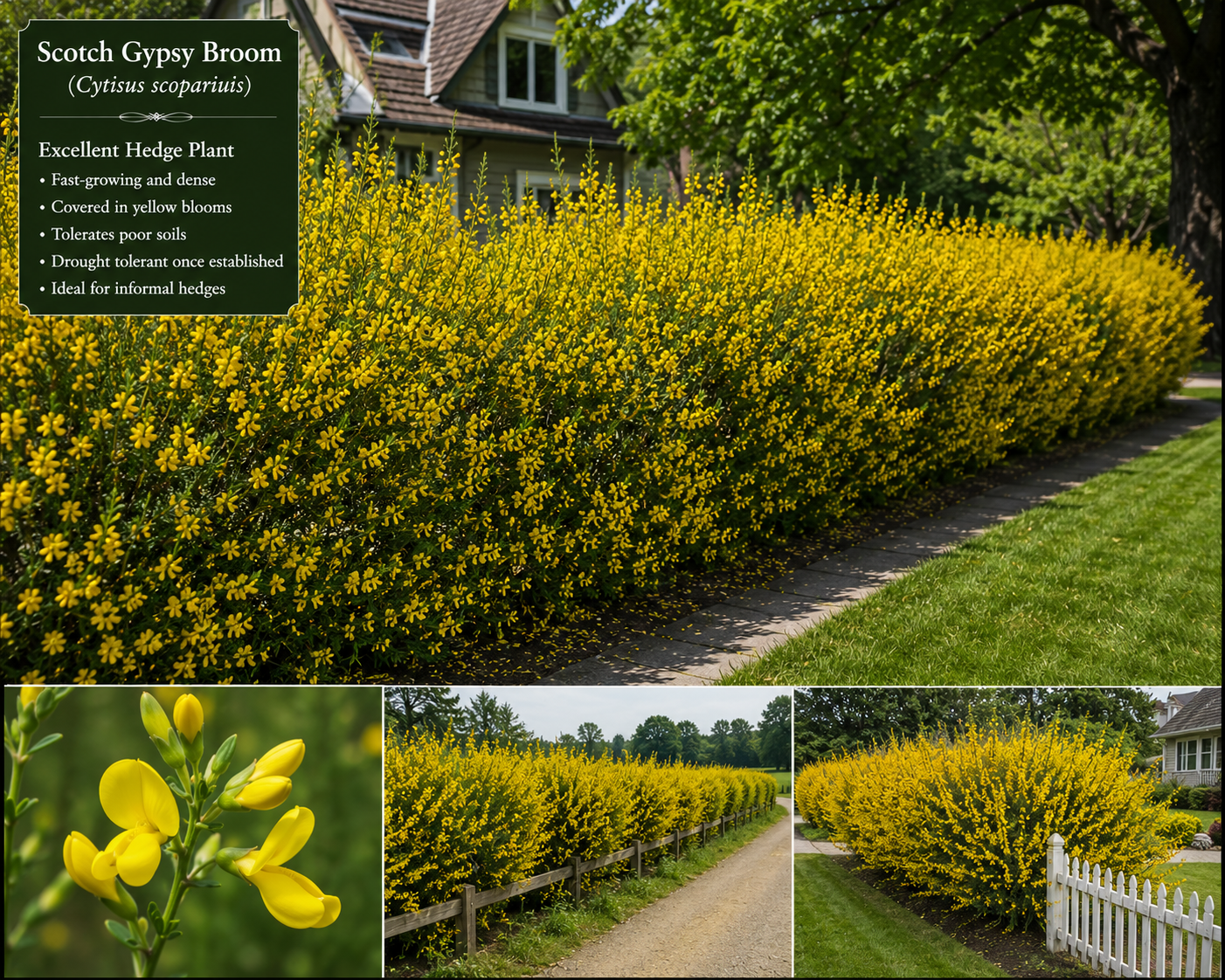
Scotch Gypsy Broom is a fast-growing flowering shrub renowned for its brilliant display of golden-yellow blossoms that can nearly cover the entire plant during spring. Native to Europe and widely cultivated around the world, it has become a favorite for informal hedges, sunny borders, erosion control, and wildlife plantings.
Its upright, arching branches create a naturally dense shrub that is especially attractive when planted in groups or hedgerows. During bloom, the plant transforms into a mass of bright color that can be seen from considerable distances.
For gardeners seeking a hedge that offers both privacy and spectacular seasonal beauty, Scotch Gypsy Broom is an excellent choice.
Plant Characteristics- Botanical Name: Cytisus scoparius
- Common Names: Scotch Broom, Scotch Gypsy Broom, Common Broom
- Plant Type: Deciduous flowering shrub
- USDA Zones: 5-8
- Height: 4-10 feet
- Spread: 4-8 feet
- Sun Requirements: Full sun
- Growth Rate: Fast
- Flower Color: Bright yellow
- Bloom Time: Spring to early summer
Scotch Gypsy Broom is especially useful in difficult sites where other hedge plants may struggle.
- Flowering hedges
- Property boundaries
- Wildlife screens
- Erosion control plantings
- Roadside plantings
- Sunny borders
- Drought-tolerant landscapes
- Naturalized hedgerows
When planted in rows, the shrubs create a colorful and highly attractive informal hedge.
Important Hedge NoteUnlike Yew or Arborvitae, Scotch Gypsy Broom is best used as a natural hedge rather than a tightly clipped formal hedge. Its graceful branching habit and seasonal flowers are best displayed when allowed to retain their natural shape.
Germination Instructions- Scarify seeds by lightly nicking the seed coat or soaking in hot water for 12-24 hours.
- Sow approximately 1/4 inch deep.
- Maintain temperatures of 65-75°F.
- Keep soil lightly moist.
- Provide bright light.
- Germination typically occurs within 2-6 weeks.
- Transplant seedlings when well established.
- Avoid excessive fertilization.
Scotch Gypsy Broom thrives in full sun and well-drained soil. It performs exceptionally well in poor, sandy, rocky, and drought-prone sites where many other shrubs struggle.
Once established, plants require little maintenance and often perform best when left relatively undisturbed.
The species is particularly useful for challenging sites where attractive screening is desired.
Container GrowingYoung plants can be grown in containers but perform best when eventually planted in the landscape.
- Use well-drained soil.
- Avoid overwatering.
- Provide full sun.
- Use moderate fertilization.
- Transplant before roots become crowded.
Landscape planting is recommended for mature specimens.
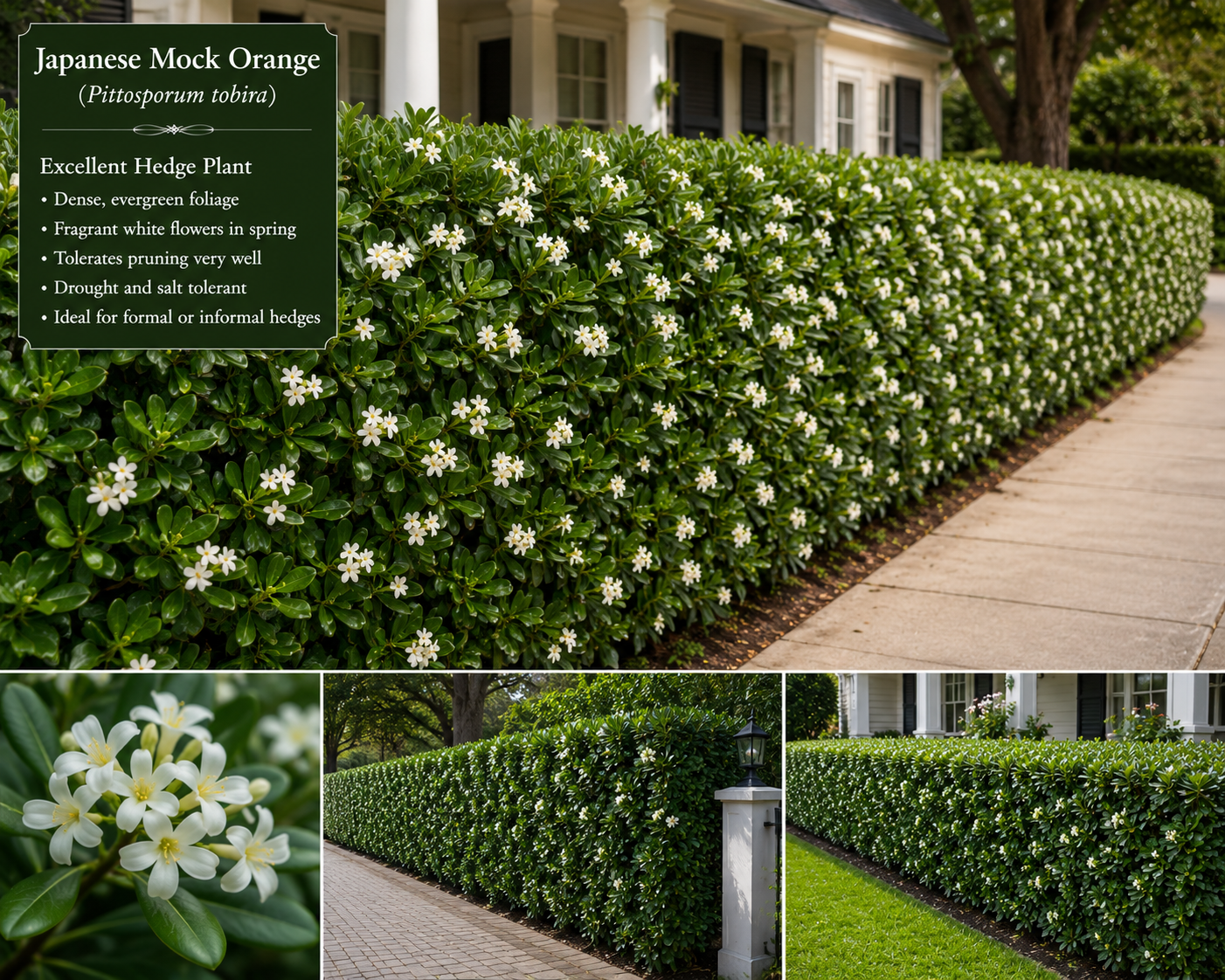
Japanese Mock Orange is a handsome evergreen shrub prized for its dense glossy foliage, highly fragrant spring flowers, and exceptional versatility as a hedge plant. Native to Japan, Korea, and parts of eastern Asia, it has become one of the most widely planted evergreen hedges in warm temperate and coastal regions around the world.
Its naturally dense branching habit forms an attractive screen that can be maintained as a formal clipped hedge or allowed to develop into a graceful informal barrier. During spring, clusters of creamy white flowers release a sweet citrus-like fragrance often compared to orange blossoms, giving rise to its common name.
For gardeners seeking beauty, privacy, fragrance, and year-round greenery, few hedge plants offer as complete a package as Japanese Mock Orange.
Plant Characteristics- Botanical Name: Pittosporum tobira
- Common Names: Japanese Mock Orange, Japanese Pittosporum, Tobira
- Plant Type: Evergreen flowering shrub
- USDA Zones: 8-11
- Height: 6-15 feet
- Spread: 6-12 feet
- Sun Requirements: Full sun to partial shade
- Growth Rate: Moderate
- Foliage Color: Deep glossy green
- Flower Color: Creamy white
- Bloom Time: Spring
Japanese Mock Orange is one of the most adaptable evergreen shrubs for landscape use.
- Privacy hedges
- Foundation plantings
- Property screens
- Coastal landscapes
- Windbreaks
- Formal hedges
- Fragrant gardens
- Evergreen borders
Its neat growth habit and year-round appearance make it equally suitable for residential and commercial landscapes.
Important Hedge NoteJapanese Mock Orange tolerates repeated trimming and shaping exceptionally well. This ability allows gardeners to maintain crisp formal hedges while preserving dense foliage from top to bottom.
Germination Instructions- Sow seeds in a well-drained seed starting mix.
- Lightly cover seeds with fine soil.
- Maintain temperatures between 70-80°F.
- Keep soil consistently moist.
- Provide bright indirect light.
- Germination may occur within several weeks.
- Transplant seedlings when well established.
- Provide protection from frost during early growth.
Japanese Mock Orange performs best in full sun to partial shade and adapts to a wide variety of soil conditions. Once established, it exhibits excellent drought tolerance and requires relatively little maintenance.
It is particularly valued in coastal areas because of its tolerance to salt spray and ocean winds.
Occasional pruning after flowering helps maintain a dense, attractive form.
Container GrowingThis species adapts exceptionally well to large containers.
- Use quality well-drained potting soil.
- Provide full sun or partial shade.
- Water regularly during establishment.
- Prune as needed to maintain shape.
- Feed lightly during active growth.
Container-grown specimens are frequently used around patios, entrances, and courtyards.
Interesting Botanical Facts- The flowers are often compared to orange blossoms in fragrance.
- The species is highly tolerant of coastal conditions.
- Glossy leaves remain attractive throughout the year.
- It is frequently used in commercial landscapes due to its reliability.
- Mature plants develop an exceptionally dense branching structure.
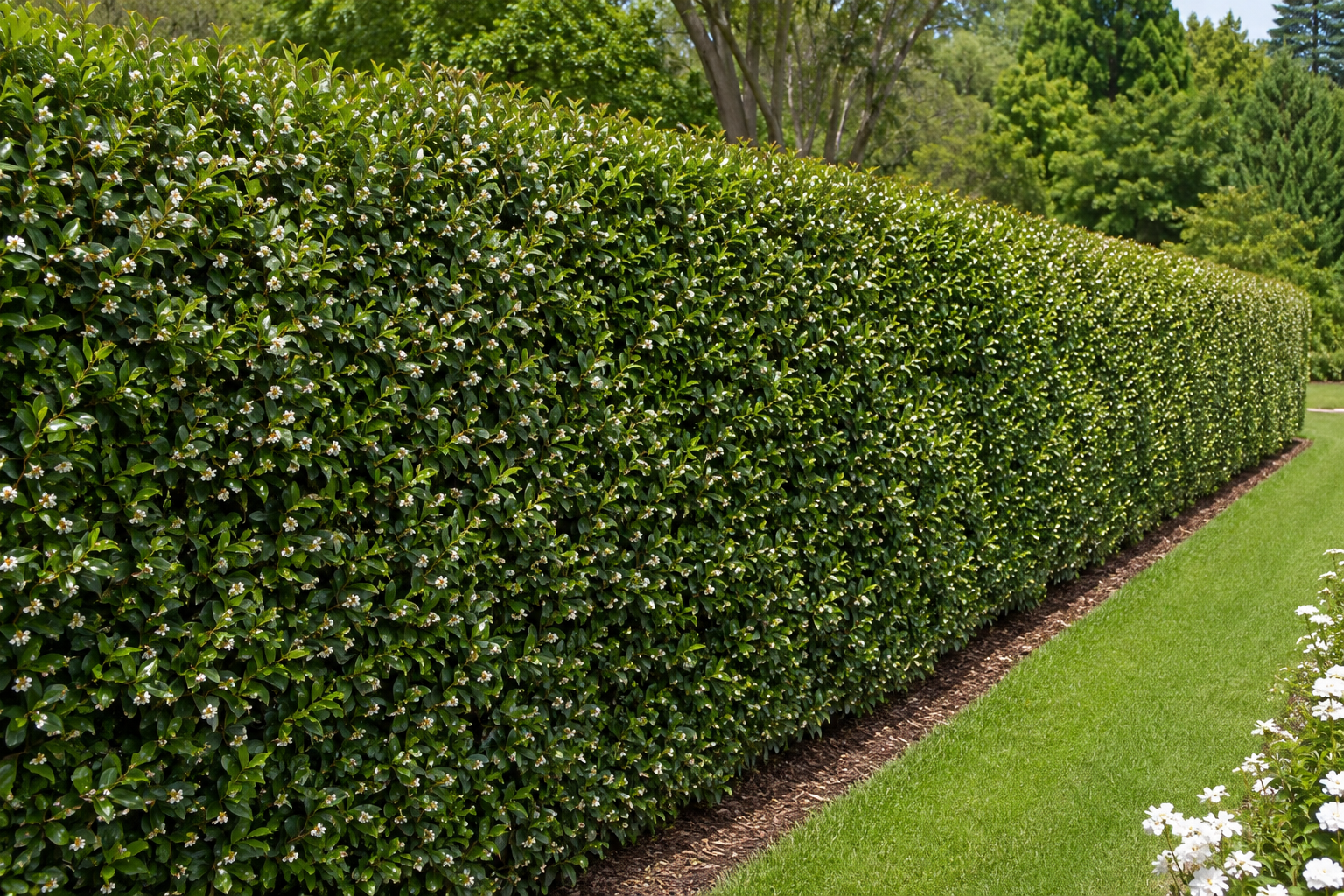
Tea Olive (Osmanthus fragrans) is one of the most treasured fragrant hedge plants for warm climates. This handsome evergreen shrub or small tree is prized for its glossy green foliage, dense growth habit, and tiny, intensely fragrant flowers. Although the blooms are small, their sweet perfume can fill an entire garden, often carrying on the breeze long before the flowers are noticed.
Plant CharacteristicsTea Olive is a broadleaf evergreen shrub or small tree that can reach 10 to 20 feet tall when mature, though it is commonly maintained much shorter as a hedge. The foliage is dark green, glossy, and attractive throughout the year. In season, the plant produces small white, cream, or pale orange flowers with a powerful sweet fragrance often compared to apricot, peach, jasmine, and ripe fruit.
Landscape UsesTea Olive is excellent for formal hedges, informal privacy screens, foundation plantings, fragrant walkways, courtyard gardens, patio borders, and mixed evergreen plantings. It is especially valuable near entrances, porches, windows, and garden paths where its fragrance can be enjoyed up close.
Important Hedge NoteTea Olive is one of the finest flowering hedge plants for southern gardens. Unlike many hedge plants that offer only foliage, Tea Olive provides year-round greenery along with wonderfully fragrant flowers. It can be maintained as a clipped formal hedge or allowed to grow naturally into a graceful informal screen. For hedge use, plants are commonly spaced about 4 to 6 feet apart.
Germination InstructionsTea Olive seed can be slow and irregular to germinate. Soak seeds in warm water for 24 hours before planting. Sow in a moist, well-drained seed-starting mix and cover lightly with soil. Keep the medium evenly moist but not soggy, and maintain warm temperatures of about 70 to 80 degrees F. Germination may take several weeks to several months, so patience is important.
Growing InformationTea Olive grows best in full sun to partial shade and prefers fertile, well-drained soil. Plants appreciate moderate moisture while becoming established, but mature specimens are fairly drought tolerant once their roots are well developed. Pruning is best done after flowering or as needed to maintain the desired hedge shape.
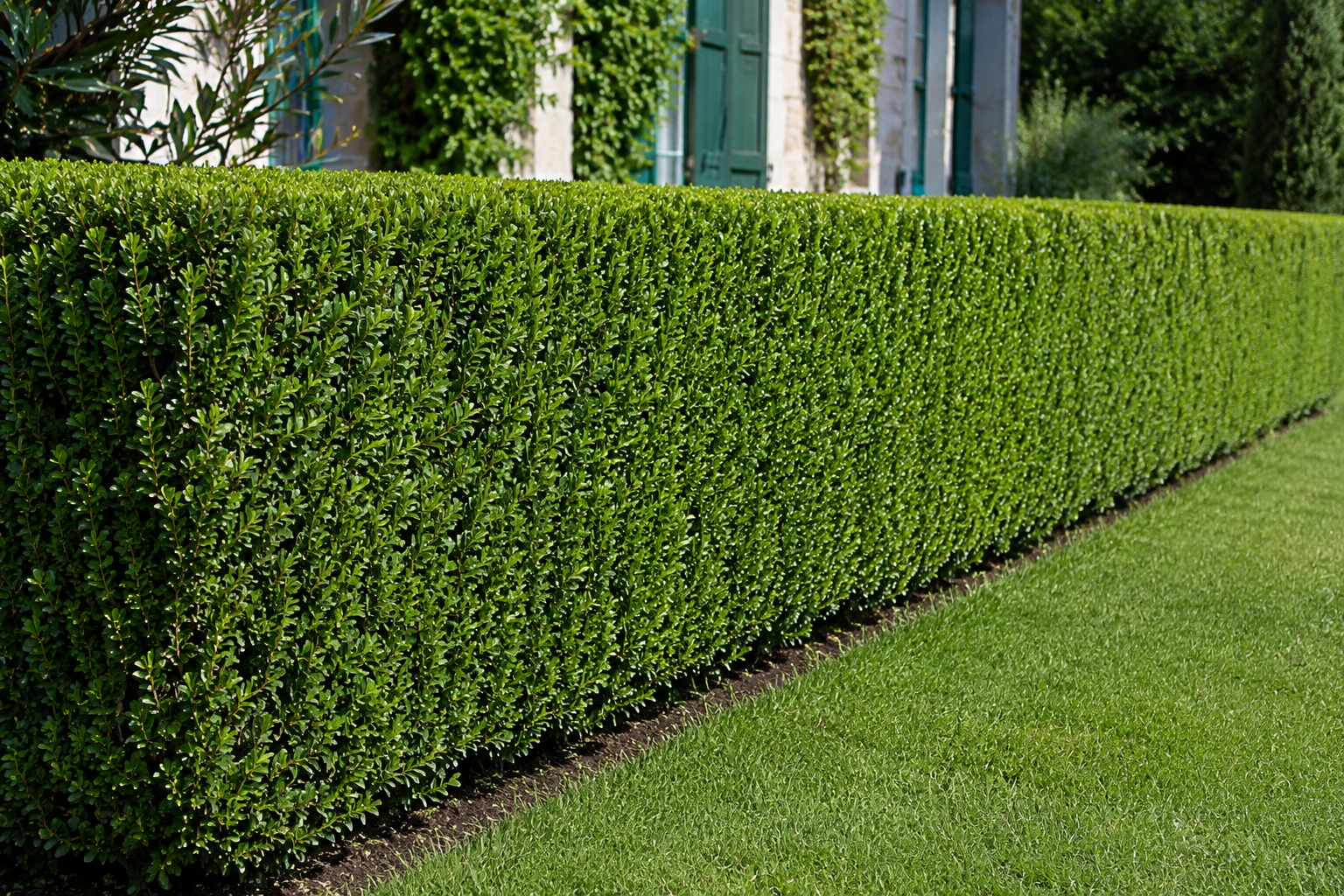
Boxwood (Buxus sempervirens) is one of the world's most famous hedge plants, prized for its dense evergreen foliage, exceptional pruning tolerance, and elegant appearance. For centuries, Boxwood has been used to create formal hedges, garden borders, knot gardens, and estate landscapes. Its fine-textured foliage and ability to be shaped into almost any form make it one of the premier hedge plants available.
Plant CharacteristicsBoxwood is a slow to moderate growing evergreen shrub with small, glossy, dark green leaves that remain attractive throughout the year. Mature plants typically reach 8 to 20 feet in height if left unpruned, but are commonly maintained much smaller as hedges. Its naturally dense branching habit creates one of the most uniform and refined hedge appearances available.
- Botanical Name: Buxus sempervirens
- Common Name: Common Boxwood, English Boxwood
- Plant Type: Evergreen shrub
- Mature Height: 8-20 feet
- Hedge Height: 2-8 feet typically maintained
- Spread: 6-15 feet
- Growth Rate: Slow to moderate
- USDA Zones: 5-9
- Sun Exposure: Full sun to partial shade
Boxwood is the classic choice for formal landscape design and is commonly used for:
- Formal hedges
- Property borders
- Foundation plantings
- Parterre gardens
- Knot gardens
- Walkway edging
- Topiary creations
- Estate landscaping
- Evergreen screening
Few shrubs offer the same level of refinement and architectural structure as a well-maintained Boxwood hedge.
Important Hedge NoteBoxwood is widely regarded as the gold standard for formal hedges. Its dense branching, small leaves, and ability to withstand repeated trimming allow it to maintain crisp, clean lines for decades. Some historic Boxwood hedges planted centuries ago are still thriving today.
For dense hedge formation, plants are typically spaced 2 to 4 feet apart depending on the desired final size.
Germination InstructionsBoxwood seeds require cold stratification for best germination.
- Soak seeds in water for 24 hours.
- Place seeds in moist peat or sand.
- Refrigerate for 60 to 90 days at approximately 40°F.
- Sow in a well-drained seed-starting mix.
- Maintain temperatures of 65-75°F.
- Keep evenly moist during germination.
Germination can be slow and may occur over several weeks or months.
Growing InformationBoxwood grows best in fertile, well-drained soil and performs well in both full sun and partial shade. Plants appreciate consistent moisture while becoming established but are relatively drought tolerant once mature.
Annual pruning encourages dense growth and helps maintain hedge shape. Mulching around the base helps conserve moisture and protect shallow roots.
Container GrowingBoxwood performs exceptionally well in containers and is frequently used in decorative pots near entrances, patios, and formal garden settings.
- Start with 3 to 5 gallon containers.
- Move mature plants into 15 to 25 gallon containers.
- Use high-quality well-drained potting soil.
- Provide regular watering during hot weather.
Container-grown Boxwoods can remain attractive for decades with proper care.
Interesting Botanical Facts- Boxwood is one of the oldest cultivated ornamental shrubs in history.
- Its wood is extremely dense and was historically used for carving, musical instruments, and fine woodworking.
- Some Boxwood specimens are known to live for hundreds of years.
- The small leaves allow precise shaping not possible with many hedge plants.
- Boxwood remains attractive throughout all four seasons.
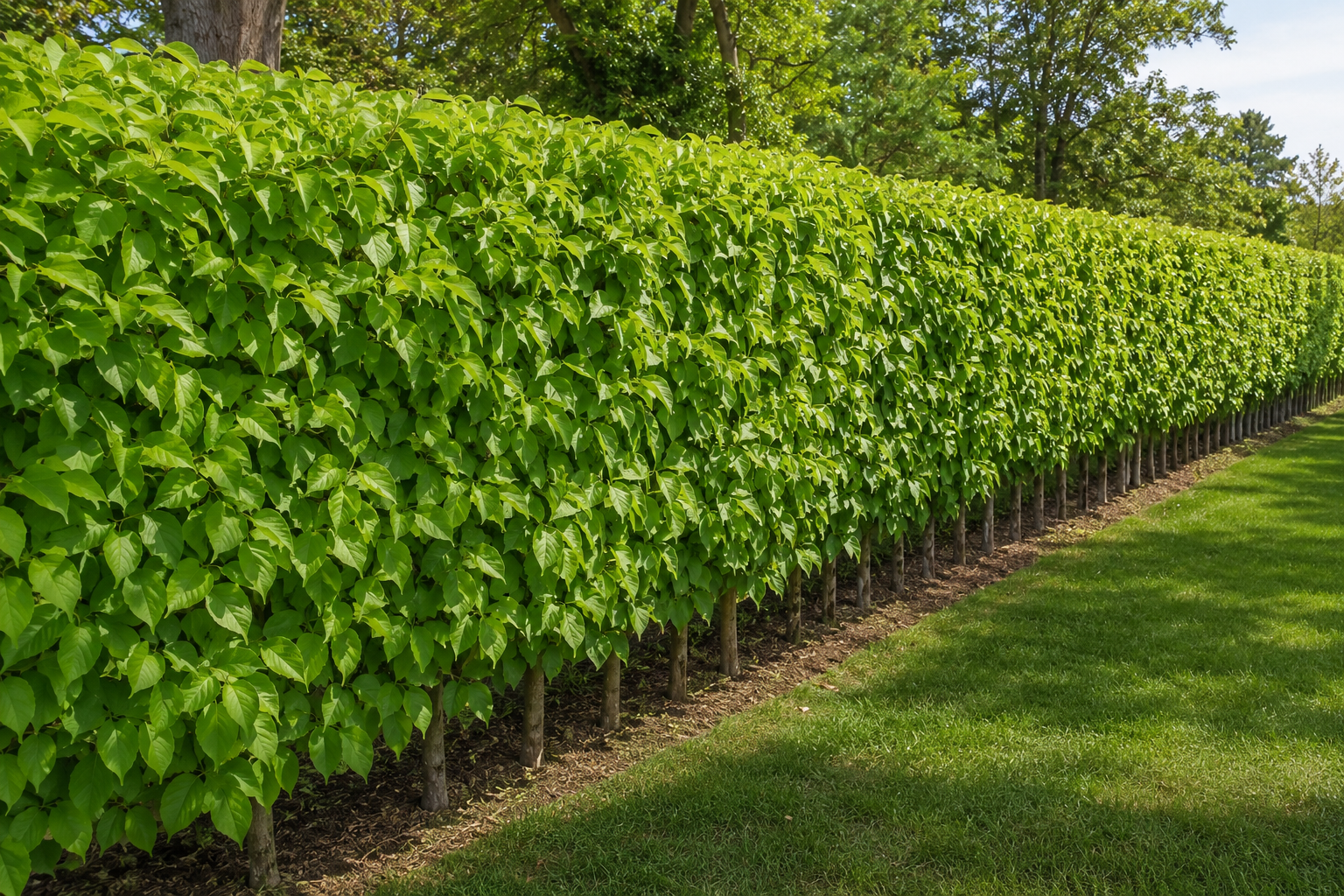
Osage Orange (Maclura pomifera) is one of North America's most historic and effective hedge plants. Long before the invention of barbed wire, farmers across the Midwest planted Osage Orange hedgerows as living fences capable of containing livestock and deterring intruders. With its dense branching habit, formidable thorns, rapid growth, and exceptional durability, few plants can rival its effectiveness as a protective hedge.
Plant CharacteristicsOsage Orange is a deciduous tree native to the south-central United States. When planted closely and regularly pruned, it forms an exceptionally dense hedge that can become nearly impenetrable. The bright green foliage creates an attractive summer screen before turning golden yellow in autumn.
- Botanical Name: Maclura pomifera
- Common Names: Osage Orange, Hedge Apple, Horse Apple, Bodark
- Plant Type: Deciduous tree
- Mature Height: 30-50 feet
- Hedge Height: Commonly maintained at 6-15 feet
- Spread: 20-40 feet
- Growth Rate: Fast
- USDA Zones: 4-9
- Sun Exposure: Full sun
Osage Orange is ideal for:
- Security hedges
- Living fences
- Farm boundaries
- Windbreaks
- Wildlife cover plantings
- Rural property screening
- Erosion control
- Naturalized landscapes
Its thorny branches and dense growth make it one of the most effective barrier hedges available.
Important Hedge NoteHistorically, Osage Orange was known as the "horse-high, bull-strong, pig-tight hedge." Properly planted and maintained, it forms a living fence so dense that livestock and large animals cannot easily penetrate it.
Unlike ornamental hedges, Osage Orange excels where security, durability, and wildlife value are primary goals.
Germination Instructions- Remove seeds from mature fruit and clean thoroughly.
- Cold stratify seeds for 60-90 days in moist peat or sand.
- Sow seeds approximately 1/4 inch deep.
- Maintain temperatures between 70-80°F.
- Keep soil consistently moist.
- Germination typically occurs within several weeks after stratification.
Osage Orange is remarkably adaptable and thrives in a wide variety of soil conditions including clay, sand, rocky soils, and drought-prone sites. Once established, it requires very little maintenance and is highly resistant to heat, drought, wind, and poor soils.
Pruning can be used to encourage dense branching and maintain hedge shape. Young plants respond especially well to formative pruning.
Container GrowingDue to its vigorous growth and eventual size, Osage Orange is generally not recommended as a long-term container plant. Young seedlings may be grown temporarily in containers before transplanting to a permanent landscape location.
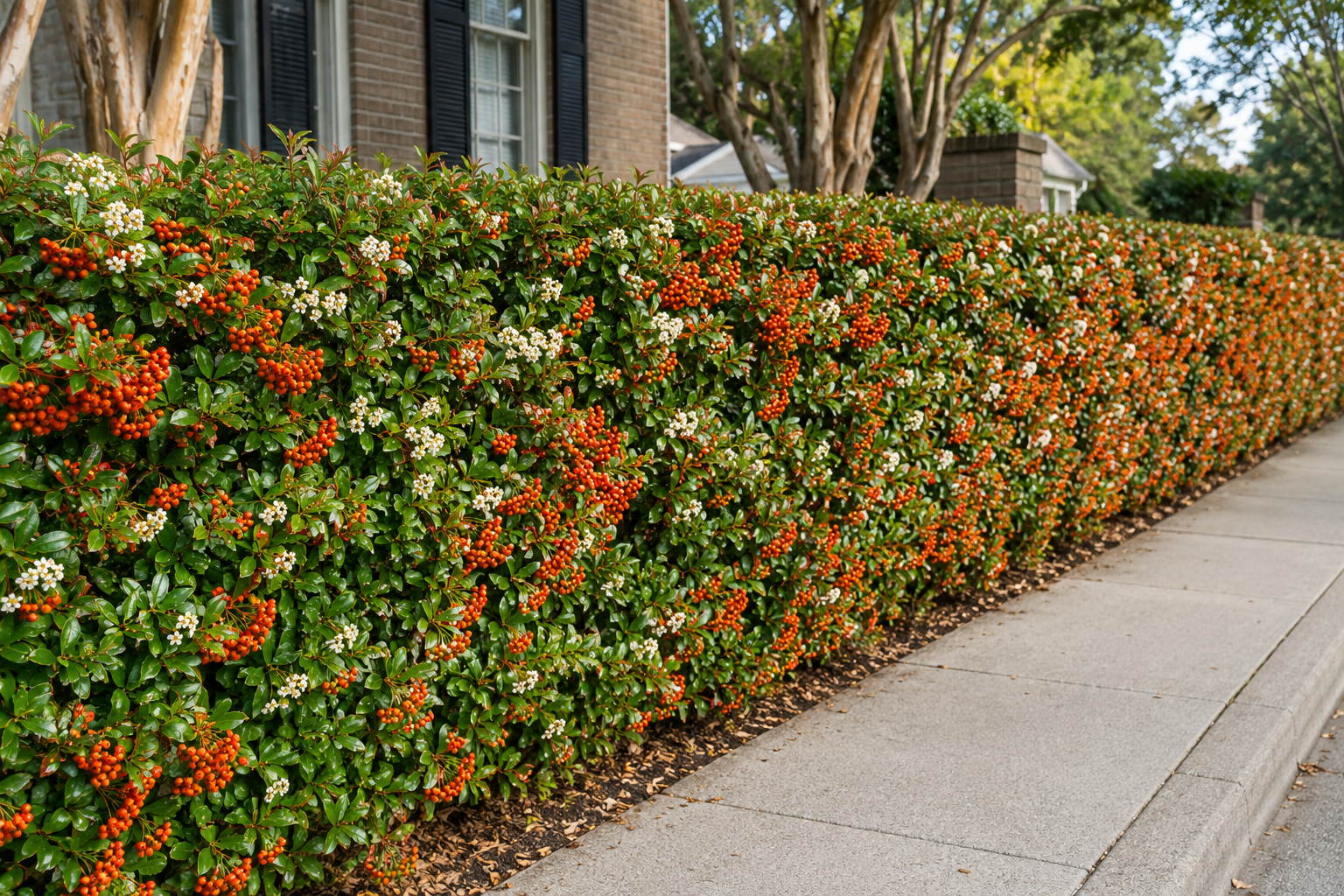
Firethorn (Pyracantha coccinea) is one of the most colorful and versatile hedge plants available. Valued for its dense evergreen foliage, fragrant spring flowers, brilliant clusters of orange-red berries, and formidable thorny branches, Firethorn provides beauty, wildlife value, and security all in one plant. A mature Firethorn hedge becomes a spectacular display of color while serving as an effective privacy and barrier planting.
Plant CharacteristicsFirethorn is a vigorous evergreen shrub with dense branching and sharp thorns. In spring, it produces clusters of small white flowers that are followed by masses of brightly colored berries that often persist well into winter.
- Botanical Name: Pyracantha coccinea
- Common Name: Firethorn
- Plant Type: Evergreen shrub
- Mature Height: 8-15 feet
- Hedge Height: Commonly maintained at 4-10 feet
- Spread: 6-12 feet
- Growth Rate: Moderate to fast
- USDA Zones: 6-9
- Sun Exposure: Full sun to partial shade
Firethorn is commonly used for:
- Security hedges
- Privacy screens
- Property boundaries
- Wildlife plantings
- Foundation plantings
- Espaliers against walls
- Bird gardens
- Mixed shrub borders
Its combination of flowers, berries, evergreen foliage, and thorns makes it one of the most multi-purpose hedge plants available.
Important Hedge NoteFirethorn creates a highly effective barrier hedge due to its dense growth and sharp thorns. A mature hedge can deter unwanted foot traffic while still providing ornamental value throughout the year.
For dense screening, plants are typically spaced 3 to 5 feet apart.
Germination Instructions- Cold stratify seeds for 60-90 days.
- Sow in a well-drained seed-starting mix.
- Cover lightly with soil.
- Maintain temperatures of 65-75°F.
- Keep evenly moist until germination occurs.
Germination may occur over several weeks following stratification.
Growing InformationFirethorn performs best in full sun where berry production is maximized. It adapts to a wide range of soil types and becomes fairly drought tolerant once established.
Annual pruning can be used to maintain shape and encourage dense branching. Plants flower on older wood, so heavy pruning should be timed carefully if berry production is desired.
Container GrowingFirethorn can be grown successfully in large containers for many years.
- Use containers at least 15 gallons in size.
- Provide excellent drainage.
- Water regularly during hot weather.
- Prune as needed to maintain size.
Container-grown plants often produce attractive displays of flowers and berries.
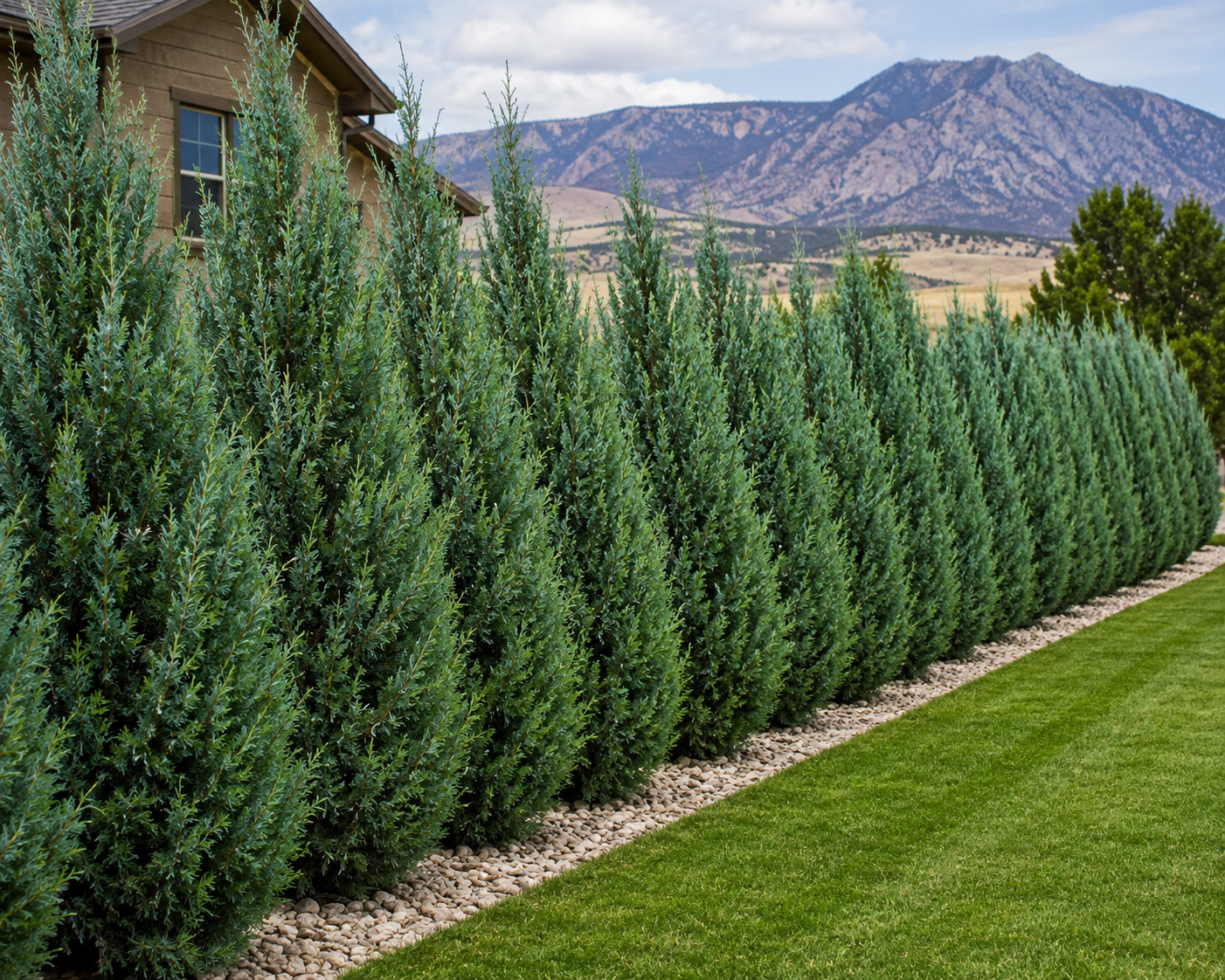
Rocky Mountain Juniper (Juniperus scopulorum) is one of the finest evergreen screening and windbreak plants for cold, dry climates. Native to the rugged mountains and foothills of western North America, this hardy conifer is valued for its attractive blue-green foliage, exceptional drought tolerance, and ability to form a dense year-round privacy screen. While not a traditional formal hedge plant, it excels as a low-maintenance living wall, shelterbelt, and wildlife hedge.
Plant CharacteristicsRocky Mountain Juniper is an evergreen conifer with a naturally upright, narrow growth habit. Many forms display attractive blue-green to silvery foliage that provides year-round color and texture.
- Botanical Name: Juniperus scopulorum
- Common Name: Rocky Mountain Juniper
- Plant Type: Evergreen conifer
- Mature Height: 20-50 feet
- Hedge Height: Commonly maintained at 8-20 feet
- Spread: 6-15 feet
- Growth Rate: Moderate
- USDA Zones: 3-8
- Sun Exposure: Full sun
Rocky Mountain Juniper is especially useful for:
- Privacy screens
- Windbreaks
- Shelterbelts
- Property boundaries
- Wildlife cover plantings
- Rural landscapes
- Drought-tolerant gardens
- Low-maintenance screening
Its dense evergreen foliage provides year-round screening even in harsh climates where many other hedge plants struggle.
Important Hedge NoteUnlike Boxwood or Privet, Rocky Mountain Juniper should not be treated as a formal clipped hedge. It performs best as a natural or lightly pruned screening hedge where its upright form can develop naturally.
For privacy screening, plants are typically spaced 6 to 8 feet apart. When mature, they create an attractive evergreen wall with minimal maintenance requirements.
Germination Instructions- Clean thoroughly and soak for 24 hours.
- Cold stratify for 90 to 120 days.
- Sow in a well-drained growing medium.
- Keep moist but not waterlogged.
- Germination may occur over several months.
Juniper seeds are naturally slow to germinate and patience is often required.
Growing InformationRocky Mountain Juniper thrives in full sun and is highly adaptable to poor, rocky, sandy, and drought-prone soils. Once established, it requires very little supplemental water and is one of the most drought-tolerant evergreen screening plants available.
The species is extremely cold hardy and performs well in areas with harsh winters and strong winds.
Container GrowingYoung plants can be grown successfully in containers for several years.
- Use deep containers with excellent drainage.
- Water regularly during establishment.
- Avoid overwatering.
- Transplant to the landscape before plants become rootbound.
Long-term container culture is generally less desirable due to the plant's eventual size.

Japanese Flowering Quince (Chaenomeles japonica) is one of the earliest and most colorful flowering hedge plants available. This hardy deciduous shrub bursts into bloom in late winter and early spring, often before the leaves emerge, covering its branches with brilliant scarlet, orange-red, pink, or white flowers. Combined with its dense growth habit, thorny branches, wildlife value, and aromatic fruits, Flowering Quince makes an outstanding ornamental and security hedge.
Plant CharacteristicsJapanese Flowering Quince is a low-growing, spreading deciduous shrub known for its spectacular spring bloom display. Dense branching and occasional thorns make it useful as both an ornamental hedge and a protective barrier planting.
- Botanical Name: Chaenomeles japonica
- Common Name: Japanese Flowering Quince
- Plant Type: Deciduous shrub
- Mature Height: 3-6 feet
- Hedge Height: Typically maintained at 3-5 feet
- Spread: 4-8 feet
- Growth Rate: Moderate
- USDA Zones: 5-9
- Sun Exposure: Full sun to partial shade
Japanese Flowering Quince is excellent for:
- Flowering hedges
- Property borders
- Foundation plantings
- Wildlife gardens
- Security hedges
- Pollinator gardens
- Slope stabilization
- Cottage gardens
Its vivid spring flowers provide one of the earliest displays of color in the landscape.
Important Hedge NoteFlowering Quince forms a dense, thorny hedge that provides both beauty and protection. While not as tall as some screening plants, it excels as a low ornamental hedge that discourages foot traffic while delivering outstanding seasonal interest.
For hedge planting, space shrubs approximately 3 to 4 feet apart.
Germination Instructions- Cold stratify seeds for 60 to 90 days.
- Sow in a moist, well-drained growing medium.
- Cover lightly with soil.
- Maintain temperatures between 65-75°F.
Germination generally occurs within several weeks following stratification.
Growing InformationJapanese Flowering Quince is adaptable to a wide variety of soils and growing conditions. It tolerates drought once established and requires minimal maintenance.
Plants flower best in full sun. Pruning should be performed immediately after flowering if shaping is desired.
Container GrowingFlowering Quince performs surprisingly well in large containers and patio planters.
- Use containers at least 10-15 gallons.
- Provide good drainage.
- Water regularly during active growth.
- Prune occasionally to maintain compact form.
Container-grown plants often provide spectacular spring displays.
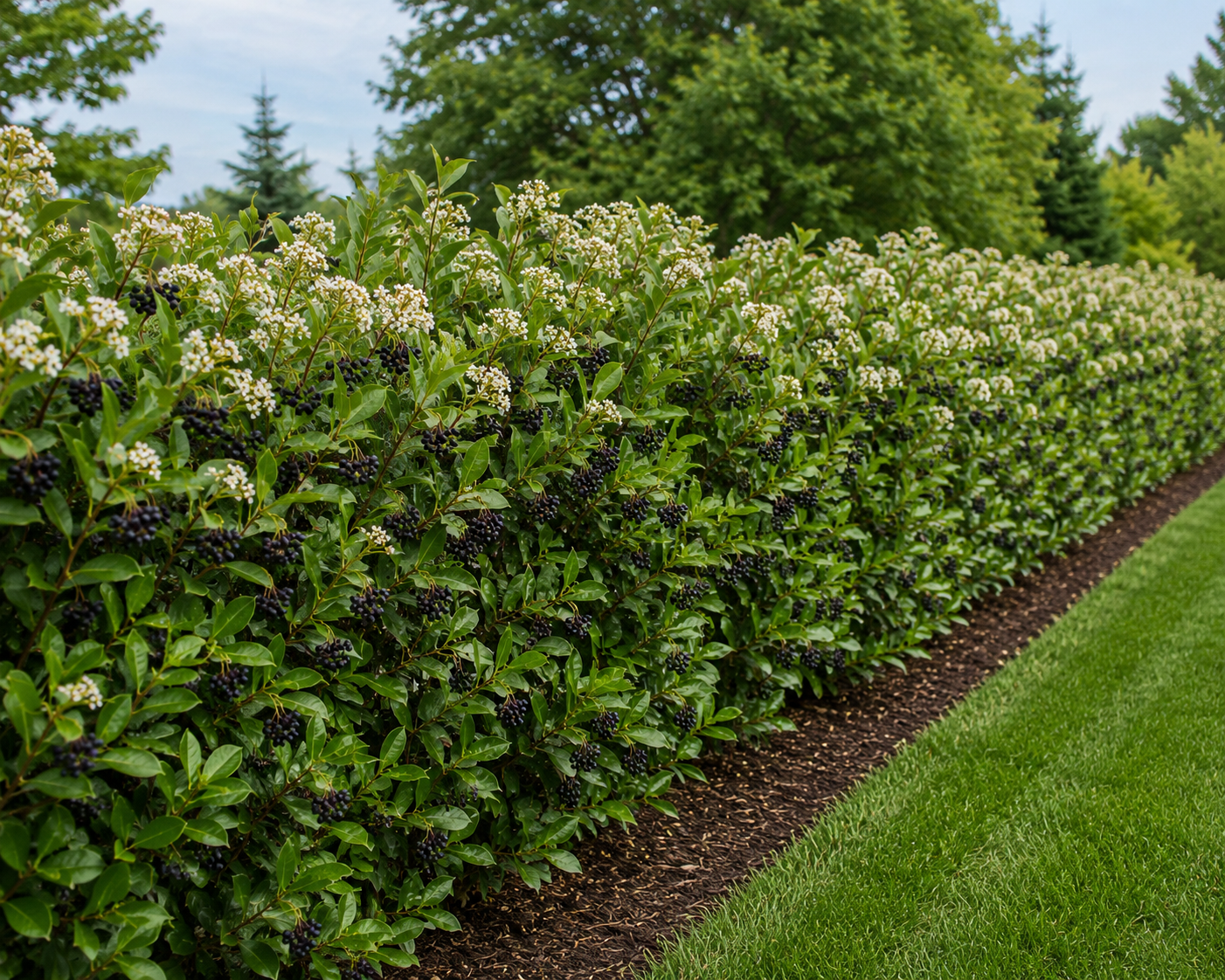
Black Chokeberry (Aronia melanocarpa) is one of the finest multi-purpose hedge plants available for modern landscapes. This attractive native shrub offers beautiful white spring flowers, glossy green foliage, edible dark purple-black berries, brilliant red fall color, exceptional wildlife value, and outstanding cold hardiness. Whether planted as an edible hedge, wildlife screen, pollinator planting, or ornamental border, Black Chokeberry provides year-round interest and remarkable versatility.
Plant CharacteristicsBlack Chokeberry is a dense, suckering deciduous shrub that forms attractive colonies over time. Its glossy leaves, spring flowers, edible fruits, and vivid autumn foliage provide interest during every season.
- Botanical Name: Aronia melanocarpa
- Common Name: Black Chokeberry
- Plant Type: Deciduous shrub
- Mature Height: 3-8 feet
- Hedge Height: Commonly maintained at 4-6 feet
- Spread: 3-6 feet
- Growth Rate: Moderate
- USDA Zones: 3-8
- Sun Exposure: Full sun to partial shade
Black Chokeberry is excellent for:
- Edible hedges
- Wildlife hedges
- Pollinator gardens
- Property borders
- Rain gardens
- Naturalized landscapes
- Erosion control
- Four-season ornamental plantings
Its dense growth and attractive appearance make it one of the best native hedge plants for residential landscapes.
Important Hedge NoteUnlike many traditional hedge plants, Black Chokeberry combines screening value with edible fruit production and outstanding wildlife benefits. Its suckering habit gradually creates a dense hedge that becomes increasingly effective over time.
For hedge planting, space shrubs approximately 3 to 5 feet apart.
Germination Instructions- Clean thoroughly and soak for 24 hours.
- Cold stratify for 60 to 90 days.
- Sow in a moist, well-drained seed-starting mix.
- Cover lightly with soil.
- Maintain temperatures of 65-75°F.
Germination generally occurs within several weeks after stratification.
Growing InformationBlack Chokeberry is highly adaptable and grows in a wide variety of soil conditions. It tolerates wet soils better than many hedge plants yet also withstands periods of drought once established.
Plants perform best in full sun where flowering, fruit production, and fall color are maximized.
Container GrowingBlack Chokeberry can be grown successfully in large containers.
- Use containers of 15 gallons or larger.
- Provide consistent moisture.
- Use quality potting soil with good drainage.
- Prune occasionally to maintain shape.
Container plants often produce flowers, berries, and fall color comparable to landscape specimens.
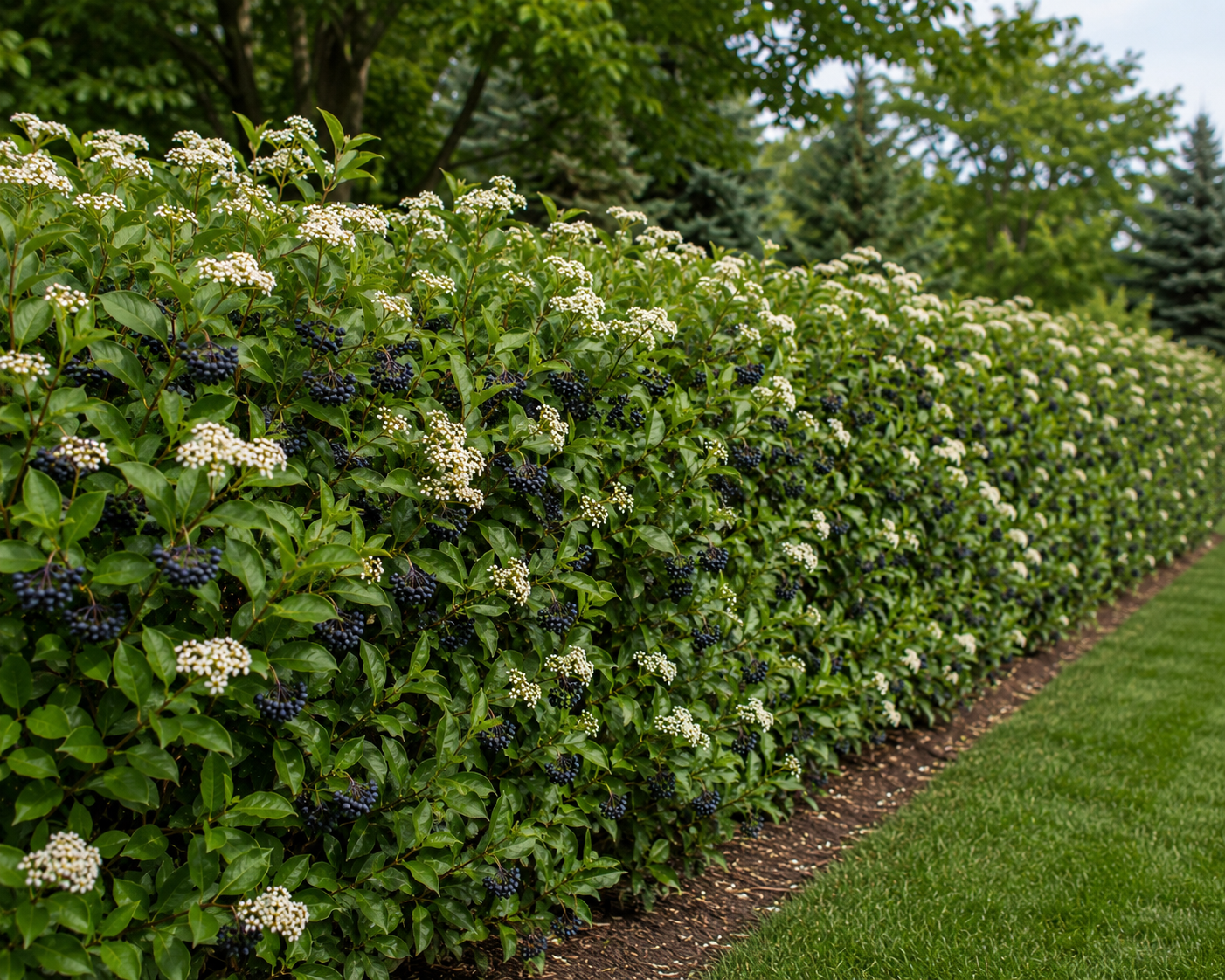
Nannyberry (Viburnum lentago) is one of North America's finest native hedge shrubs, offering beautiful spring flowers, edible fruits, brilliant fall color, exceptional wildlife value, and dependable screening performance. This adaptable shrub or small tree forms a dense hedge over time while providing food and shelter for birds, pollinators, and other wildlife. Its combination of ornamental beauty and ecological value makes it one of the most rewarding native hedge plants available.
Plant CharacteristicsNannyberry is a large deciduous shrub or small tree with glossy green foliage, flat clusters of creamy white flowers, and attractive blue-black fruits. It develops a naturally dense growth habit that works exceptionally well as a hedge or screen.
- Botanical Name: Viburnum lentago
- Common Name: Nannyberry
- Plant Type: Deciduous shrub or small tree
- Mature Height: 12-20 feet
- Hedge Height: Commonly maintained at 6-12 feet
- Spread: 8-15 feet
- Growth Rate: Moderate
- USDA Zones: 2-8
- Sun Exposure: Full sun to partial shade
Its attractive appearance and wildlife benefits make it especially valuable in modern ecological landscapes.
Important Hedge NoteNannyberry is best used as a natural or lightly pruned hedge rather than a formal clipped hedge. Its dense branching creates an attractive privacy screen while preserving its flowers, fruits, and wildlife value.
For hedge planting, shrubs are typically spaced 4 to 6 feet apart.
Germination Instructions- Remove pulp and clean thoroughly.
- Warm stratify for approximately 90 days.
- Follow with 90 to 120 days of cold stratification.
- Sow in a moist, well-drained growing medium.
- Keep consistently moist during germination.
Nannyberry seeds naturally require patience and may germinate over an extended period.
Growing InformationNannyberry adapts to a wide range of soil conditions and tolerates both moist and moderately dry sites once established. It performs best in full sun but also grows well in partial shade.
Plants require little maintenance beyond occasional pruning to remove older stems and maintain shape.
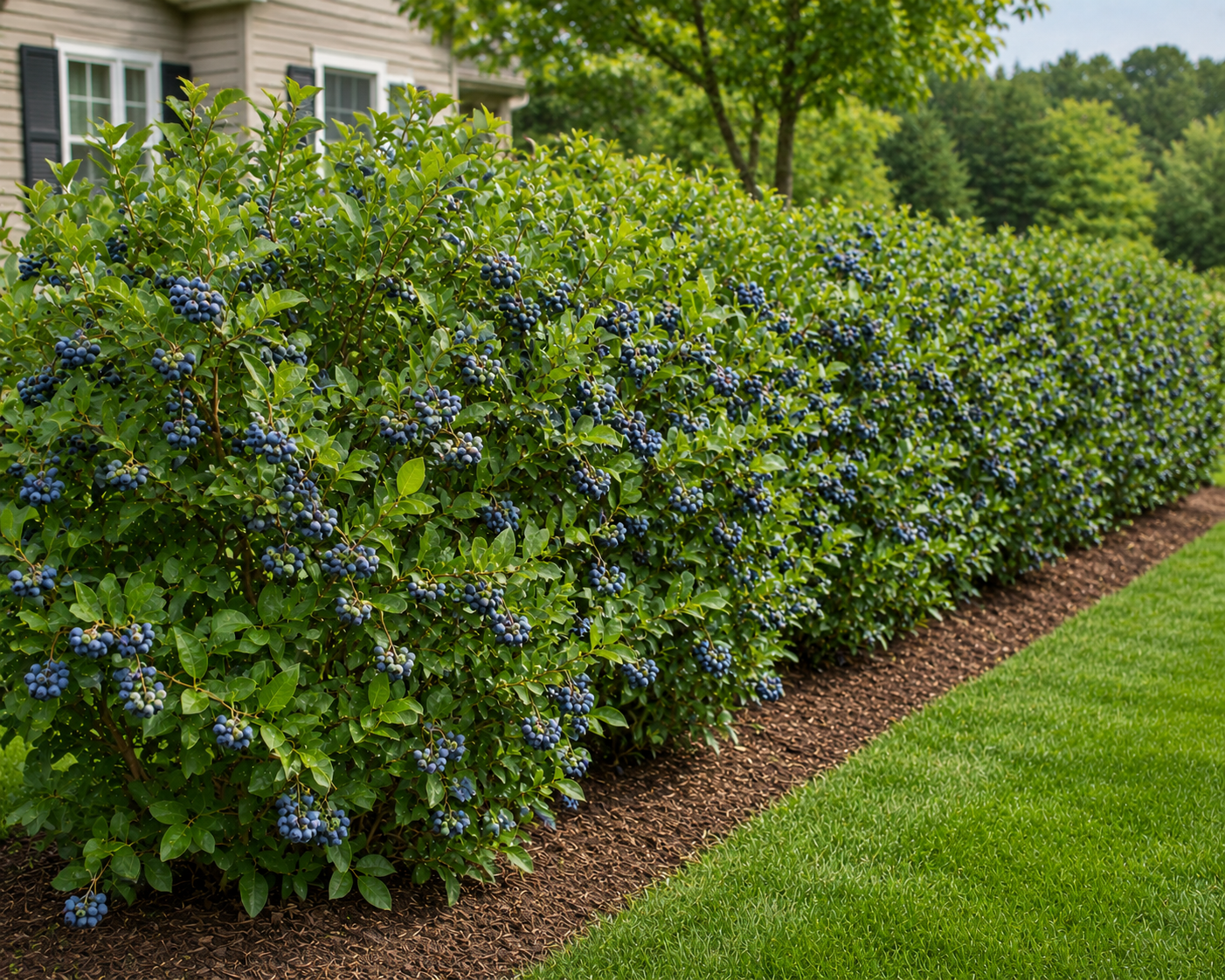
Highbush Blueberry (Vaccinium corymbosum) is one of the finest edible hedge plants available. Combining beautiful spring flowers, delicious summer fruit, attractive green foliage, brilliant autumn color, and exceptional wildlife value, this native North American shrub offers year-round appeal. When planted as a hedge, Highbush Blueberry provides privacy, pollinator support, edible harvests, and outstanding ornamental beauty.
Plant CharacteristicsHighbush Blueberry is a dense, multi-stemmed deciduous shrub known for its sweet blue berries and spectacular seasonal display. White bell-shaped flowers appear in spring, followed by clusters of blueberries and vivid red-orange fall foliage.
- Botanical Name: Vaccinium corymbosum
- Common Name: Highbush Blueberry
- Plant Type: Deciduous fruiting shrub
- Mature Height: 6-12 feet
- Hedge Height: Commonly maintained at 5-8 feet
- Spread: 4-8 feet
- Growth Rate: Moderate
- USDA Zones: 3-9
- Sun Exposure: Full sun
Highbush Blueberry is ideal for:
- Edible hedges
- Privacy screens
- Pollinator gardens
- Wildlife plantings
- Property borders
- Kitchen gardens
- Four-season landscapes
- Naturalized fruit plantings
Its beauty and productivity make it one of the most useful shrubs in the landscape.
Important Hedge NoteUnlike traditional hedge plants that simply provide screening, Highbush Blueberry offers flowers, fruit, wildlife habitat, and spectacular fall color. A mature blueberry hedge can be both highly ornamental and highly productive.
For hedge planting, shrubs are typically spaced 3 to 5 feet apart.
Germination Instructions- Clean thoroughly and allow to dry briefly.
- Sow on the surface of a moist acidic seed-starting mix.
- Do not bury deeply, as light aids germination.
- Maintain temperatures of 65-75°F.
- Keep consistently moist.
Germination generally occurs within several weeks under favorable conditions.
Growing InformationBlueberries require acidic soil, ideally with a pH between 4.5 and 5.5. Plants perform best in full sun and well-drained soils rich in organic matter.
Mulching with pine bark, pine needles, or other acidic organic materials helps maintain ideal growing conditions. Regular watering during fruit development improves yields.
Container GrowingHighbush Blueberries are excellent container plants.
- Use containers of 15 gallons or larger.
- Fill with acidic potting media.
- Maintain consistent moisture.
- Fertilize with acid-loving plant fertilizer.
Container-grown blueberries often produce abundant crops while remaining easy to manage.
Historical and Cultural SignificanceNative Americans harvested wild blueberries for centuries and used them fresh, dried, and mixed into traditional foods. Highbush Blueberry became one of the first domesticated native fruit crops in North America during the early 1900s.
Today, blueberries are among the most important fruit crops grown worldwide.
Germination instructions are not on seed packets, click here for germination instructions.
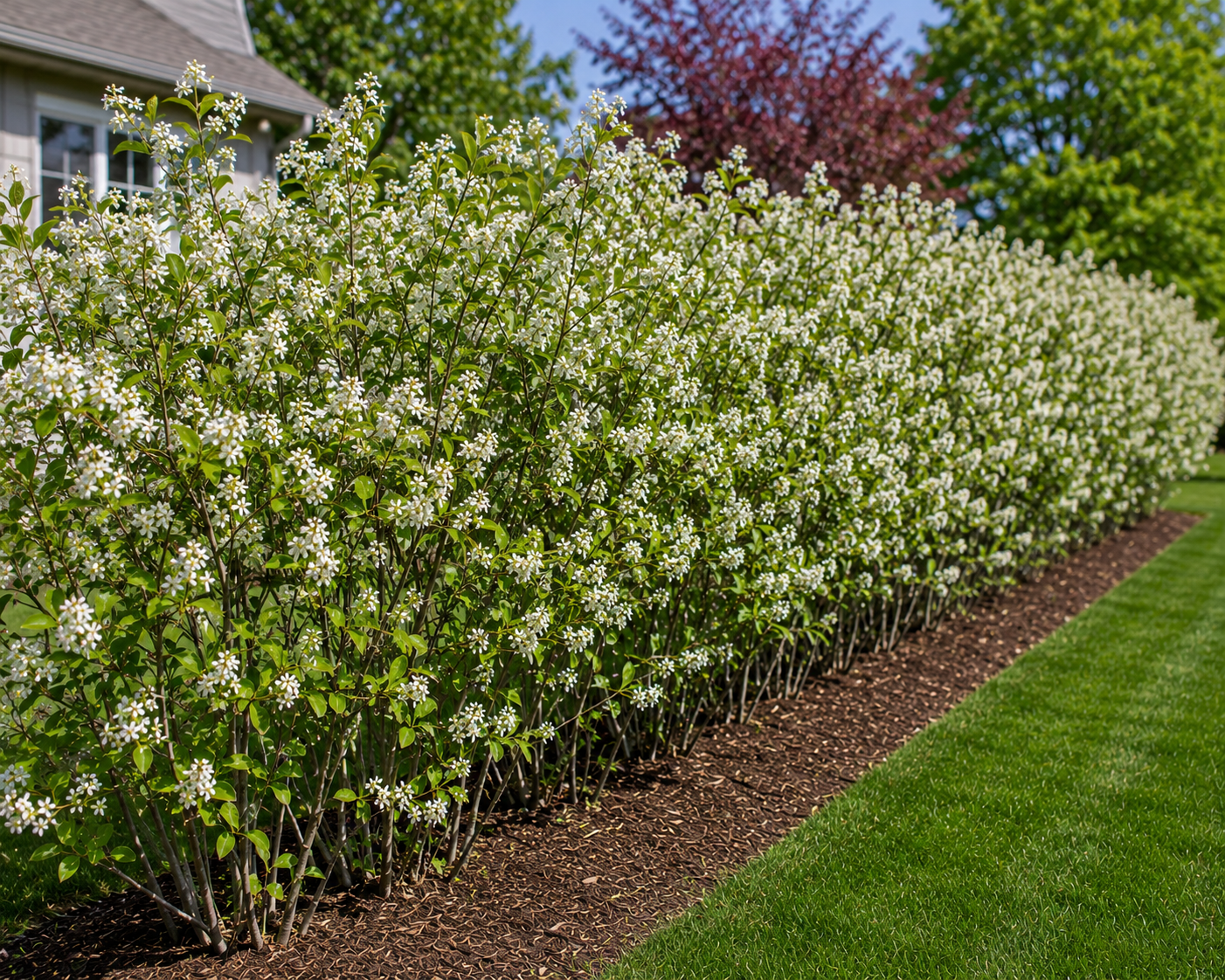
Juneberry, also known as Saskatoon Serviceberry (Amelanchier alnifolia), is one of North America's finest native edible shrubs. This beautiful multi-season plant offers clouds of white spring flowers, delicious blueberry-like fruits, outstanding wildlife value, brilliant fall color, and excellent screening ability. Whether grown as an edible hedge, wildlife planting, or ornamental landscape feature, Juneberry delivers beauty and productivity throughout the year.
Plant CharacteristicsJuneberry is a hardy deciduous shrub or small tree with an upright growth habit. In spring, its branches become covered with masses of white flowers, followed by sweet purple-blue fruits that resemble blueberries. Autumn brings spectacular shades of orange, red, and gold.
- Botanical Name: Amelanchier alnifolia
- Common Names: Juneberry, Saskatoon Serviceberry, Western Serviceberry
- Plant Type: Deciduous fruiting shrub
- Mature Height: 6-15 feet
- Hedge Height: Commonly maintained at 5-10 feet
- Spread: 4-10 feet
- Growth Rate: Moderate
- USDA Zones: 2-8
- Sun Exposure: Full sun to partial shade
Juneberry is excellent for:
- Edible hedges
- Privacy screens
- Wildlife hedges
- Pollinator gardens
- Property borders
- Naturalized landscapes
- Native plant gardens
- Four-season ornamental plantings
Its flowers, fruit, and fall color provide interest in every season.
Important Hedge NoteJuneberry forms an attractive informal hedge that combines screening ability with edible fruit production. Unlike many traditional hedge plants, it provides food for both people and wildlife while remaining highly ornamental.
For hedge planting, shrubs are typically spaced 4 to 6 feet apart.
Germination Instructions- Clean thoroughly and soak for 24 hours.
- Cold stratify seeds for 90 to 120 days.
- Sow in a moist, well-drained seed-starting medium.
- Cover lightly with soil.
- Maintain temperatures of 65-75°F.
Germination generally occurs within several weeks after stratification.
Growing InformationJuneberry is adaptable to a variety of soil types and is highly cold hardy. Plants perform best in full sun where flowering and fruit production are maximized.
Once established, Juneberry is drought tolerant and requires relatively little maintenance beyond occasional pruning.
Container GrowingYoung Juneberry plants can be grown successfully in large containers.
- Use containers of 15 gallons or larger.
- Provide excellent drainage.
- Maintain regular watering.
- Prune as needed to control size.
Container-grown plants often flower and fruit reliably.
Pollinator ValueThe abundant spring flowers are highly attractive to honeybees, native bees, butterflies, and other beneficial pollinating insects. Juneberry is considered one of the best early-season pollinator shrubs.
Juneberry may be one of the most underappreciated edible landscape plants in North America. It offers outstanding ornamental beauty while producing delicious fruit and supporting a wide range of wildlife.
If you are seeking an edible hedge that combines beauty, history, wildlife value, and excellent fruit production, Juneberry deserves a place at the top of your list. Few plants offer such a remarkable combination of attributes while remaining easy to grow and highly adaptable.
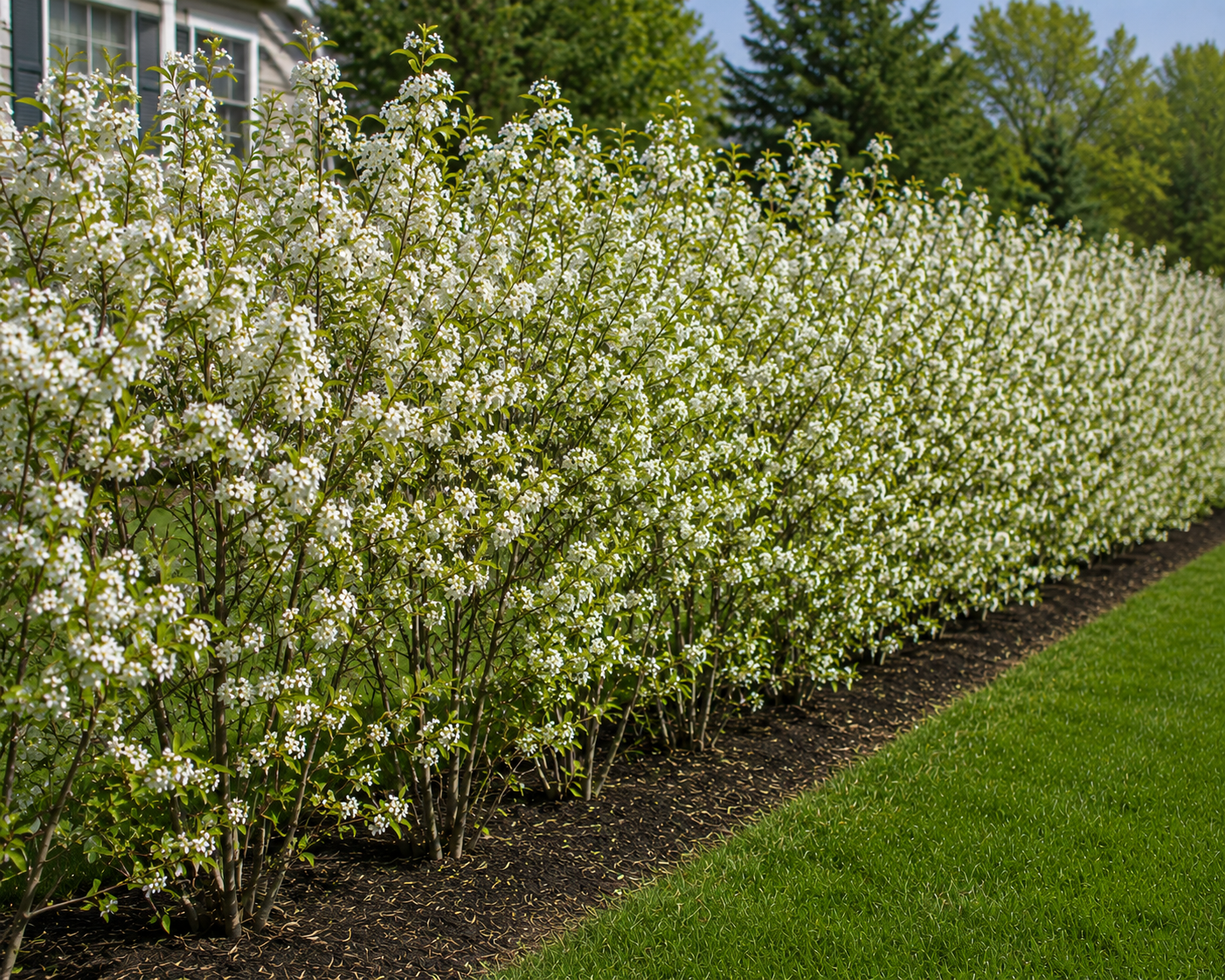
American Plum (Prunus americana) is one of North America's finest native hedge plants. This hardy fruiting shrub or small tree combines fragrant spring flowers, edible summer fruits, dense screening growth, outstanding wildlife value, and excellent adaptability. Its naturally suckering habit allows it to form thick, nearly impenetrable hedges that provide privacy, food, and shelter for both people and wildlife.
Plant CharacteristicsAmerican Plum is a deciduous shrub or small tree that naturally forms colonies through root suckers. In spring, the branches become covered with masses of fragrant white blossoms before the leaves emerge. Summer brings attractive red to yellow plums, while fall foliage develops warm shades of yellow and orange.
- Botanical Name: Prunus americana
- Common Name: American Plum
- Plant Type: Deciduous fruiting shrub or small tree
- Mature Height: 10-20 feet
- Hedge Height: Commonly maintained at 6-12 feet
- Spread: 8-15 feet
- Growth Rate: Moderate to fast
- USDA Zones: 3-8
- Sun Exposure: Full sun
Its dense growth and abundant flowers make it both attractive and highly functional.
Important Hedge NoteAmerican Plum naturally spreads by suckers, allowing it to form thick hedgerows over time. This characteristic made it a favorite living fence and wildlife hedge throughout much of its native range.
For hedge planting, shrubs are typically spaced 4 to 6 feet apart.
Germination Instructions- Clean thoroughly and allow to dry briefly.
- Cold stratify seeds for 90 to 120 days.
- Sow approximately 1 inch deep.
- Keep evenly moist during germination.
- Maintain temperatures of 65-75°F.
Germination generally occurs the following spring after stratification.
Growing InformationAmerican Plum grows best in full sun and adapts well to a variety of soil types including clay, loam, and sandy soils. Once established, plants are reasonably drought tolerant and highly adaptable.
Occasional pruning can help maintain hedge shape while encouraging vigorous flowering and fruit production.
American Plum is one of the best examples of a native edible hedge. It combines privacy, wildlife value, pollinator support, and fruit production while remaining rugged enough for difficult sites and rural landscapes.
If you want a hedge that truly works for both people and wildlife, American Plum deserves serious consideration. Its flowers attract pollinators, its fruits feed birds and gardeners alike, and its dense branching creates an attractive natural screen that improves with age.
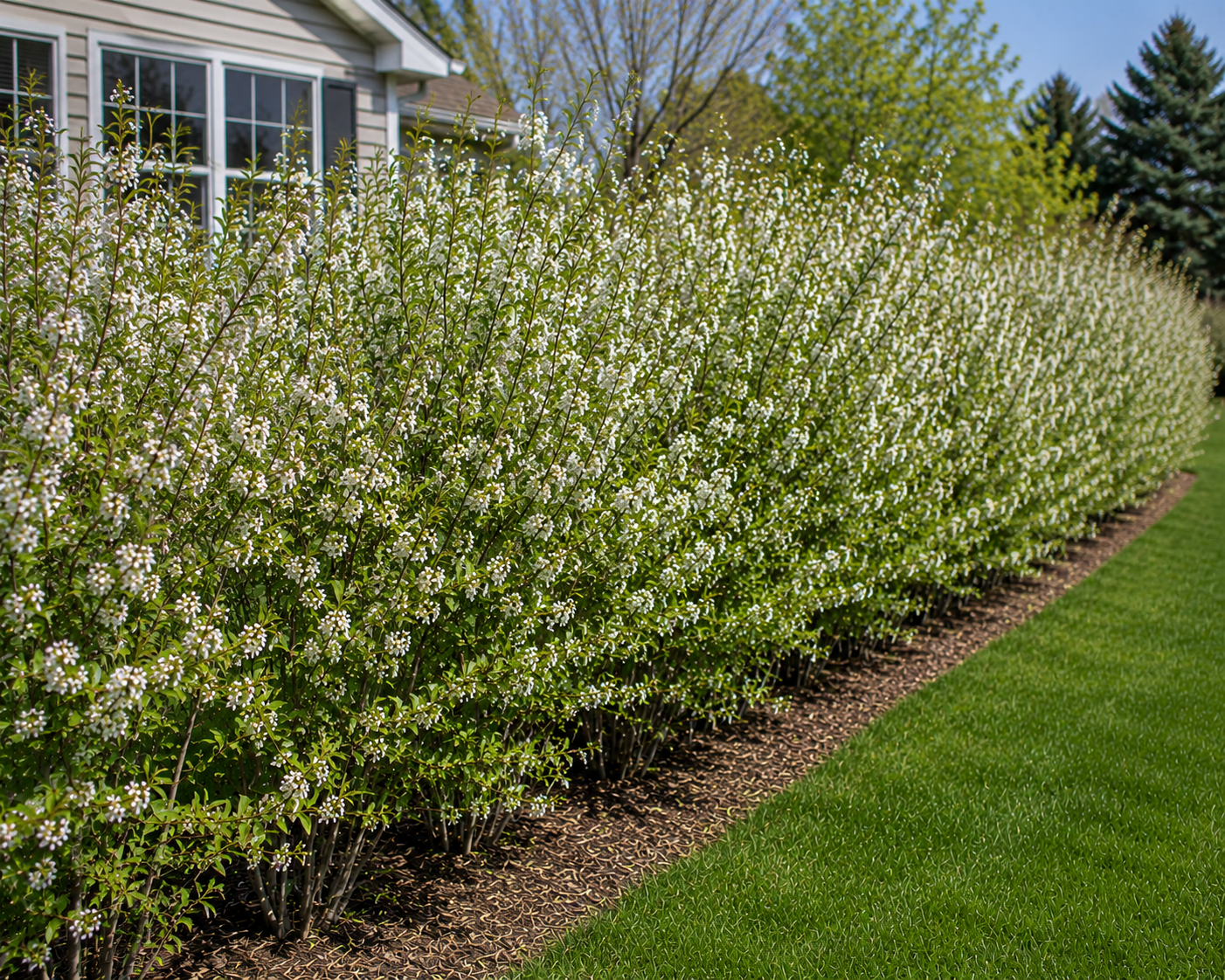
Chickasaw Plum (Prunus angustifolia) is one of the most valuable native fruiting hedge plants in the southeastern United States. Known for its fragrant spring blossoms, sweet edible fruits, dense thicket-forming habit, and outstanding wildlife value, this rugged shrub creates beautiful natural hedges that provide privacy, food, and habitat. Its ability to spread by root suckers allows it to develop into a dense, effective living screen over time.
Plant CharacteristicsChickasaw Plum is a deciduous shrub or small tree that naturally forms colonies through underground runners. In early spring, branches become covered with masses of fragrant white flowers before the leaves appear. The resulting red, yellow, or orange plums ripen in summer and are highly prized by both people and wildlife.
- Botanical Name: Prunus angustifolia
- Common Name: Chickasaw Plum
- Plant Type: Deciduous fruiting shrub
- Mature Height: 8-15 feet
- Hedge Height: Commonly maintained at 6-10 feet
- Spread: 8-20 feet through suckering
- Growth Rate: Moderate to fast
- USDA Zones: 5-9
- Sun Exposure: Full sun
Chickasaw Plum is excellent for:
- Edible hedges
- Wildlife hedges
- Privacy screens
- Property boundaries
- Pollinator gardens
- Erosion control
- Naturalized landscapes
- Southern native gardens
Its dense growth and abundant flowering make it one of the most attractive native hedge plants for southern landscapes.
Important Hedge NoteChickasaw Plum naturally forms dense thickets through root suckers, making it exceptionally effective as a hedge. Over time, a planting can develop into a nearly continuous screen that provides privacy, wildlife habitat, and seasonal beauty.
For hedge planting, shrubs are typically spaced 4 to 6 feet apart.
Germination Instructions- Cold stratify seeds for 90 to 120 days.
- Sow approximately 1 inch deep.
- Keep evenly moist during germination.
- Maintain temperatures of 65-75°F.
Seeds typically germinate the following spring after stratification.
Growing InformationChickasaw Plum thrives in full sun and adapts to a wide range of soils including sandy, loamy, and clay soils. It is particularly well adapted to heat, drought, and the challenging growing conditions often found throughout the South.
Plants require little maintenance and can be pruned as needed to control spread and maintain hedge shape.
Chickasaw Plum was widely cultivated and distributed by Native American tribes long before European settlement. The species is believed to have spread beyond parts of its original range through Native American trade routes and cultivation practices.
The common name reflects its close association with the Chickasaw people, who valued the fruits as an important food resource.
Few native shrubs offer the combination of beauty, wildlife value, fruit production, and screening ability found in Chickasaw Plum. Its spectacular spring bloom alone makes it worthy of consideration for almost any landscape.
If you are looking for a hedge that provides flowers, fruit, pollinator support, wildlife habitat, and privacy, Chickasaw Plum is an exceptional choice. It is one of the most useful native hedge plants available for southern and central landscapes.
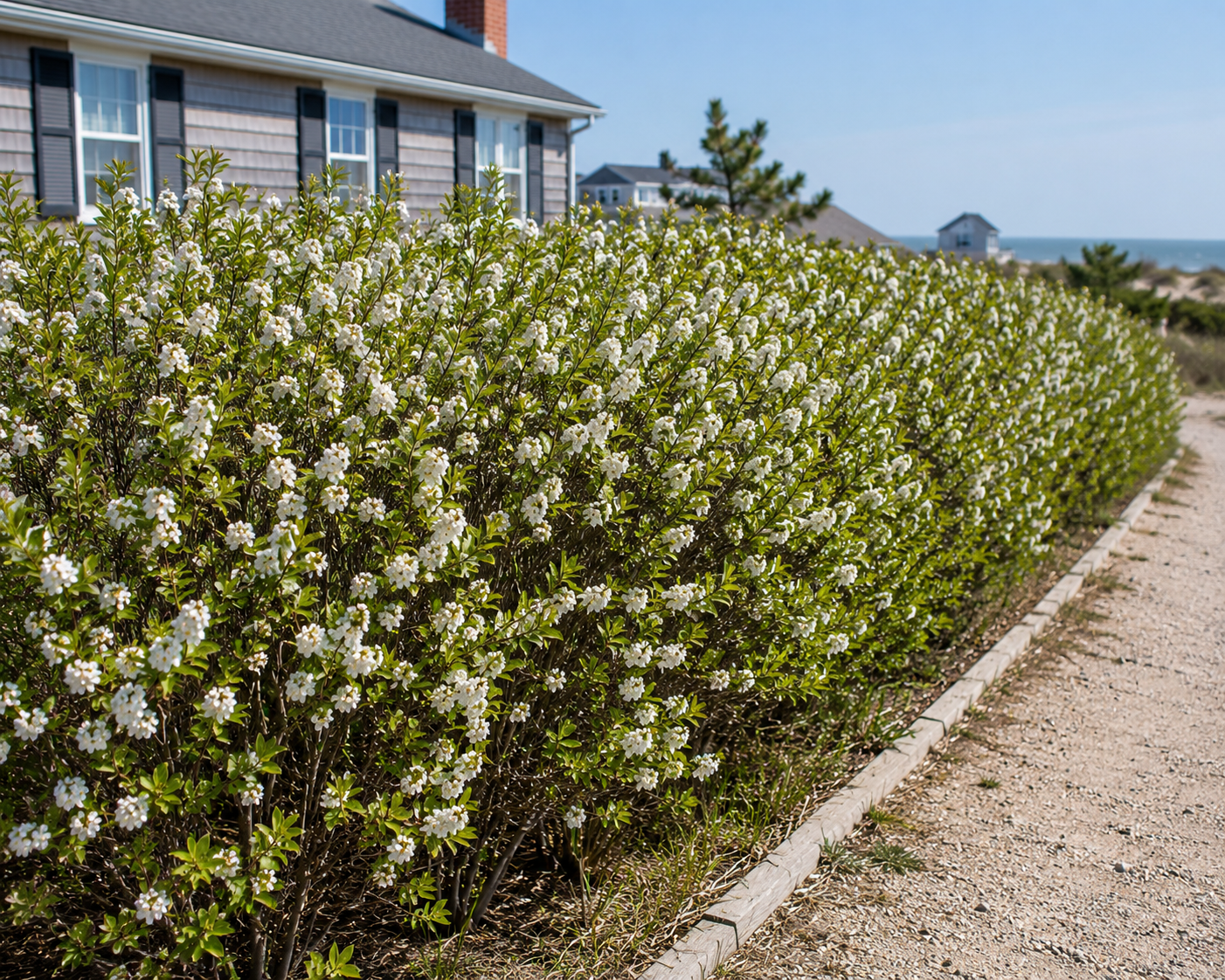
Beach Plum (Prunus maritima) is a rugged native shrub of the Atlantic Coast that combines beautiful spring flowers, edible fruits, exceptional wildlife value, and remarkable tolerance to salt spray, wind, and sandy soils. Naturally found growing among dunes and coastal grasslands, Beach Plum forms dense colonies that make excellent hedges while providing both ornamental beauty and delicious fruit.
Plant CharacteristicsBeach Plum is a deciduous shrub with dense branching, glossy green leaves, fragrant white flowers, and attractive plum-like fruits ranging from purple to deep blue. Its naturally spreading growth habit makes it particularly useful for hedges and coastal landscapes.
- Botanical Name: Prunus maritima
- Common Name: Beach Plum
- Plant Type: Deciduous fruiting shrub
- Mature Height: 4-8 feet
- Hedge Height: Commonly maintained at 4-6 feet
- Spread: 6-12 feet
- Growth Rate: Moderate
- USDA Zones: 3-8
- Sun Exposure: Full sun
Its toughness and adaptability make it one of the best shrubs for difficult coastal environments.
Important Hedge NoteBeach Plum naturally spreads through suckers, forming dense thickets that become increasingly effective as hedges over time. Unlike many ornamental hedge plants, it also produces edible fruit while supporting pollinators and wildlife.
For hedge planting, shrubs are typically spaced 4 to 5 feet apart.
Germination Instructions- Cold stratify for 90 to 120 days.
- Sow approximately 1 inch deep.
- Keep evenly moist during germination.
- Maintain temperatures of 65-75°F.
Seeds generally germinate the following spring after stratification.
Growing InformationBeach Plum thrives in full sun and is highly tolerant of sandy soils, salt spray, drought, and wind. Once established, it requires very little maintenance and performs exceptionally well in coastal conditions.
Occasional pruning may be used to maintain hedge shape and encourage dense growth.
Beach Plum is one of the most distinctive native fruiting shrubs in North America. Its ability to thrive where many other plants fail makes it particularly valuable for coastal gardeners seeking beauty, fruit production, and wildlife value.
If you garden near the coast, Beach Plum may be one of the best hedge plants available. It provides flowers, fruit, wildlife habitat, and outstanding durability while bringing a piece of America's coastal heritage into the landscape.
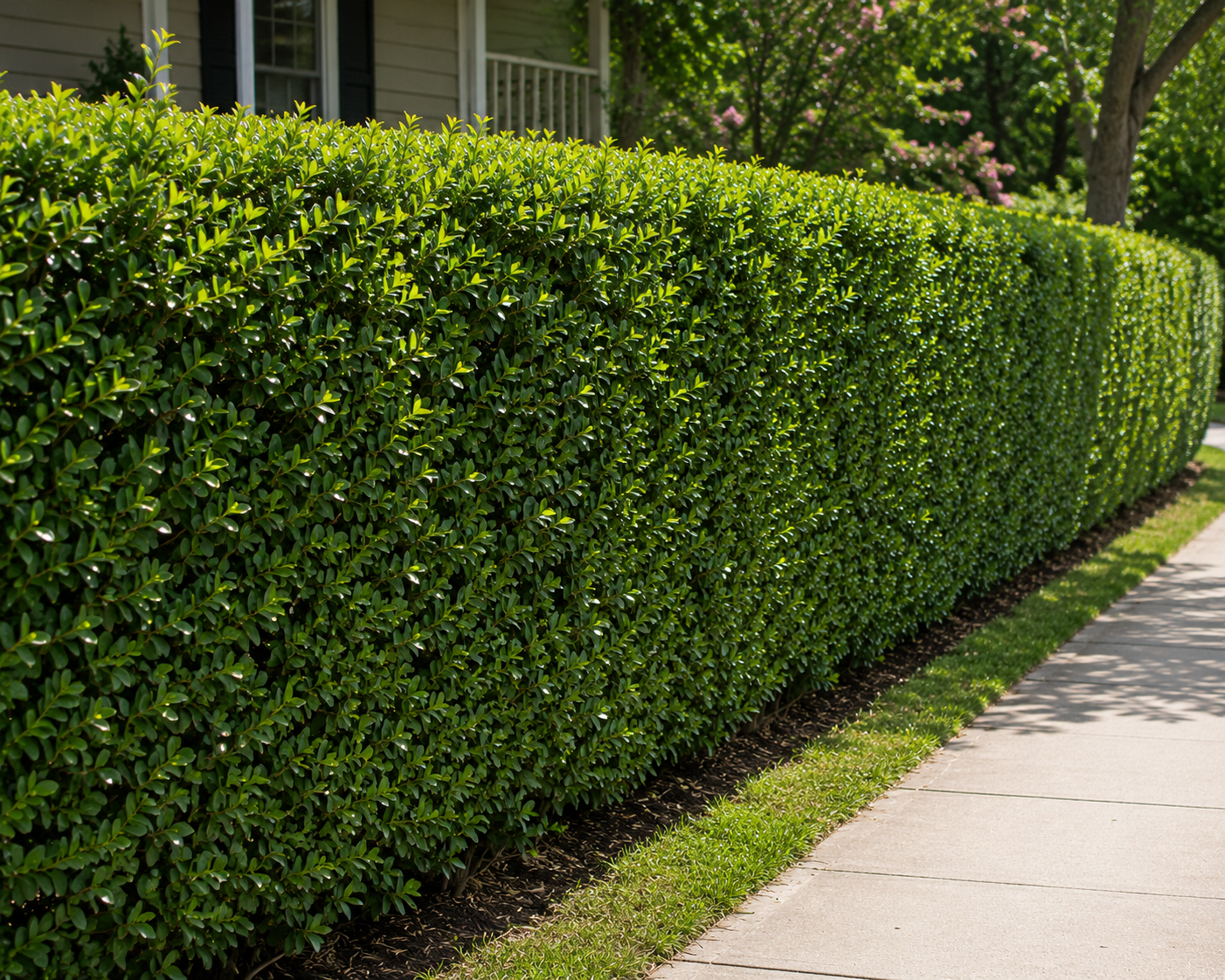
Japanese Privet (Ligustrum japonicum) is one of the most dependable evergreen hedge plants for warm climates. Valued for its dense glossy foliage, rapid growth, exceptional pruning tolerance, and year-round screening ability, Japanese Privet has become a landscape favorite throughout the southern United States and many temperate regions worldwide. Whether maintained as a formal hedge or allowed to develop into a natural screen, it provides reliable privacy and attractive evergreen color.
Plant CharacteristicsJapanese Privet is a broadleaf evergreen shrub or small tree with thick, glossy leaves and a naturally dense growth habit. It responds exceptionally well to pruning and can be maintained as a neat formal hedge or informal screen.
- Botanical Name: Ligustrum japonicum
- Common Name: Japanese Privet
- Plant Type: Evergreen shrub or small tree
- Mature Height: 10-15 feet
- Hedge Height: Commonly maintained at 4-10 feet
- Spread: 6-10 feet
- Growth Rate: Moderate to fast
- USDA Zones: 7-10
- Sun Exposure: Full sun to partial shade
Japanese Privet is widely used for:
- Privacy hedges
- Evergreen screens
- Property boundaries
- Formal hedges
- Foundation plantings
- Noise barriers
- Windbreaks
- Urban landscapes
Its dense evergreen foliage makes it especially valuable where year-round screening is desired.
Important Hedge NoteJapanese Privet is among the easiest hedge plants to maintain. It tolerates repeated trimming and can be shaped into formal hedges with crisp lines or allowed to develop into a more natural screen.
For dense hedge formation, plants are typically spaced 3 to 5 feet apart.
Germination Instructions- Cold stratify for 60 to 90 days.
- Sow in a moist, well-drained growing medium.
- Cover lightly with soil.
- Keep consistently moist until germination.
Germination usually occurs within several weeks following stratification.
Growing InformationJapanese Privet is adaptable to a wide range of soil types and growing conditions. It tolerates heat, humidity, drought, urban pollution, and occasional salt exposure once established.
Plants respond very well to pruning and can be trimmed several times each year to maintain desired shape and density.
Container GrowingJapanese Privet performs well in large containers and planters.
- Use containers of 15 gallons or larger.
- Provide good drainage.
- Water regularly during establishment.
- Prune as needed to maintain compact growth.
Container-grown specimens are frequently used around patios, entrances, and courtyards.
Native to Japan and Korea, Japanese Privet has been cultivated for centuries as both an ornamental and practical landscape plant. It gained widespread popularity in the United States during the twentieth century because of its durability, adaptability, and ability to create dense evergreen hedges.
Its reliability helped establish it as one of the most commonly planted screening shrubs in many southern landscapes.
When gardeners think of a traditional evergreen privacy hedge, Japanese Privet is often one of the first plants that comes to mind. Its reliability and ease of maintenance have made it a landscape staple for generations.
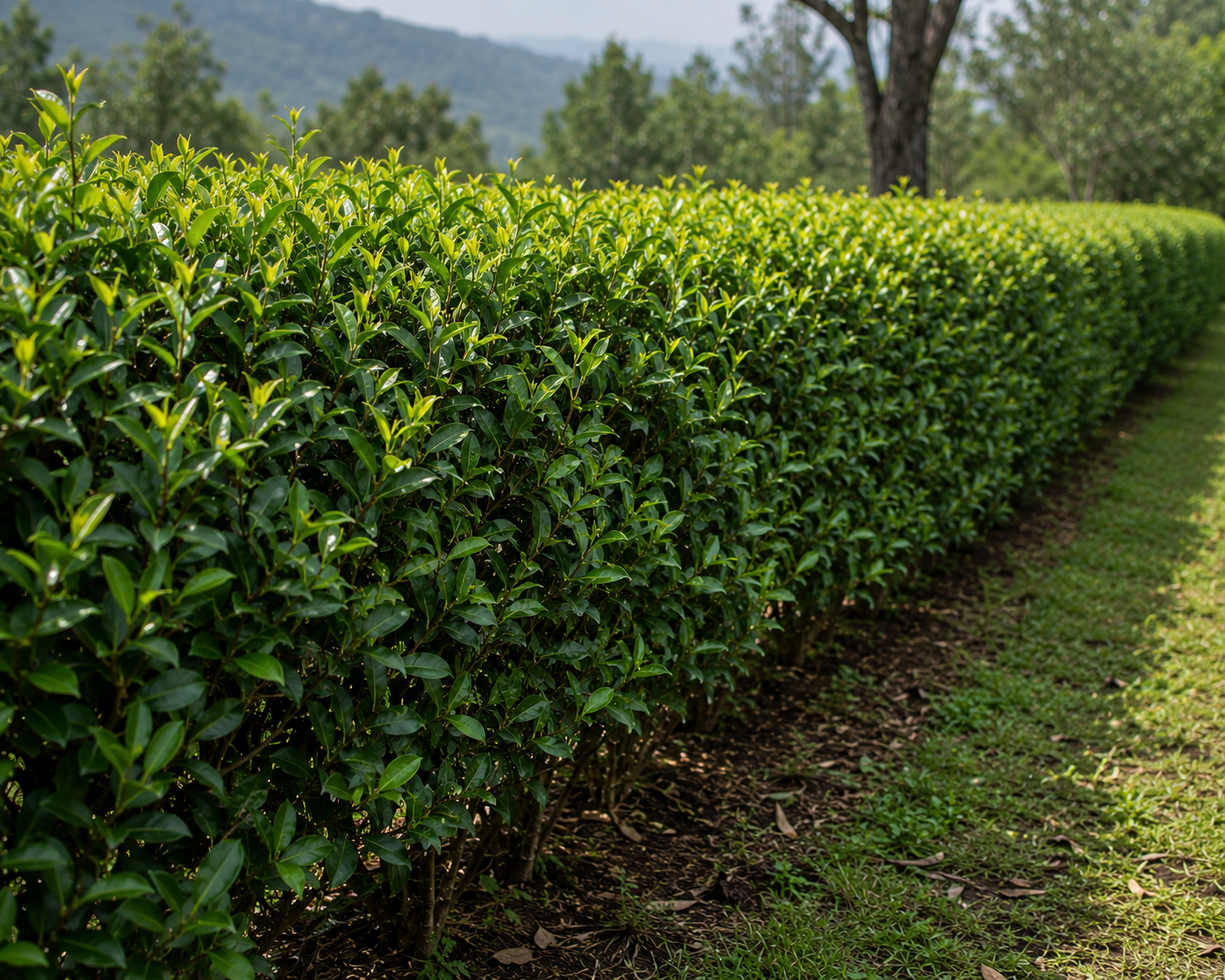
Camellia Tea Plant (Camellia sinensis) is one of the most historically important plants ever cultivated. The source of green tea, black tea, oolong tea, white tea, and many other traditional teas, this attractive evergreen shrub also makes an excellent hedge. With glossy foliage, fragrant white flowers, year-round greenery, pollinator value, and edible leaves, Tea Plant offers a unique combination of beauty, utility, and cultural significance.
Plant CharacteristicsTea Plant is a dense evergreen shrub with attractive dark green leaves and small white flowers that bloom in autumn and winter. When regularly pruned, it forms a handsome hedge that can remain productive for decades.
- Botanical Name: Camellia sinensis
- Common Names: Tea Plant, Tea Camellia
- Plant Type: Evergreen shrub
- Mature Height: 6-15 feet
- Hedge Height: Commonly maintained at 3-6 feet
- Spread: 4-8 feet
- Growth Rate: Moderate
- USDA Zones: 7-10
- Sun Exposure: Full sun to partial shade
Tea Plant is excellent for:
- Evergreen hedges
- Edible hedges
- Privacy screens
- Pollinator gardens
- Asian-inspired gardens
- Foundation plantings
- Container gardens
- Tea production gardens
Its dense foliage and ability to tolerate pruning make it a surprisingly attractive hedge plant.
Important Hedge NoteTea Plant responds exceptionally well to trimming and is traditionally maintained as a low hedge in commercial tea plantations. Regular pruning encourages the production of tender new growth, which is the portion harvested for tea production.
For hedge planting, shrubs are typically spaced 3 to 4 feet apart.
Germination Instructions- Soak seeds in water for 24 hours.
- Discard floating seeds.
- Sow approximately 1 inch deep in well-drained acidic soil.
- Maintain temperatures between 70-85°F.
- Keep consistently moist but not waterlogged.
Germination generally occurs within 4 to 8 weeks under favorable conditions.
Growing InformationTea Plant prefers acidic, well-drained soil rich in organic matter. It grows best in areas with moderate rainfall and protection from severe winter conditions.
Regular pruning encourages dense growth and improves hedge appearance while stimulating new leaf production.
Container GrowingTea Plant is well suited for container cultivation.
- Use containers of 10-20 gallons.
- Maintain acidic soil conditions.
- Provide consistent moisture.
- Prune regularly to encourage compact growth.
Container-grown plants can provide a surprisingly productive source of homegrown tea leaves.
According to Chinese tradition, tea was discovered around 2737 BC when leaves accidentally fell into the boiling water of Emperor Shen Nong. Whether legend or fact, tea cultivation eventually spread across Asia and later the world, profoundly influencing trade, culture, and history.
Tea Plant may be one of the most unique edible hedge plants available. Few shrubs can claim to have influenced world history while simultaneously serving as an attractive landscape hedge.
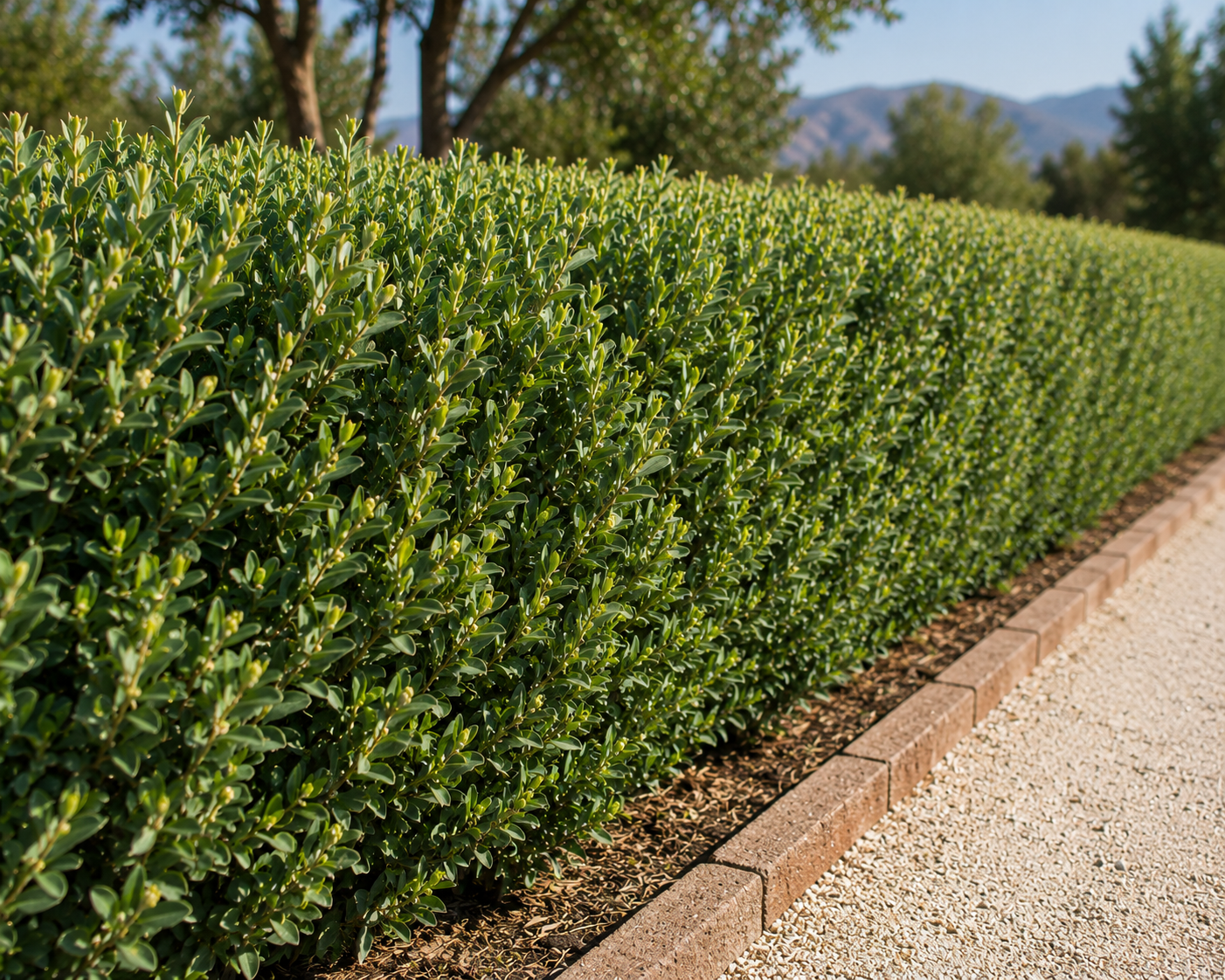
Jojoba (Simmondsia chinensis) is a remarkable evergreen desert shrub native to the arid regions of the southwestern United States and northern Mexico. Valued for its attractive gray-green foliage, extreme drought tolerance, wildlife benefits, and oil-rich seeds, Jojoba makes an outstanding hedge for warm, dry climates. Once established, it requires very little water while providing year-round screening and beauty.
Plant CharacteristicsJojoba is a dense, multi-branched evergreen shrub with leathery blue-green leaves and a naturally rounded growth habit. Its attractive foliage remains attractive throughout the year, even under extreme heat and drought conditions.
- Botanical Name: Simmondsia chinensis
- Common Name: Jojoba
- Plant Type: Evergreen desert shrub
- Mature Height: 6-12 feet
- Hedge Height: Commonly maintained at 4-8 feet
- Spread: 6-10 feet
- Growth Rate: Moderate
- USDA Zones: 8-11
- Sun Exposure: Full sun
Jojoba excels as a natural hedge in arid climates. While it can be pruned into a formal shape, it often looks best as a lightly maintained natural screen. Once established, it may survive for months without supplemental irrigation.
For hedge planting, shrubs are typically spaced 4 to 6 feet apart.
Germination Instructions- Soak seeds in warm water for 24 hours.
- Sow approximately 1 inch deep.
- Use a well-drained sandy growing medium.
- Maintain temperatures between 75-90°F.
- Keep lightly moist until germination occurs.
Germination often occurs within 1 to 3 weeks under warm conditions.
Growing InformationJojoba thrives in full sun and well-drained soils. It is exceptionally tolerant of drought, heat, wind, and poor soils. Overwatering is one of the few conditions that may cause problems.
Plants become increasingly drought tolerant as they mature and develop extensive root systems.
Container GrowingJojoba can be grown successfully in large containers.
- Use containers with excellent drainage.
- Choose sandy or cactus-type potting media.
- Allow soil to dry between waterings.
- Provide full sun exposure.
Container-grown plants are excellent for patios and water-conscious landscapes.
If you garden in a hot, dry climate, few hedge plants can compete with Jojoba. Its ability to thrive with minimal water while maintaining attractive evergreen foliage makes it an exceptional landscape choice.
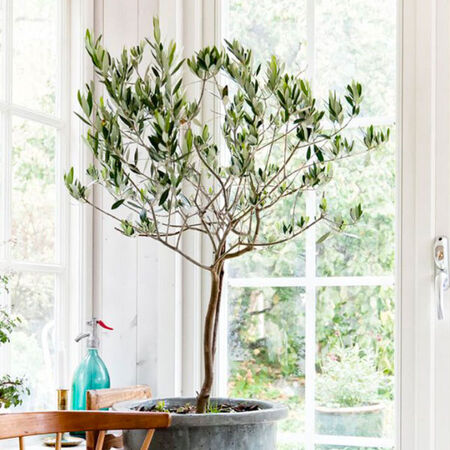
Common Olive (Olea europaea) is one of the oldest cultivated plants in human history. Renowned for its silvery evergreen foliage, edible fruits, drought tolerance, and extraordinary cultural significance, the Olive Tree also makes a handsome and durable hedge. When regularly pruned, Olive develops into a dense evergreen screen that combines Mediterranean beauty with practical landscape performance.
Plant CharacteristicsCommon Olive is an evergreen shrub or small tree with narrow gray-green leaves that create a distinctive silvery appearance. The foliage remains attractive year-round, while mature plants may also produce clusters of edible olives.
- Botanical Name: Olea europaea
- Common Name: Common Olive, European Olive
- Plant Type: Evergreen shrub or small tree
- Mature Height: 15-30 feet
- Hedge Height: Commonly maintained at 4-10 feet
- Spread: 8-20 feet
- Growth Rate: Moderate
- USDA Zones: 8-11
- Sun Exposure: Full sun
Common Olive is excellent for:
- Evergreen hedges
- Mediterranean-style gardens
- Privacy screens
- Edible landscapes
- Property boundaries
- Drought-tolerant gardens
- Windbreaks
- Courtyard gardens
Its unique foliage color creates a sophisticated appearance unlike most hedge plants.
Important Hedge NoteOlive trees respond very well to pruning and can be maintained as dense formal hedges or natural evergreen screens. In many Mediterranean regions, olive hedges have been used for centuries to define property boundaries and garden spaces.
For hedge planting, shrubs are typically spaced 4 to 6 feet apart.
Germination Instructions- Scarify or lightly crack the hard seed coat.
- Soak seeds in warm water for 24 hours.
- Sow approximately 1 inch deep.
- Use well-drained growing media.
- Maintain temperatures between 70-85°F.
Germination may take several weeks to several months depending on conditions.
Growing InformationOlive trees thrive in full sun and well-drained soils. Once established, they are exceptionally drought tolerant and require relatively little maintenance.
Plants prefer warm climates and benefit from good air circulation. Regular pruning encourages dense hedge development and improved appearance.
Container GrowingOlive trees perform exceptionally well in containers.
- Use containers of 15 gallons or larger.
- Provide excellent drainage.
- Use a sandy or well-drained potting mix.
- Prune regularly to maintain hedge form.
Container-grown olives are popular in patios, courtyards, and Mediterranean-style landscapes.
Few plants have influenced human civilization more profoundly than the Olive Tree. Olive cultivation dates back thousands of years and played a central role in the cultures of ancient Greece, Rome, Egypt, and the Middle East.
The olive branch became an enduring symbol of peace, wisdom, and prosperity. Ancient Olympic champions were crowned with olive wreaths, and olive oil became one of the most valuable commodities of the ancient world.
Olive may be one of the most elegant evergreen hedge plants available. Its silvery foliage provides a distinctive appearance that immediately evokes the landscapes of Italy, Greece, and southern Spain.
If you want a hedge with beauty, history, edible value, and remarkable drought tolerance, Common Olive deserves serious consideration. Few plants can match its combination of ornamental appeal and historical significance.
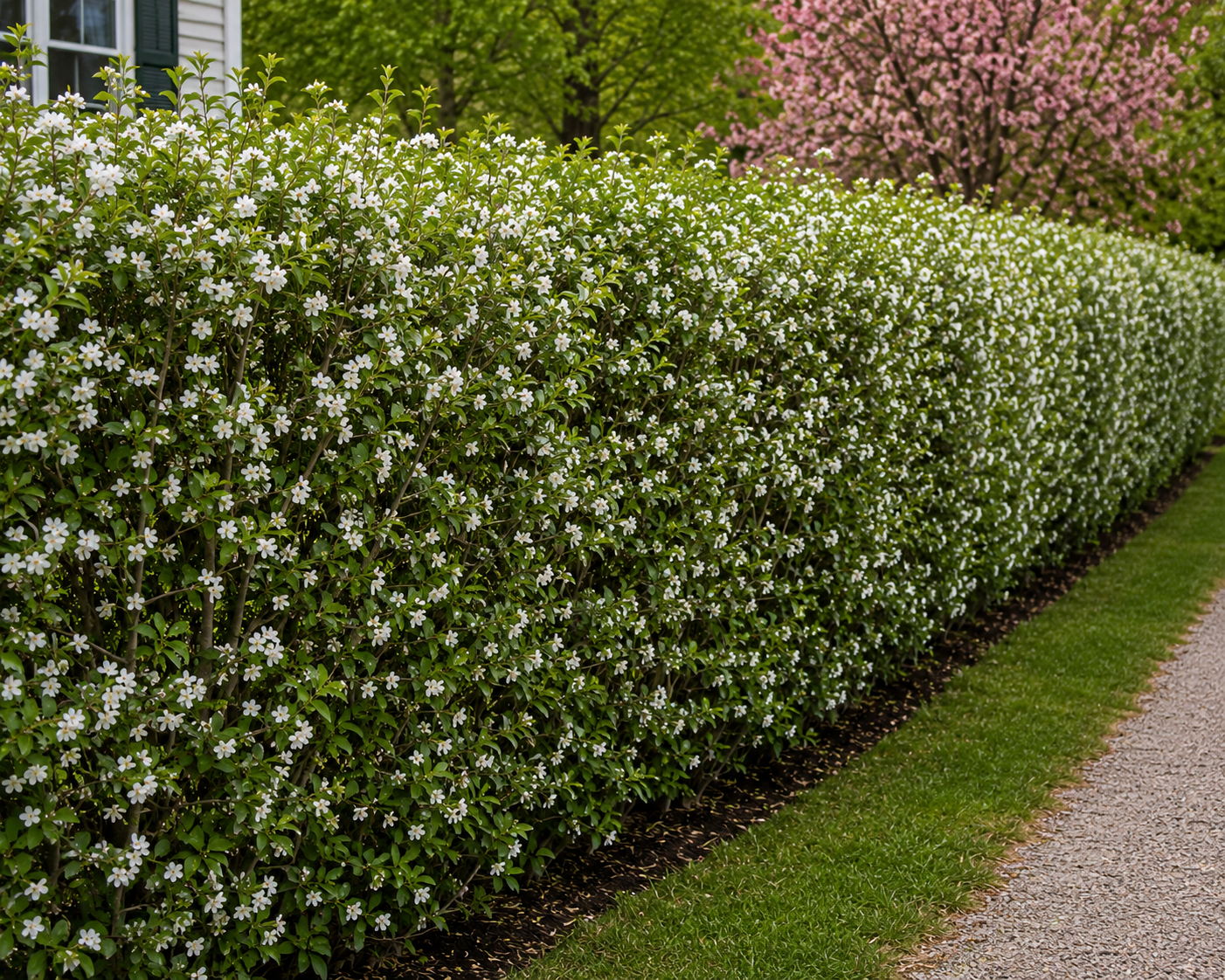
Siberian Crabapple (Malus baccata) is one of the hardiest crabapple species in the world. Native to Siberia, northern China, Mongolia, and parts of Korea, this beautiful flowering tree can also be grown as a large hedge or screening shrub. Renowned for its spectacular spring blossoms, colorful fruits, wildlife value, and exceptional cold tolerance, Siberian Crabapple offers year-round beauty and ecological benefits.
Plant CharacteristicsSiberian Crabapple is a deciduous small tree or large shrub with dense branching, attractive foliage, abundant white flowers, and masses of colorful crabapples. When planted closely and maintained through pruning, it forms an attractive flowering hedge.
- Botanical Name: Malus baccata
- Common Name: Siberian Crabapple
- Plant Type: Deciduous flowering tree or large shrub
- Mature Height: 15-40 feet
- Hedge Height: Commonly maintained at 6-12 feet
- Spread: 10-25 feet
- Growth Rate: Moderate
- USDA Zones: 2-7
- Sun Exposure: Full sun
Siberian Crabapple performs best as an informal hedge or large screening hedge. While it can be pruned, allowing a somewhat natural form preserves the maximum display of flowers and fruit.
For hedge planting, shrubs are typically spaced 5 to 8 feet apart.
Germination Instructions- Cold stratify seeds for 60 to 90 days.
- Sow in a moist, well-drained growing medium.
- Cover lightly with soil.
- Maintain temperatures of 65-75°F.
Germination generally occurs in spring following stratification.
Growing InformationSiberian Crabapple thrives in full sun and adapts to a wide variety of soils. It is exceptionally cold hardy and capable of surviving temperatures that would damage many other ornamental trees.
Regular watering during establishment promotes vigorous growth, after which plants become relatively drought tolerant.
Siberian Crabapple has long been valued throughout northern Asia for its beauty, fruit, and extraordinary hardiness. It has played an important role in apple breeding programs, contributing cold-hardiness genes to many modern apple cultivars.
Its ability to survive harsh Siberian winters made it one of the most important wild apple relatives for horticultural development.
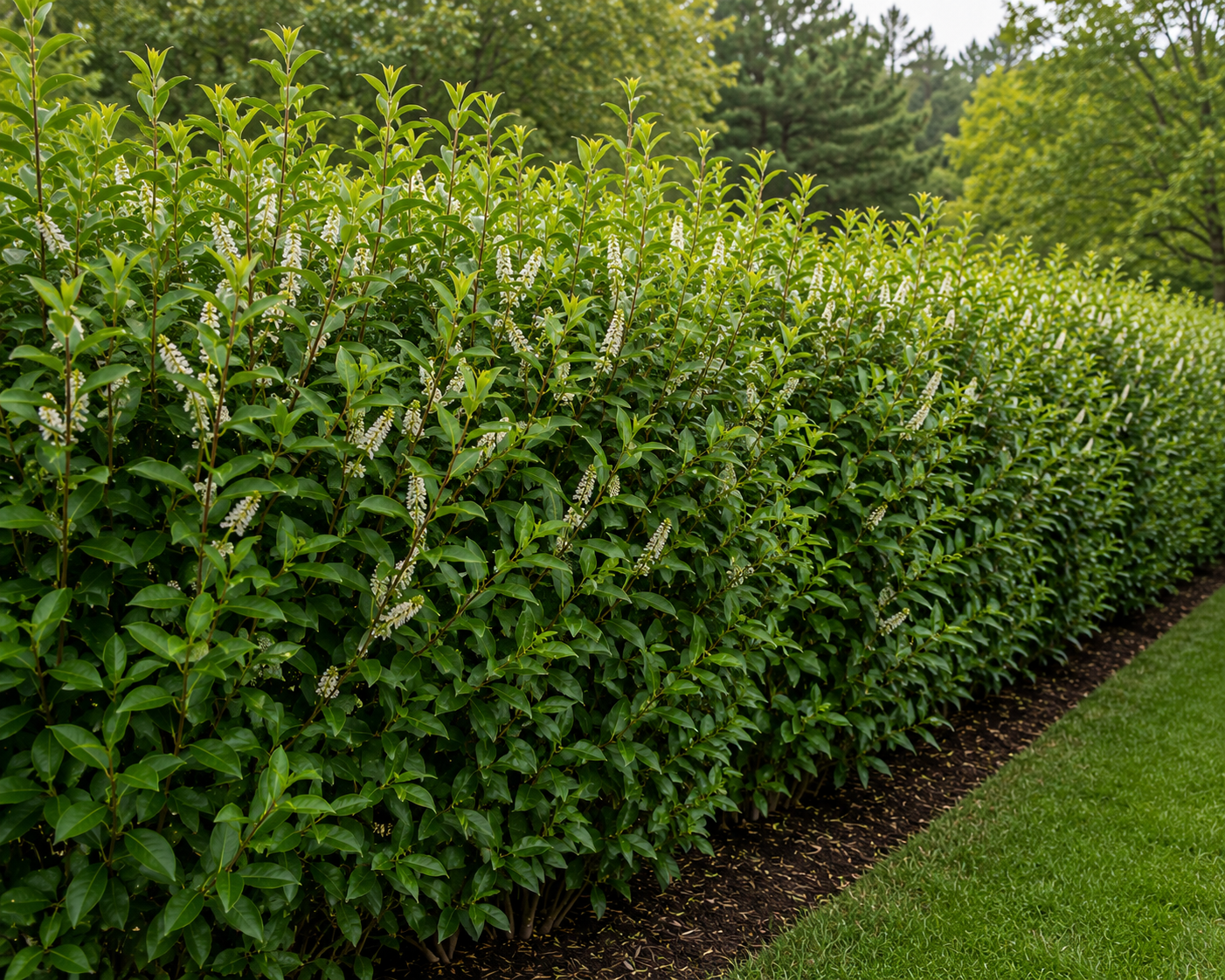
Wild Black Cherry (Prunus serotina) is one of the most valuable native trees in North America. Known for its fragrant spring flower clusters, edible dark cherries, outstanding wildlife benefits, and beautiful glossy foliage, it can also serve as an attractive large hedge or natural screen. While often grown as a tree, close planting and periodic pruning allow it to form dense wildlife-friendly hedges that provide beauty, food, and shelter throughout the year.
Plant CharacteristicsWild Black Cherry is a deciduous tree or large shrub with glossy green leaves, drooping clusters of fragrant white flowers, and dark purple-black fruits that ripen during summer. Young plants respond well to pruning and can be shaped into informal hedges.
- Botanical Name: Prunus serotina
- Common Name: Wild Black Cherry
- Plant Type: Deciduous tree or large shrub
- Mature Height: 30-80 feet
- Hedge Height: Commonly maintained at 8-15 feet
- Spread: 15-40 feet
- Growth Rate: Fast
- USDA Zones: 3-9
- Sun Exposure: Full sun to partial shade
Wild Black Cherry is excellent for:
- Wildlife hedges
- Privacy screens
- Property boundaries
- Pollinator gardens
- Native landscapes
- Edible landscapes
- Windbreaks
- Naturalized plantings
Its flowers, fruits, and dense growth make it particularly valuable in larger landscapes.
Important Hedge NoteWild Black Cherry is best used as a large informal hedge or natural screen. While it can be maintained through pruning, allowing a somewhat natural growth habit maximizes flowering, fruit production, and wildlife value.
For hedge planting, shrubs or young trees are typically spaced 6 to 10 feet apart.
Germination Instructions- Remove seeds from ripe fruits.
- Clean thoroughly to remove pulp.
- Cold stratify seeds for 90 to 120 days.
- Sow approximately ½ inch deep.
- Keep evenly moist.
- Maintain temperatures of 65-75°F.
Seeds generally germinate the following spring after stratification.
Growing InformationWild Black Cherry adapts to a wide range of soils and growing conditions. It performs best in full sun but tolerates partial shade. Once established, it is relatively drought tolerant and requires little maintenance.
Periodic pruning helps maintain hedge density and desired height.
Wild Black Cherry may not be the first plant people think of as a hedge, but its wildlife value is simply extraordinary. Few native plants contribute more food and habitat to birds and beneficial insects.
If your goal is to create a hedge that benefits wildlife while producing edible fruit and beautiful spring flowers, Wild Black Cherry deserves consideration. It combines ecological importance with ornamental appeal in a way few species can match.
Check out our
Complete Hedge Plant Growing Guide

Contact Us | Privacy Policy | About Us
Serving gardeners since 1992
State of Mississippi Seedmen's Permit #C-391, Ohio 90152, Minnesota 20086777